
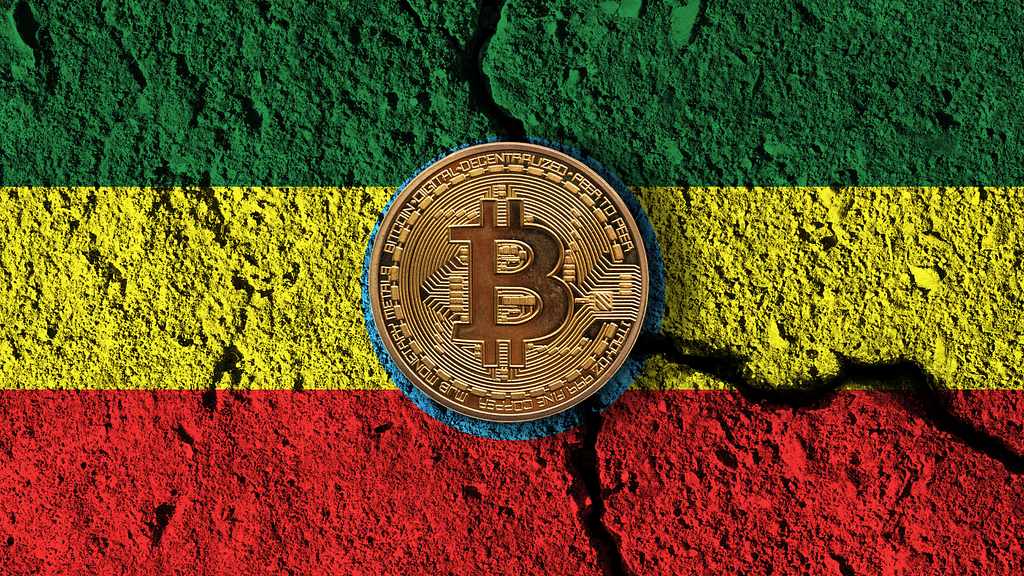
Ethiopia’s Crypto Paradox: How Africa’s Fastest-Growing Stablecoin Market Got Banned by the Same Crisis That Created It
In 2025, Ethiopia had the fastest-growing crypto market in all of Africa, but by mid-2026, that same market had turned into one of the most restricted on the continent. It’s a strange but true situation, where the rapid growth led directly to tighter controls. To really grasp what’s happening, you need to look at an ongoing currency crisis and a government that seems to believe the fastest-growing part of their financial system is also the riskiest if left unchecked.
The Devaluation Kickoff
In July 2024, the National Bank of Ethiopia decided to devalue the birr by about 30% against the dollar, part of a larger reform backed by the IMF that came with $10.7 billion in funding. This was intended to help transition Ethiopia towards a market-based exchange system after dealing with a shortage of foreign currency exacerbated by years of civil strife. In some sense, it did achieve that by unifying a fractured exchange system. But the downside? It wiped out household purchasing power overnight, pushing many Ethiopians to seek out safe places for their money that wouldn’t lose value with the next policy shift.
Stablecoins quickly became a go-to solution, and people adopted them at an astonishing rate. According to Chainalysis, retail-sized stablecoin transfers in Ethiopia shot up by 180% year-on-year, allowing the country to jump from 26th to 12th in the 2025 Global Crypto Adoption Index. By the time Binance started winding down its birr operations, around 1.8 million Ethiopians were trading in crypto. This surge was fueled by a mix that the initial framing of the situation didn’t quite capture: 23.9% inflation, ongoing dollar shortages, and a population of freelancers, importers, and small businesses with no formal means of handling hard currency.
The Currency Crisis Continues
Since the devaluation in 2024, the crisis never really stabilized. By August 2026, the birr had dropped to become the worst-performing currency among 23 tracked by Bloomberg, hovering around 160 to 162 to the dollar officially, while unofficial rates were even worse, nearing 180. The central bank has poured genuine money into trying to defend it, spending $1.35 billion on currency defense by March 2026, which was about a quarter of its known reserves. That figure rose to $2.7 billion by late August. In a single auction on August 20, the central bank sold $500 million to local banks while drawing bids for $710 million, highlighting that the dollar shortage is far from resolved, it’s just being rationed. As of July 2026, the IMF estimated Ethiopia’s reserves to be around $5.9 billion, and with oil prices rising and fuel subsidies increasing, the budget deficit is widening precisely when the reserves are under significant strain.
In simpler terms: the factors that pushed Ethiopians toward stablecoins back in 2024 didn’t just go away. They’ve gotten worse, which should have led to more stablecoin adoption. Instead, the government took steps to shut it down.
A Step-by-Step Crackdown
Ethiopia didn’t go for a sudden, sweeping ban; the response unfolded in three phases over five months, with each move tightening the market further.
The first occurred on February 27, 2026, when the National Bank of Ethiopia announced that birr-paired peer-to-peer crypto trading would be illegal without specific authorization. The notice portrayed informal P2P markets as unauthorized competitors to the central bank’s own exchange rate management and pointed to international cases where P2P platforms had restricted user withdrawals as a reason for caution.
Next, the largest platform in that space complied. Binance announced it would halt all birr-denominated peer-to-peer trading starting May 15, 2026, due to what the exchange described as increasing regulatory pressure. Ethiopia’s National Intelligence and Security Service had also claimed that crypto and digital payment platforms were being exploited for gold smuggling and illegal trade, which added a national security angle to the monetary concerns.
The third and final move escalated the situation from just trading restrictions to a near-total ban. On July 23, 2026, the National Bank issued a public notice that expanded the ban beyond just trading to any activities involving virtual-asset-to-fiat exchange, crypto-to-crypto swaps, transfers, custody, and even administration tied to virtual assets. Legal interpretations of this notice emphasized its broad scope: it’s prohibition-first, not just focused on crypto, extending even into self-custody and portfolio management in ways the February notice hadn’t touched. As one industry report pointed out, the central bank essentially told anyone using a crypto wallet that many functions on their dashboards were now illegal to use.
The Reasons Behind It
Three main forces are at play here, and they all reinforce each other.
First up is monetary control. A central bank trying to defend a currency through rationed dollar auctions faces a clear challenge from any avenue that allows citizens to bypass the official exchange rate. Every dollar moved through an unregulated stablecoin transfer is a dollar the National Bank can’t track, tax, or use to shore up its reserves. Reports have indicated that the central bank framed this broader ban as a way to tighten its grip on Ethiopia’s National Payment System, closing what it deemed regulatory gaps in unauthorized digital trading networks.
Secondly, there are legitimate enforcement concerns that precede the current currency issues. Investigations linked to tax evasion in areas like sports betting and payment gateways have drawn regulatory focus toward the digital payment frameworks Ethiopia set up starting in 2020. Crypto got swept into a larger review regarding how digital payment systems were used to move money outside established channels.
Lastly, there’s capital flight, clearly highlighted in the National Bank’s own rationale. Authorities have cited that unchecked crypto trading and informal remittance channels could undermine monetary policy and drain the limited hard currency that the country can’t afford to lose. Given that the central bank is spending billions it doesn’t readily have to defend the birr, this argument carries a lot more significance in 2026 than it would in a country with stable reserves.
What’s Still Allowed
The most striking detail in all this, and one that complicates a simple “Ethiopia is anti-crypto” narrative, is what the central bank chose not to restrict. Even while expanding its ban to include custody and self-storage, the NBE has still confirmed that cryptocurrency mining remains legal and is even growing, thanks to the country’s hydroelectric resources.
This distinction shows what the policy is really optimizing for. Mining takes Ethiopia’s surplus electricity and turns it into exportable, foreign-currency-generating value without creating a retail channel that allows citizens to maneuver around the official exchange rate. Trading, custody, and P2P transfers do the opposite: they enable citizens to exit the birr. The central bank isn’t rejecting crypto as a whole. It’s rejecting specific crypto activities that challenge its control over the currency while keeping the activities that generate foreign exchange.
The NBE has also mentioned several times that it’s working on a formal long-term framework for digital assets, reportedly with international partners. They’ve indicated that the current ban will remain in place until that framework is finalized. It’s hard to predict whether that framework will appear in months or years, but the consistent message from various notices is a desire for regulation eventually, rather than an intention for permanent prohibition.
How Ethiopia Stands Against Nigeria and Kenya
Ethiopia’s approach starkly contrasts with the rest of the region, especially when you look at how Nigeria and Kenya have responded to their own crypto environments. Nigeria took a different route, responding to widespread grassroots crypto use with the Investments and Securities Act 2025, which brought exchanges under SEC licensing while keeping the market open. Meanwhile, Kenya developed a dedicated VASP Act with clear licensing pathways and a compliance deadline set for November 2026. Both countries opted to legitimize a market that was already too significant to ignore.
Ethiopia, however, had less flexibility to take a similar path. Despite being the fastest-growing crypto market by percentage, it’s smaller in absolute terms compared to Nigeria’s, and its currency crisis is quite severe, far beyond what Lagos or Nairobi are dealing with currently. A government spending through a quarter of its reserves to defend its currency has a much stronger immediate incentive to seal off exit routes than one managing relatively stable reserves. The regulatory trends we’re seeing reveal a divergence driven less by ideology and more by the fiscal realities each central bank faces.
Implications for Stakeholders
For crypto platforms, the key takeaway is that the expansive nature of the July 2026 notice, which covers custody and self-storage, not just trading, means that continuing operations in Ethiopia without clear NBE authorization exposes them to real legal risks, not merely reputational ones. For businesses that have developed remittance or trade-settlement systems based on Ethiopian stablecoin corridors, it’s fair to say those operations are now in a prohibited area until something concrete develops, regardless of the legitimate commercial needs behind them.
For investors and analysts keeping an eye on East Africa, Ethiopia serves as a valuable counterpoint to the assumption that rapid crypto adoption leads directly to formal market regulation and access. Sometimes governments conclude that the growth itself poses the threat they need to rein in first, and they’ll figure out the rulebook later, if they ever do. Whether Ethiopia will eventually adopt a regulatory model similar to Nigeria’s or Kenya’s, or settle into a more restrictive approach with a few state-sanctioned exceptions for activities like mining that support the government’s foreign exchange needs, is a key question to watch over the coming year. The currency crisis that spurred the fastest-growing crypto market in Africa is the same crisis now determining how much of that market gets to survive.
This article is for educational purposes only and does not constitute financial, legal, or investment advice. Figures and regulatory details reflect information available as of October 2026 and change quickly in this market; verify current status before acting on any of it. #TechSFinance
Ethiopia’s Crypto Paradox: How Africa’s Fastest-Growing Stablecoin Market Got Banned by the Same… was originally published in Coinmonks on Medium, where people are continuing the conversation by highlighting and responding to this story.