
Chain of Thoughts 2026–09–17
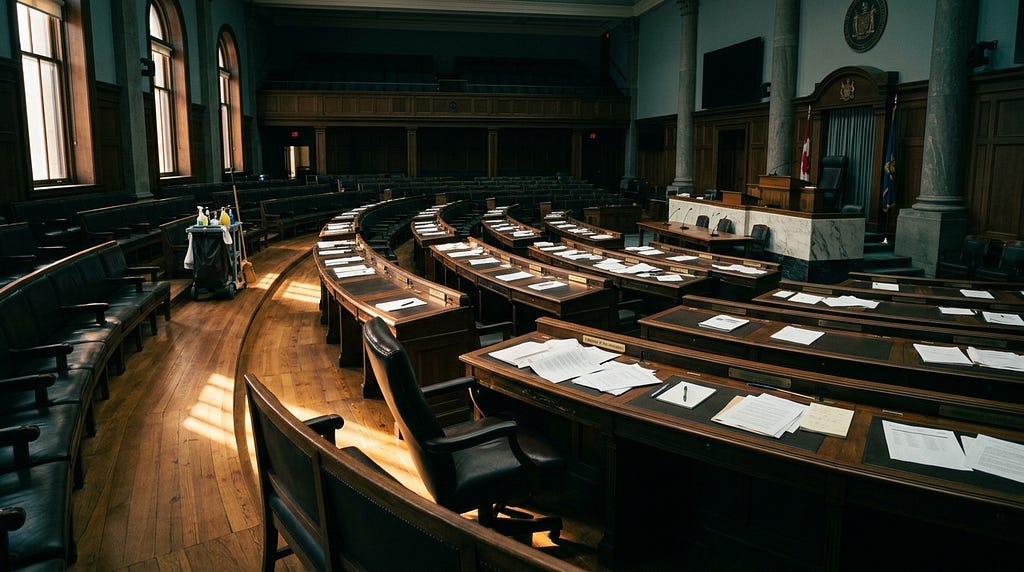
The CLARITY Act failed 49–50 — short of a simple majority, not merely of cloture — and on Wednesday every risk asset on earth recovered except the one that cared.
Generated using Nano Banana 2
The Verdict
Bitcoin — short term (3–5 months). $75,723, down 0.87%, a second consecutive red session but the mildest of the three-day sequence. Spot sits $223 above the $75,500 average ex-tax cash cost at which listed miners produced coins last quarter, which means the market has now spent two full sessions inside a few hundred dollars of the production floor without either bouncing off it or breaking it. Price remains below the $77,100–$80,200 distribution band it fell out of on Tuesday. Confirmation is unchanged at $81,700 on a daily close, now 7.9% above and further away than at any point this month. Beneath, $70,000–$72,000 is the first support zone and $62,000–$65,000 is the shelf where roughly 476,000 coins were accumulated. The notable feature of Wednesday is not the size of the decline. It is that it happened alone.
Bitcoin — long term (1–3 years). Circle launched its Arc mainnet with BlackRock, the DTCC and Visa sitting in the validator set #9. Read that sentence slowly. The Depository Trust and Clearing Corporation — the entity that settles American securities, the single most consequential piece of plumbing bitcoin was designed to make unnecessary — is now validating blocks on a production chain. Over three years the question stops being whether tokenized settlement wins; it is winning, and the incumbents are building it. The question becomes whether the winning infrastructure has any structural reason to hold bitcoin. Tokenized treasuries, tokenized equities and tokenized money-market funds all generate yield, all have issuers, and all fit the existing risk framework. Bitcoin fits none of it. The bull case survives this — an asset with no issuer is exactly what you want when the settlement layer has a board of directors — but it survives as a hedge against the new system rather than as a component of it. Those are different sizes of claim.
Ethereum — short term. $2,391.84, down 1.26%, and the $2,400 handle is gone for the second time in three sessions. The $2,300 invalidation now sits 3.8% below, down from 5.1% yesterday and 8.8% on Monday. That cushion has compressed in three consecutive sessions, which is the longest such run since the June drawdown.
Ethereum — long term. Circle’s new chain uses USDC as its native gas token #10. The single largest source of real, revenue-generating demand for Ethereum blockspace over the last five years has been dollar stablecoin transfer, and the largest regulated issuer of those dollars has now built a chain where the fee is paid in its own product rather than in ETH. The long-run bull case for Ethereum is that it is the neutral venue where value settles and that neutrality is worth a fee. Issuer verticalization attacks that directly: if the dollar moves on the dollar-issuer’s chain, Ethereum keeps the tokens that need censorship-resistant settlement and loses the ones that were only ever there for distribution. What remains is genuinely valuable and genuinely smaller — the venue of last resort for assets that cannot afford a corporate validator set. That is a real business. It is not the everything-settles-here business.
Cardano — short term. $0.1922, down 4.81%, a second consecutive close below $0.20 and beneath the August 30 low of $0.1927. ADA is now down 11.9% in three sessions on a market where bitcoin is down 3.2%, which is a beta of roughly 3.7 into a policy shock that has no Cardano-specific component at all.
Cardano — long term. Deutsche Bank told clients it is awaiting regulatory sign-off to launch institutional custody, and the assets it named were bitcoin and ether #11. Anchorage, on the same day, extended custody coverage to Etherlink and tokenized uranium #12. Institutional custody is not a general capability that arrives all at once. It is an enumerated list, and each name on it costs a legal opinion, an insurance underwriting, a key-management runbook and a board sign-off. The economics therefore favour assets a custodian can amortise that cost across, which means the list grows at the top and by novelty — a uranium token is a marketable first — rather than through the middle. The number worth tracking is not ADA’s price. It is how many distinct assets appear by name in institutional custody launches over the next year, and where in that list Cardano sits. Draw your own conclusion from the count.
XRP — the tracker closes. $1.27, down 8.70%, the worst major on the board for the second straight day of leadership in the wrong direction. Yesterday this digest flagged XRP’s asymmetry as unexplained and worth chasing: it had led Monday’s rally at +4.81% and surrendered only 1.55% when the catalyst reversed. There was no hidden bid. There was a one-session lag, and it closed violently — the remaining give-back plus a further leg, on reporting that XRP is functioning as the high-beta expression of the Fed-hike trade with ETF inflows at zero and funding negative. The asymmetry is resolved and retired.
Why The Market Is Here
The bill did not narrowly miss. The Senate’s cloture motion on the Digital Asset Market CLARITY Act recorded 49 yeas to 50 nays #24. Zero voting Democrats supported it and four Republicans opposed it, leaving the coalition eleven votes short of the sixty required #3. The proximate blocker was an ethics fight over the President’s own crypto holdings #1. The distinction matters more than the defeat. A bill that gets 57 and needs 60 is a bill with a path; a bill that cannot assemble half the chamber it is being voted in was never close, and the market had been trading it as a live coin flip forty-eight hours earlier. This is the standing political-risk signal firing properly for the first time in weeks: crypto is a policy-risk asset, its legislative window is shorter than the industry’s spending implies, and the industry has now discovered that the votes it believed it had purchased do not exist. Market-structure legislation is finished for 2026 #2, and the sell-side counter — that nothing structural has changed because the agencies were always going to be the real venue — is a fair argument that nevertheless required a repricing to make #18.
The money left through the only door that reports. US spot bitcoin ETFs shed $450.4 million in net outflows, the heaviest single session since June 25 and a complete reversal of the prior day’s $159.9 million inflow #5. Fidelity’s FBTC led at $214.8 million, BlackRock’s IBIT followed at $161.7 million, Grayscale’s GBTC at $44.1 million #4. The crypto equity complex kept bleeding alongside it — Coinbase down another 3.56% after Tuesday’s 10.10%, Strategy down 2.39% — with Saxo arguing Coinbase carries more CLARITY exposure than the tape has priced #8.
And then everything else went up. The S&P gained 0.32% and the Nasdaq 0.72% into the Fed decision. Gold added 1.30%, silver 2.85%, copper 2.32%. The VIX fell 2.21%. The ten-year backed away from five percent to 4.959%, and Brent gave back 2.77% to $105.74 as de-escalation inputs accumulated — a Pentagon inspector confirming the Iran war has produced US munitions shortfalls #20, a $38 billion running cost #19, and a former Trump ally publicly demanding the war stop #21. The barrel is still doing damage on the way down — UK inflation rose on petrol and diesel, which is last quarter’s crude arriving in this quarter’s CPI #22 — but the direction of travel on Wednesday was unambiguous. Lower crude, lower yields and lower volatility are precisely the combination a rate-sensitive asset is supposed to enjoy. Crypto declined into all three. That is not a macro session. That is a sector carrying a discount the rest of the market does not have to price, and the name of the discount is the absence of a statute.
Institutional Pulse
The day’s only measurable institutional number was a negative one, and that is worth sitting with. The $450.4 million ETF outflow is a public tape: it prints daily, it is reported within hours, and it generates a headline whether it is large or small. Meanwhile the institutional business that actually expanded on Wednesday generated no flow number at all. Deutsche Bank moving toward European custody for bitcoin and ether produces no print. The DTCC validating blocks on Arc produces no print #9. Anchorage adding tokenized uranium to a federally chartered bank’s custody shelf produces no print. Bernstein’s expectation that the SEC and CFTC will now move to aggressive rulemaking #6 — with the incidental effect that stablecoin rewards on idle balances survive, because the bill that would have banned them died #7 — produces no print either, though it may matter more to three-year cash flows than any week of ETF flow ever will.
The OTC reminder, in its fourteenth shape: the flows you can see are the flows that were designed to be seen. An ETF outflow is a redemption inside a regulated wrapper with a mandatory disclosure regime. A bank building a custody desk, an issuer recruiting clearing houses as validators and a treasury desk accumulating through a broker all happen off that tape by construction. When the visible number is negative and the invisible activity is constructive, the tape will read like capitulation regardless of what the balance sheets are doing. That is not an argument that the outflow is fake. It is an argument that the outflow is one number from one venue, and it was the only one anybody could quote.
Calendar Watch
The FOMC decision lands at 2:00pm Eastern on September 16 — roughly five hours after this edition’s data window closed, and it is a Summary of Economic Projections meeting, so the dot plot and Chair Warsh’s press conference carry more information than the rate itself. The prevailing sell-side read into it was that the Fed outranks the Senate this week #14, with a dovish surprise explicitly discounted #13. The Bank of Japan follows on Friday with USDJPY at 155.09. The House Ways and Means crypto tax markup proceeds this week and is now, following the Senate’s failure, the only live piece of crypto legislation in Washington. The UK’s authorization window for crypto firms opens in two weeks, with FCA guidance already published.
Signals Worth Watching
The Fed grade is deferred one more day, and the test is unchanged. A hike into a market that shrugs confirms the variance-not-level frame. A hold that produces a violent reversal confirms it too. Only the third outcome falsifies it: a hike that is delivered as expected and still sells crypto off hard. Wednesday’s pre-decision tape — equities up, crypto down — makes that third outcome meaningfully more likely than it looked on Monday, because the asset has already demonstrated it will decline on days when the macro inputs are friendly.
The fear gauge re-coupled violently, and the inversion watch closes at two. Fear & Greed fell from 69 to 51, an eighteen-point collapse into Neutral, on a session where bitcoin moved 0.87%. For two days the index printed against the tape; on the third it did not diverge, it over-corrected. An index that lags by two sessions and then repays the gap eight times over is not decoupled from price — it is behind price. Treat the level as history rather than as a signal in either direction, and the two-day inversion tracker is retired rather than escalated.
The production floor is being tested from a second direction. Spot closed $223 above the $75,500 miner cash cost, the second session hugging that line. Separately, Ethiopia cut power to bitcoin miners by 77% amid a hydropower shortage #17. That is hashrate leaving for a reason entirely unrelated to price, which is the same shape as the AI-compute migration and points the same way: capacity is exiting on non-price terms, so the cost floor stops functioning as a magnet and starts functioning as a coincidence.
The 5.02% settle went quiet and USDJPY did not. The ten-year backed off to 4.959%, the furthest from the trigger in three sessions; the test remains a daily close above 5.02%, and it is not close this week. USDJPY at 155.09 sits 0.6% from 156, with the Bank of Japan meeting on Friday — still the likeliest tracker to fire.
What would change the thesis. A daily close above $81,700 restores the structure that Monday briefly promised. A close below $75,500 puts spot under the production floor for the first time and makes the miner-capitulation question live rather than theoretical. On ETH, $2,300 is 3.8% away and has now been approached three sessions running.
Big Picture
For most of crypto’s life the marginal price signal came from places with a regulator of record. Spot order books, then ETF flows: instruments with disclosure regimes, audited custodians and somebody whose name is on the filing. In 2026 the marginal signal for a policy-sensitive asset is a prediction-market line. This digest has been honest about using it and should now be honest about what that means. Two consecutive editions built their entire analytical spine on Polymarket odds — 14% to 34% on Monday with bitcoin up 1.89%, then 34% back to 17% on Tuesday with bitcoin down 2.86%. The measurement worked. The odds repriced on genuine news hours before spot did — and the surge that preceded them was itself reported as news #23 — and when the vote came the bill lost. Accuracy is not the complaint.
The complaint is the plumbing underneath the accuracy. Those lines are thin, the participant set overlaps heavily with the people who hold the asset being priced, and the venues are themselves contested legal infrastructure — Underdog sued Connecticut on Wednesday to stop a state crackdown on sports prediction markets #15, which is the same week the DOJ charged former Robinhood engineers with front-running crypto listings on Hyperliquid #16. Inside-information problems at trading venues are not hypothetical in this industry; they are this month’s indictments. And the referee does not agree with itself. On Fed day, hours before resolution, Kalshi priced a hike near 57% while Polymarket sat closer to 49% and CME FedWatch implied north of 60%. A forty-point spread on a binary event with a known resolution time is not a consensus estimate. It is three different numbers that reporters will describe with the same phrase — the market expects — and that traders will act on as though it were one.
Then look at what the CLARITY line actually told you and what it did not. The contract peaked around a third, and the bill could not get fifty votes in a hundred-seat chamber. A market that is well calibrated on average can be badly wrong about the specific thing you are using it for, and the thing being priced — will this become law this year — was never the thing that moved bitcoin, which was the procedural vote. Crypto spent fifteen years arguing that transparent, permissionless price formation beats gatekept price formation. It has now routed its most consequential political price signal through a venue layer that has neither the transparency of the first nor the accountability of the second, and the first time a legislative outcome is credibly alleged to have been traded ahead of, there will be no filing to subpoena and no regulator of record to ask. That is the exposure. It is not a reason to stop reading the odds. It is a reason to stop calling them the market.
If I Had $100 This Month
Crypto spent Wednesday pricing the absence of a law while every other risk asset priced cheaper oil and a friendlier rates path. That gap is the whole trade description: you are being paid to hold an asset class that carries one extra risk factor, and the factor just resolved in the worst available direction, which is the moment the compensation is largest.
$60 → BTC. Spot is $223 above what it costs to produce and the sector’s legislative worst case has now happened rather than being feared.$25 → ETH. The issuer-verticalization question is real and $2,300 is 3.8% away — size this as the position you would be content to add to if that line goes.$15 → ADA. Down 11.9% in three sessions on American legislation it has no exposure to, into a custody list it is not yet on. You are paying for the beta and getting none of the bid, so pay little.
Hold actual coins. Not ETF shares, not equity proxies.
This is how I’d think about it. Make your own call.
Sources
#1 — Clarity Act preliminary vote falls short in Senate amid ethics fight over Trump’s crypto wealth — The Block#2 — ‘This one stings’: Clarity Act fails procedural Senate vote — is crypto’s biggest regulatory push dead? — The Block#3 — Morning Minute: Clarity Act Vote Falls Short as Democrats All Vote ‘No’ — Decrypt#4 — Bitcoin ETFs Had Their Worst Day Since June Following Failed Clarity Act Vote — Decrypt#5 — Heaviest bitcoin ETF outflow since June follows Senate defeat: Crypto Markets Today — CoinDesk#6 — Bernstein expects ‘aggressive’ rulemaking from SEC, CFTC, following CLARITY Act failure — CoinTelegraph#7 — Bernstein says Clarity Act failure allows stablecoin rewards on idle balances to continue — The Block#8 — Coinbase faces greater fallout from CLARITY Act setback: Saxo — CoinTelegraph#9 — Circle Launches Arc Mainnet With BlackRock, DTCC and Visa as Validators — Decrypt#10 — Circle launches Arc mainnet with USDC as native gas token — CoinTelegraph#11 — Deutsche Bank plans bitcoin, ether custody for institutional clients in Europe — The Block#12 — Anchorage expands institutional custody to Etherlink, tokenized uranium — CoinTelegraph#13 — Bitcoin awaits Fed rate decision below $76K as analysis discounts ‘dovish surprise’ odds — CoinTelegraph#14 — Bitcoin Hovers at $76K as Analysts Argue the Fed Matters More Than Clarity Act — Decrypt#15 — Underdog sues Connecticut to stop sports prediction market crackdown — The Block#16 — DOJ charges Robinhood former engineers with front-running crypto listings on Hyperliquid — The Block#17 — Ethiopia cuts Bitcoin miners’ power by 77% amid hydropower shortage: Report — CoinTelegraph#18 — ‘Nothing truly structural’: Analysts downplay Clarity Act defeat as bitcoin, major crypto stocks dip — The Block#19 — Iran war has cost the US $38bn: How will it impact US economy, politics? — Al Jazeera#20 — Iran war has led to US munitions shortfalls, Pentagon inspector confirms — BBC World#21 — Ex-Trump ally Marjorie Taylor Greene says war on Iran must ‘stop’ — Al Jazeera#22 — Petrol and diesel price rises push UK inflation higher — BBC Business#23 — Clarity Act odds surge on prediction markets, but crypto bill still faces long road — CoinDesk#24 — Senate cloture vote on Clarity Act fails, dealing regulatory blow to crypto industry — CNBC
Market Data
Asset Price 24h
──────────────────────────────────────
Bitcoin (BTC) $75,723 -0.87%
Ethereum (ETH) $2,391.84 -1.26%
Cardano (ADA) $0.1922 -4.81%
Solana (SOL) $97.19 -1.97%
BNB $712.47 -0.94%
XRP $1.27 -8.70%Fear & Greed: 51 — Neutral (was 69 yesterday)
S&P 500: +0.32% · Nasdaq: +0.72% · DXY: 99.69 (+0.04%) · Gold: $4,389 (+1.30%)Brent $105.74 (-2.77%) · WTI $102.54 (-3.11%)
10Y 4.959% (-0.74%) · 30Y 5.340% (-0.45%) · VIX 16.82 (-2.21%) · USDJPY 155.09 (+0.46%)
Silver $65.04 (+2.85%) · Copper $6.52 (+2.32%)
Wheat 724.75 (-0.51%) · Corn 530.00 (-1.07%) · Soybeans 1314.75 (-0.30%)Note: all traditional-market rows are Sept 16 INTRADAY prints, pulled with the US
session still open and roughly five hours before the 2:00pm ET FOMC decision.
They are not settles and are subject to revision.
Chain of Thought is a daily crypto and macro market digest. Not financial advice.
Why Did Bitcoin Price a Bill That Never Had Fifty Votes? was originally published in Coinmonks on Medium, where people are continuing the conversation by highlighting and responding to this story.