
Evaluate Forex Trading Software based on execution, tools, and security.
Open a few forex trading websites and you will probably notice the same promises everywhere.
Fast execution. Advanced charts. Low spreads. Easy trading. Powerful tools.
At first, it can feel as though every platform offers exactly the same thing. This makes choosing the right Forex Trading Software confusing, especially when every provider claims to be the best.
The truth is that most platforms do offer similar basic features. The real differences only become clear when you start placing trades, managing risk, switching devices, withdrawing money, or dealing with a technical problem.
So, how do you choose a platform that actually works for your needs?
This guide looks at the most common problems traders face and explains what to check before selecting from the many forex trading platforms available today.
My Orders Are Not Executing at the Price I Expected
One of the biggest frustrations traders experience is poor order execution.
You may click buy or sell at one price, only to find that the trade opens at a different price. Sometimes an order may also be delayed, rejected, or filled after the market has already moved.
This is especially important during volatile market conditions, such as major economic announcements or central bank decisions. Good Forex Trading Software should process orders quickly and clearly display the final execution price. It should also perform reliably when trading activity is high.
Before opening a live account, check whether the platform provides:
Fast order executionClear trade confirmationsStable performance during busy market periodsTransparent information about slippageEasy order modification and cancellation
A demo account can help you understand how the software works, although live execution conditions may still be different. Do not choose a platform simply because it claims to be fast. Look at the broker’s execution policy and read the trading conditions carefully.
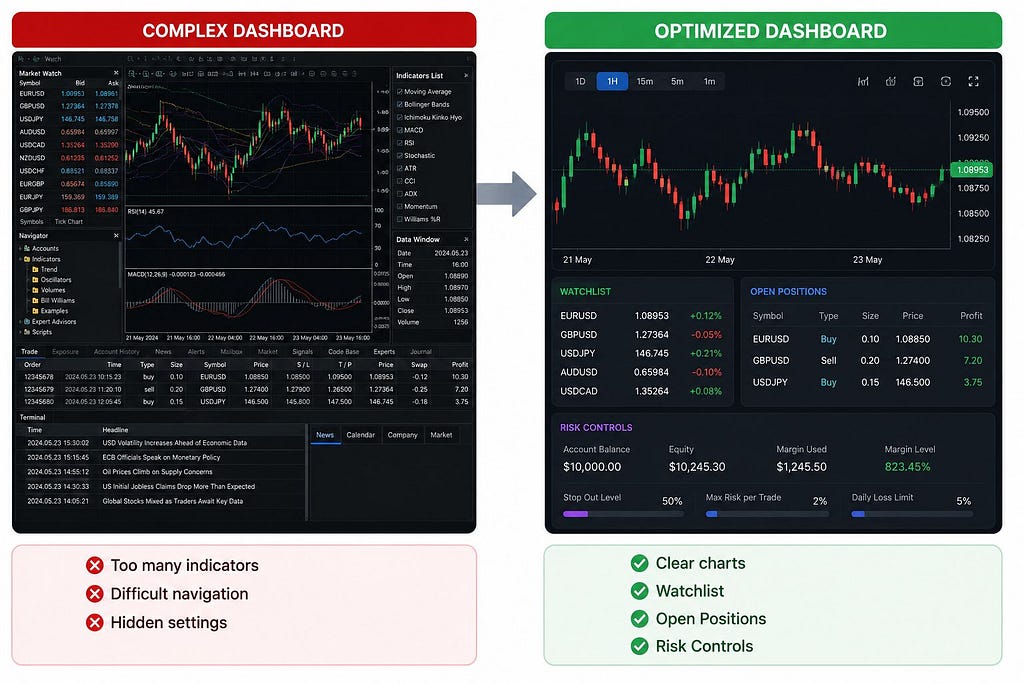
The Platform Has Too Many Tools and Feels Confusing
More features do not always create a better trading experience.
Many traders open a platform and immediately see multiple charts, indicators, buttons, account figures, news feeds, and order windows. Instead of helping, the software becomes difficult to understand.
create a better trading experience
The best platform should make important information easy to find.
You should be able to quickly see:
Your open positionsYour current profit or lossAvailable account balanceMargin levelPending ordersStop-loss and take-profit settings
A well-designed platform should also allow you to customise the layout. For example, you may want to save chart templates, create a currency watchlist, or remove tools you do not use. The best forex trading platform is not necessarily the one with the most complicated dashboard. It is the one that helps you make decisions without wasting time searching through menus.
I Need Better Charts, but I Don’t Want Information Overload
Charts are an essential part of forex trading, but not every platform provides the same quality of analysis.
Some platforms offer only basic charting, while others include dozens of technical indicators, drawing tools, timeframes, and market analysis features.
Useful tools may include:
Moving averagesRelative Strength IndexBollinger BandsFibonacci retracement toolsTrendlinesSupport and resistance toolsEconomic calendarsCurrency strength indicatorsReal-time market news
The key is to choose software that gives you the tools your strategy actually requires.
For example, a short-term trader may need fast charts and smaller timeframes. A longer-term trader may care more about economic news, daily charts, and historical price data.
When comparing the top 10 forex trading platforms, avoid being impressed by a long feature list alone. Check whether the tools are easy to use, reliable, and included in your account plan.
I’m Worried About Losing More Than I Planned
Risk management is one of the most important concerns for any forex trader.
Because forex trading often involves leverage, even a small market movement can create a larger profit or loss. Without proper controls, traders may lose more money than they expected.
Reliable Forex Trading Software should make risk management simple.
Look for tools such as:
Stop-loss ordersTake-profit ordersTrailing stopsMargin alertsPosition-size calculatorsRisk-to-reward displaysNegative balance protection, where available
The platform should also clearly show how much margin a trade will require before you confirm the order.
Another important question is whether stop-loss and take-profit orders remain active when you close the platform or lose your internet connection. Server-side orders may continue working even when your device is offline.
A platform cannot remove trading risk, but it should give you clear tools to control it.
I Need to Manage Trades When I’m Away From My Computer
Many traders do not spend the entire day sitting in front of a desktop screen.
You may need to check a position while travelling, at work, or away from home. This is why mobile and web access have become important features of modern forex trading platforms.
A good mobile trading application should allow you to:
Open and close tradesModify stop-loss and take-profit levelsView live pricesCheck chartsReceive price alertsMonitor margin and account balance
The mobile version should not feel like a completely different platform. Ideally, your watchlists, account information, and selected settings should synchronise across desktop, web, and mobile devices.
Before choosing a provider, test the mobile application. Check whether it is stable, easy to navigate, and secure.
I Want to Automate My Strategy, but the Platform Limits Me
Some traders prefer to place trades manually. Others want to use automated systems, custom indicators, copy trading, or trading bots.
Not every platform supports these features.
If automation is important to you, check whether the software supports:
Automated trading strategiesExpert advisorsCustom indicatorsBacktestingStrategy optimisationApplication programming interfacesVirtual private server accessCopy or social trading
You should also check whether the broker places restrictions on automated strategies.
A platform may claim to support algorithmic trading, but the available tools may be too limited for advanced users. Test the system before committing money or purchasing additional software.
The Spread Looks Low, but What Am I Actually Paying?
Low spreads are often used to attract traders, but they do not show the complete cost of trading.
A broker may advertise a very small spread while charging a separate commission. There may also be overnight financing costs, withdrawal charges, currency conversion fees, inactivity fees, or platform subscription costs.
When comparing platforms, review the total cost, including:
SpreadsTrading commissionsOvernight chargesDeposit and withdrawal feesInactivity feesData or platform fees
The cheapest-looking option is not always the most affordable. A reliable provider should clearly explain its pricing before you open an account. Avoid platforms that make their fees difficult to find or understand.
Can I Trust the Platform With My Money and Personal Details?
Security should never be treated as an optional feature.
Your trading account may contain financial information, identity documents, and deposited funds. The platform should use appropriate security measures to protect this information. Look for features such as encrypted connections, secure account verification, strong passwords, login alerts, and two-factor authentication.
You should also research the broker connected to the software. Check whether it is regulated in the relevant jurisdiction and whether it clearly explains how client funds are handled.
Customer support also matters. When you face a deposit, withdrawal, verification, or technical issue, you need access to a support team that can provide a clear answer. Test the support service before depositing money. Ask a real question and see how quickly and professionally the company responds.
How Do You Choose the Right Forex Trading Software?
Start by thinking about how you plan to trade.
how you plan to trade
A beginner may need simple navigation, educational materials, a demo account, and clear risk controls. An experienced trader may prioritise execution speed, advanced charts, lower costs, and custom order types. An algorithmic trader may need backtesting, APIs, and automated trading support.
Create a shortlist and compare each platform based on:
Execution qualityEase of useTrading costsCharting toolsRisk-management featuresMobile accessAutomation optionsSecurityCustomer support
Lists of the top 10 forex trading platforms can help you discover available options, but they should not make the final decision for you.
The right choice depends on your strategy, experience, account size, and preferred trading style.
Make a Smarter Choice for Your Forex Trading Journey
Most forex platforms may look similar, but the quality of the trading experience can be very different.
The best Forex Trading Software should solve real problems. It should help you place trades efficiently, understand your costs, manage risk, analyse the market, and access support when something goes wrong. Do not select a platform based only on design, advertising claims, or the number of available indicators. Test the software, review the fees, check the broker’s conditions, and make sure the platform supports the way you want to trade.
Ultimately, the best forex trading platform is not the one that promises the most. It is the one that provides the reliability, transparency, and tools you genuinely need.
Most Forex Trading Platforms Look the Same Here’s What Actually Separates the Best was originally published in Coinmonks on Medium, where people are continuing the conversation by highlighting and responding to this story.