
Building a P2P crypto exchange in 2026 requires the right technology, security, compliance, and trading features. This step-by-step guide explains the complete development process, key components, costs, and best practices to launch a scalable and secure platform.
Looking to launch a cryptocurrency exchange but unsure where to start? As the global crypto economy continues to expand, Peer-to-Peer (P2P) trading has become one of the fastest growing segments of the digital asset market. Compared to traditional exchanges, P2P platforms enable users to trade cryptocurrencies directly through secure escrow mechanisms, offering greater transparency, flexible payment options, lower transaction costs, and improved control over every trade.
For entrepreneurs, fintech startups, and blockchain businesses, this presents a significant opportunity to build a profitable trading platform in an industry. However, creating a successful exchange involves much more than developing software, it requires a well defined business strategy, the right technology stack, strong security measures, regulatory compliance, and a seamless user experience. This step-by-step guide explores everything you need to know about P2P Crypto Exchange Development, helping you understand the complete development process, essential features, monetization strategies, and best practices for launching a secure, scalable, and future ready P2P crypto exchange in 2026.
Step 1: Define Your Business Strategy Before Development
Every successful crypto exchange begins with a well defined business strategy. Before writing a single line of code, businesses should determine their target audience, operational goals, and competitive positioning.
Start by answering a few important questions:
Which countries or regions will your exchange serve?Which cryptocurrencies will be available for trading?Will users be able to trade using fiat currencies?Which payment gateways and local payment methods should be integrated?How will your platform generate revenue?What regulatory requirements apply to your target market?
Answering these questions early helps create a roadmap that reduces development risks and aligns your platform with real market demand.
Step 2: Research the Market and Understand User Expectations
Before investing in P2P Crypto Exchange Development, analyze successful exchanges to understand what attracts and retains users. Evaluate their features, trading experience, security measures, and customer support.
Modern traders expect:
Fast trade executionTransparent pricingMultiple payment methodsLow transaction feesSecure escrow protectionMobile-friendly accessSimple user interfaceQuick dispute resolution
Studying market trends also helps identify opportunities to introduce unique features that differentiate your exchange from competitors. A clear value proposition not only improves user acquisition but also strengthens long term brand loyalty.
Step 3: Choose the Right Technology Stack
The technology stack forms the backbone of your exchange. Selecting the right technologies determines how secure, scalable, and efficient your platform will be as user activity increases.
When planning P2P Crypto Exchange Development, focus on technologies that support high transaction volumes, seamless wallet connectivity, and real time trading.
A modern P2P exchange typically includes:
Blockchain integration (Ethereum, BNB Chain, Solana, Polygon, etc.)Smart contract developmentHigh performance backend architectureResponsive web and mobile interfaceSecure cloud infrastructureDatabase management systemAPI integrationsReal time notification services
Choosing a flexible architecture also makes future upgrades easier as your business expands into new markets or introduces additional cryptocurrencies.
Step 4: Develop the Essential Features
Features play a major role in attracting and retaining users. A successful exchange should deliver a smooth trading experience while maintaining high security standards.
Your platform should include:
User Management
Secure registrationKYC verificationTwo factor authenticationProfile management
Trading System
Buy and sell order creationReal time order matchingInstant trade notificationsTransaction history
Wallet & Payment Integration
Multi-crypto walletsEscrow walletFiat payment gatewaysMultiple payment methods
Administration
Admin dashboardUser managementTransaction monitoringRevenue reportingDispute resolution panel
These features create a complete trading ecosystem that improves both user satisfaction and operational efficiency.
Step 5: Build a Secure Escrow Trading System
Escrow is one of the most important components of any P2P exchange.
When a trade begins, the cryptocurrency is temporarily locked in escrow until the buyer completes the payment. Once payment is verified, the platform automatically releases the crypto assets to the buyer.
This process provides several advantages:
Prevents fraudProtects buyers and sellersBuilds trustAutomates transactionsReduces manual interventionImproves transaction transparency
A well designed escrow mechanism significantly increases platform credibility and encourages repeat trading.
Step 6: Prioritize Security and Compliance
Security is often the deciding factor when users choose a crypto exchange. Even a feature rich platform can lose credibility if it lacks strong protection against cyber threats.
Businesses investing in P2P Crypto Exchange Development should implement enterprise grade security measures from the beginning.
Essential security practices include:
End-to-end encryptionMulti-factor authenticationCold wallet storageSmart contract auditingDDoS protectionRole-based admin accessAnti-phishing protectionContinuous security monitoring
In addition to security, businesses should also follow applicable KYC (Know Your Customer) and AML (Anti-Money Laundering) requirements based on their target markets. Compliance not only reduces legal risks but also builds confidence among users and investors.
Step 7: Create Multiple Revenue Streams
A P2P exchange generates revenue through more than just trading commissions.
Popular monetization methods include:
Trading feesWithdrawal feesPremium membership plansCrypto listing feesAdvertising opportunitiesFeatured trade promotionsAPI subscription servicesInstitutional trading solutions
Diversifying revenue sources helps businesses maintain consistent profitability while supporting long term platform growth.
Step 8: Test Your Platform Before Going Live
Launching a P2P crypto exchange without proper testing can lead to security vulnerabilities, poor user experience, and financial losses. Before introducing your platform to the market, every feature should undergo rigorous quality assurance to ensure smooth performance under different trading conditions.
A comprehensive testing process should include:
Functional testingSecurity testingSmart contract auditingPerformance and load testingAPI testingMobile responsivenessWallet transaction testingUser acceptance testing (UAT)
Testing helps identify bugs, improve system stability, and deliver a seamless trading experience from day one. A stable platform builds user confidence and minimizes operational risks after launch.
Step 9: Launch and Market Your Exchange
Once development and testing are complete, the next challenge is attracting users. A successful launch requires more than deploying software, it demands a well planned marketing strategy.
Businesses should focus on:
Building a professional websiteCreating educational contentRunning SEO campaignsLeveraging social media marketingEngaging crypto communitiesLaunching referral programsPartnering with blockchain influencersOffering promotional trading incentives
An effective marketing strategy increases platform visibility, attracts early adopters, and helps establish credibility in the crypto market.
Common Mistakes to Avoid During Development
Many startups rush into development without a clear roadmap, leading to delays, higher costs, and poor user adoption. Avoiding common mistakes can significantly improve your platform’s chances of success.
Some of the most common mistakes include:
Ignoring security best practicesChoosing an inflexible technology stackPoor user interface designLimited payment optionsWeak liquidity planningInadequate scalabilityDelayed customer supportLack of compliance preparation
Addressing these challenges early ensures your exchange remains secure, scalable, and capable of supporting future business growth.
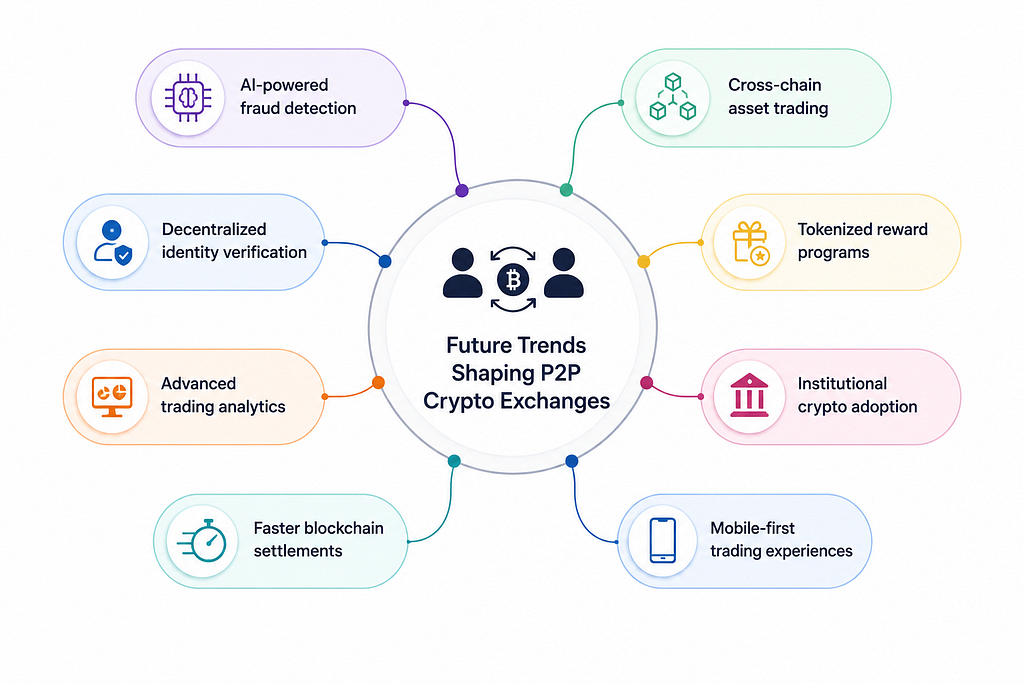
Future Trends Shaping P2P Crypto Exchanges
Future Trends Shaping P2P Crypto Exchanges
The P2P trading industry continues to grow due to new technology and changing requirements of customers. Businesses that stay ahead of these trends will be better positioned to compete in the digital asset market.
Key trends expected to shape the future include:
AI-powered fraud detectionCross-chain asset tradingDecentralized identity verificationTokenized reward programsAdvanced trading analyticsInstitutional crypto adoptionFaster blockchain settlementsMobile-first trading experiences
These innovations will make P2P exchanges more efficient, secure, and accessible, creating new opportunities for entrepreneurs entering the blockchain industry.
Frequently Asked Questions (FAQs)
1. What is a P2P crypto exchange?
A P2P (Peer-to-Peer) crypto exchange is a platform that enables users to buy and sell cryptocurrencies directly with one another without relying on a central intermediary. The platform uses an escrow system to secure transactions and protect both buyers and sellers.
2. Why should businesses invest in P2P Crypto Exchange Development?
P2P Crypto Exchange Development allows businesses to launch secure, scalable, and feature-rich trading platforms that generate revenue through trading fees, premium services, and other monetization models while meeting the growing demand for decentralized trading.
3. What are the essential features of a P2P crypto exchange?
A modern P2P crypto exchange should include KYC/AML verification, escrow services, multi-currency wallet integration, real-time order matching, multiple payment methods, dispute management, an admin dashboard, and advanced security features.
4. How does the escrow system work in a P2P crypto exchange?
The escrow system temporarily locks the seller’s cryptocurrency until the buyer completes the payment. The platform ensures a safe and transparent transaction by automatically releasing the cryptocurrency to the buyer upon payment confirmation.
5. How long does it take to create a cryptocurrency P2P exchange?
The development timeline depends on the platform’s features, customization requirements, and technology stack. A ready-to-customize solution can significantly reduce development time compared to building an exchange from scratch.
6. Which cryptocurrencies can be supported on a P2P exchange?
A P2P crypto exchange can support popular cryptocurrencies such as Bitcoin (BTC), Ethereum (ETH), USDT, BNB, Solana (SOL), and many other digital assets based on business requirements.
7. Is P2P Crypto Exchange Development secure?
Yes. A professionally developed platform incorporates security measures such as smart contract audits, end-to-end encryption, two-factor authentication, cold wallet storage, and KYC/AML compliance to protect users and transactions.
8. How do P2P crypto exchanges generate revenue?
Revenue can be generated through trading commissions, withdrawal fees, premium memberships, token listing fees, featured advertisements, API services, and enterprise partnerships.
9. What technologies are commonly used in P2P Crypto Exchange Development?
Popular technologies include blockchain networks like Ethereum, BNB Chain, Solana, and Polygon, along with smart contracts, cloud infrastructure, secure APIs, modern frontend frameworks, and scalable backend architectures.
10. What should businesses consider before launching a P2P crypto exchange?
Businesses should consider their target audience, regulatory needs, security strategy, technological stack, liquidity management, user experience, scalability, and long term growth plans before starting a P2P crypto exchange platform.
Conclusion
Building a successful P2P crypto exchange requires careful planning, secure technology, and a strong understanding of market needs. Investing in P2P Crypto Exchange Development allows businesses to launch scalable trading platforms that deliver secure transactions, seamless user experiences, and long term revenue opportunities. Beleaf Technologies provides customized P2P Crypto Exchange Development solutions, helping startups and enterprises build secure, feature rich, and scalable exchanges tailored to their business goals. As cryptocurrency adoption continues to grow in 2026 and beyond, businesses that invest in a reliable P2P trading platform today will be well positioned to capture new market opportunities and achieve sustainable growth.
How to Create a P2P Crypto Exchange in 2026 | Step-by-Step Guide was originally published in Coinmonks on Medium, where people are continuing the conversation by highlighting and responding to this story.