
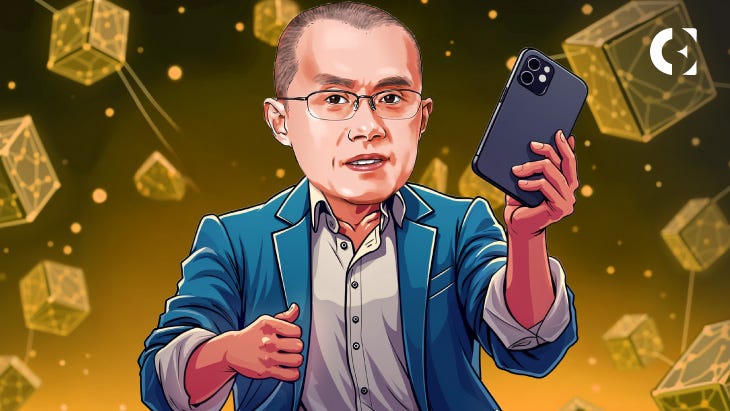
Meme coins have always been driven by attention.
A single post, exchange listing, celebrity comment, or unexpected wallet transaction can turn an unknown token into the market’s most actively traded asset within hours. But in 2026, attention alone is no longer enough.
The market has become faster, more fragmented, and increasingly cross-chain. Thousands of tokens can launch around the same narrative, while liquidity rotates between BNB Chain, Solana, Base, Robinhood Chain, Stable, and other emerging ecosystems.
That makes Changpeng “CZ” Zhao’s latest comments especially interesting.
In late July, CZ said he supports meme coins and suggested that he might buy or sell one or two tokens in the coming weeks while testing new ideas. The comment represented a shift from his earlier position that he had never personally purchased meme coins. He later bought small amounts of MUBARAK and TST in 2025.
The market immediately began asking the obvious question:
Which meme coin could CZ buy next?
But traders may be asking the wrong question.
Instead of trying to guess a specific ticker, the more useful strategy is to understand what CZ’s renewed interest says about BNB Chain, meme-coin liquidity, and the changing structure of the on-chain market.
CZ’s Comments Matter — But They Are Not a Trading Signal
CZ remains one of the most influential figures in crypto. Even casual comments from him can redirect attention toward a token, narrative, or blockchain ecosystem.
However, his latest statement did not endorse any specific project.
It also came with important context. CZ explained that Giggle Academy, the nonprofit education platform he supports, periodically converts donated tokens into BNB. He emphasized that he does not personally control the donation wallet and pushed back against traders who expected donated meme coins to be permanently held or burned.
For traders, the distinction matters.
A token sent to a public wallet is not necessarily an endorsement. A social-media interaction is not confirmation of an investment. And speculation about what a high-profile individual might buy can create temporary liquidity without creating sustainable demand.
CZ’s comments should therefore be viewed as a narrative catalyst, not a buy signal.
They may bring more traders back to BNB Chain meme coins. They may encourage creators to launch new projects. They may also increase speculative activity around tokens that appear connected to Binance, CZ, or BNB Chain — even when no official relationship exists.
That last risk is already visible. In August 2026, BNB Chain took legal action involving an allegedly unauthorized meme token created using credentials connected to a training wallet. BNB Chain said it had never endorsed the token.
In a market where perceived affiliation can move prices, verification is becoming just as important as discovery.
The Meme-Coin Market Is Moving From Simple Virality to Structured Speculation
The first generation of meme-coin trading was largely about identifying cultural momentum early.
The current market is more complex.
A successful launch now often depends on several factors working together:
Narrative strength: Is the token connected to a recognizable meme, public figure, community, event, or market theme?
Distribution quality: Is ownership reasonably distributed, or do a few connected wallets control most of the supply?
Liquidity: Can traders enter and exit without extreme slippage?
Wallet behavior: Are credible traders accumulating, or are insiders distributing into retail demand?
Launch mechanism: Was the token launched transparently through a recognized platform, or deployed through an unverified contract?
Cross-chain visibility: Is the narrative limited to one ecosystem, or spreading across several networks?
Launchpads have made token creation nearly instant. This has expanded access, but it has also increased the number of low-effort and high-risk projects.
A 2026 cross-chain research dataset covering nearly 35,000 meme coins on Ethereum, BNB Smart Chain, Solana, and Base found that 5.15% stopped trading entirely within 24 hours of launch.
Separate research examining Solana launchpads analyzed more than 40,000 migrated meme coins and over 200 million transactions. The study highlighted holding concentration, trading activity, bundle behavior, and time-series patterns as important signals for identifying risky launches.
The lesson is straightforward:
The ability to launch a token has become commoditized. The ability to evaluate one has not.
Why BNB Chain Is Returning to the Center of the Conversation
BNB Chain has several structural advantages for high-frequency on-chain trading: low transaction costs, an established retail user base, deep connections to the Binance ecosystem, and a growing collection of trading and token-launch infrastructure.
Four.meme has become one of the ecosystem’s central meme-token launch platforms, giving traders a dedicated environment for discovering and trading newly issued assets.
BNB Chain has also supported meme-coin development through trading competitions, innovation campaigns, rankings, airdrops, and liquidity programs. One BNB Chain initiative allocated permanent BNB liquidity support to leading meme coins based partly on market capitalization, price performance, and trading volume.
More importantly, the underlying network is getting faster.
According to BNB Chain’s July 2026 technical roadmap, BSC reduced block intervals to approximately 450 milliseconds, brought in-memory finality down to around 650 milliseconds, and increased benchmark throughput to roughly 5,200 transactions per second during the first half of 2026. The network’s next objective is to double throughput again as part of a broader long-term scaling plan.
These improvements are particularly relevant to meme-coin traders.
When a market moves in seconds, confirmation speed, execution quality, price updates, and resistance to malicious transaction ordering can materially affect results. Faster infrastructure does not eliminate risk, but it can create a more competitive environment for active trading.
BNB Chain is also expanding beyond meme coins. Its ecosystem is increasingly targeting stablecoins, AI agents, real-world assets, tokenized stocks, and consumer finance. That broader activity can bring additional users and capital on-chain — and some of that liquidity may eventually rotate into speculative assets.
Emerging Chains Are Creating New Meme-Coin Frontiers
BNB Chain is not operating in isolation. One of the defining features of the 2026 market is the emergence of chains built around specific types of financial activity.
Robinhood Chain: TradFi Narratives Move On-Chain
Robinhood Chain is a permissionless, Ethereum-compatible Layer 2 designed for financial services and tokenized real-world assets. Its ecosystem focuses on bringing traditional markets, crypto assets, stock tokens, and DeFi into a shared on-chain environment.
Robinhood launched the chain’s mainnet in July 2026 alongside expanded stock-token and agentic-trading initiatives.
For meme-coin traders, the opportunity is not limited to traditional animal or celebrity memes. Robinhood Chain opens the door to new categories of speculative culture based on:
Public companies and stock-market communitiesTechnology and artificial-intelligence narrativesRetail-investor cultureTokenized assets and financial eventsMemes that combine traditional markets with crypto-native trading
This creates a different kind of meme market — one shaped by the overlap between Wall Street narratives and permissionless token creation.
Stable: Stablecoin Liquidity Becomes Its Own Ecosystem
Stable is a USDT-native Layer 1 designed for payments, settlement, and stablecoin-based financial applications. The network positions itself around predictable fees and a simplified experience for moving dollar-denominated value.
By June 2026, Stable reported more than 7.18 million mainnet transactions and approximately 46,600 participating addresses.
A stablecoin-native chain may not initially appear to be a natural meme-coin market. However, speculative activity tends to follow accessible liquidity.
When users already hold the network’s main trading asset, the process of moving from payments or stablecoin yield into higher-risk tokens becomes significantly easier. Stable’s growth demonstrates how chains focused on practical financial use can still develop active retail-trading communities around newly launched assets.
The Broader Shift: Chains Are Becoming Narrative Markets
The next generation of blockchains is not competing only on transaction speed.
They are competing on identity.
BNB Chain represents retail-scale on-chain finance and Binance-connected liquidity. Robinhood Chain links tokenized markets with retail-investor culture. Stable is building around USDT-native payments. Other ecosystems continue to specialize in consumer apps, AI agents, social trading, gaming, and real-world assets.
Each chain can produce its own memes, communities, launch platforms, and speculative cycles.
The next breakout meme coin may therefore be discovered not by scanning the entire market at random, but by identifying which chain is beginning to attract a new wave of users and liquidity.
Ave.ai Insight: Follow Capital Before You Follow Hype
From Ave.ai’s perspective, the meme-coin market is increasingly a data problem.
Social sentiment can explain why a token is receiving attention. On-chain data helps traders understand what participants are actually doing with their money.
Ave.ai provides real-time market data, token discovery, smart-money tracking, wallet profiling, price alerts, address monitoring, and cross-chain trading tools. Within the BNB Chain ecosystem, traders can monitor newly launched and graduating tokens, analyze charts, follow smart-money activity, and trade Four.meme assets through an integrated workflow.
Ave.ai also provides a BSC smart-money leaderboard that ranks active traders using indicators such as profit and loss, win rate, and trading volume.
These tools support a more disciplined approach to meme-coin trading.
Instead of asking only, “Is this token trending?” traders can ask:
Which wallets entered before the price moved?Are profitable wallets holding or selling?Is volume coming from independent buyers or connected addresses?How concentrated is the token supply?Is liquidity increasing alongside attention?Are early wallets taking profits into retail demand?Is the same narrative beginning to appear on other chains?
No individual signal guarantees success. Smart-money wallets can be wrong, insiders can split holdings across addresses, and rapidly increasing volume can still be manipulated.
The objective is not to remove risk. It is to replace blind speculation with better-informed speculation.
A Practical Framework for Trading the Next Meme-Coin Rotation
As CZ’s comments redirect attention toward meme coins, traders should resist the urge to predict his next purchase based on names alone.
A stronger process begins with five steps.
1. Identify the Narrative
Understand why the token exists and why traders might care now. A recognizable meme is not enough; there must be a reason for attention to accelerate.
2. Verify the Contract and Affiliation
Confirm the correct contract address through reliable channels. Never assume that a token using a public figure’s name, company logo, or ecosystem branding is officially connected to that entity.
3. Analyze Distribution
Review top holders, deployer activity, bundled wallets, early buyers, and supply concentration. A token can appear decentralized while multiple large wallets remain controlled by the same group.
4. Track Liquidity and Smart Money
Look for increasing liquidity, genuine trading volume, and participation from wallets with verifiable histories. Pay particular attention to whether early profitable wallets are accumulating or distributing.
5. Define the Exit Before Entering
Meme coins can move faster than traders can react. Determine position size, invalidation level, profit-taking strategy, and maximum acceptable loss before placing the trade.
The goal is not to hold every token until it becomes the next global meme. The goal is to participate in asymmetric opportunities without allowing one failed trade to destroy the portfolio.
The Next Meme-Coin Cycle Will Be Cross-Chain
CZ’s renewed interest may become a powerful catalyst for BNB Chain. But the bigger story is not which token he might buy.
The bigger story is that meme-coin liquidity is becoming increasingly mobile.
Capital can move from BNB Chain to Solana, from Solana to Robinhood Chain, or from a stablecoin-focused ecosystem into a newly launched speculative market within minutes. Traders are no longer competing only to find the right token. They are competing to identify the right ecosystem before its narrative becomes obvious.
BNB Chain’s faster infrastructure and established retail base give it a strong position in this competition. Robinhood Chain introduces a new intersection between stock-market culture and permissionless finance. Stable demonstrates how stablecoin liquidity can become the foundation of an entirely new trading ecosystem.
For traders, this environment offers more opportunities — but also more noise.
The winners will not necessarily be those who react fastest to every social-media post. They will be the traders who can connect attention with liquidity, wallet behavior, token distribution, and cross-chain capital flows.
In the next phase of the meme-coin market, hype will still start the trade.
Data will determine whether it is worth taking.
CZ Is Looking at Meme Coins Again — But the Next Opportunity May Be Bigger Than One Token was originally published in Coinmonks on Medium, where people are continuing the conversation by highlighting and responding to this story.