
Open your mobile wallet.
The money you see isn’t tangible. You can’t hold it. It exists as digital entries on someone else’s servers. Yet nobody questions whether it belongs to you or whether it counts as wealth.
Then what exactly makes cryptocurrency different?
The Definition that Changes Everything…
Photo by Jen Titus on Unsplash
Islamic jurisprudence defines wealth or maal as property, meaning “anything that holds value, can be possessed, and can be stored for future use. For something to count, it needs to be recognized as valuable by the community and serve a real purpose.” Scholars further add the requirement for being storable, transferable, valuable among humans, and Shariah compliant in use.
How Other Assets Compare
Gold and silver are the traditional backbone of fiat currency. They are tangible, scarce, and universally accepted as property carrying sufficient value to exchange for goods, assets or currency. The classic definition of wealth (maal) accepts them.
Paper currency is tangible when held in your hand, but its real value is intangible or digital. The world moved off the gold standard in 1971, making paper currency simply a state issued promise recorded on ledgers without real intrinsic backing. It is further reliant on social acceptance and susceptible to global economic and geopolitical changes. Yet it is defined as wealth (maal) universally by Muslims and non Muslims alike.
The fintech platforms and digital wallets currently accessible in the country include Wise, Payoneer, JazzCash, Remitly, EasyPaisa, SadaPay and NayaPay. All of these are digital instruments, ledger entries backed by fiat currency and state regulation. Your money is neither tangible nor directly accessible. You rely on the platform to execute transactions and withdrawals. Yet it is still considered wealth (maal).
The reward points and cashbacks allotted by marketplaces are digital records of an issuer’s promise. They enjoy broad social acceptance and are readily convertible into goods and services, making them widely accepted as wealth (maal).
The Point where Scholars Disagree
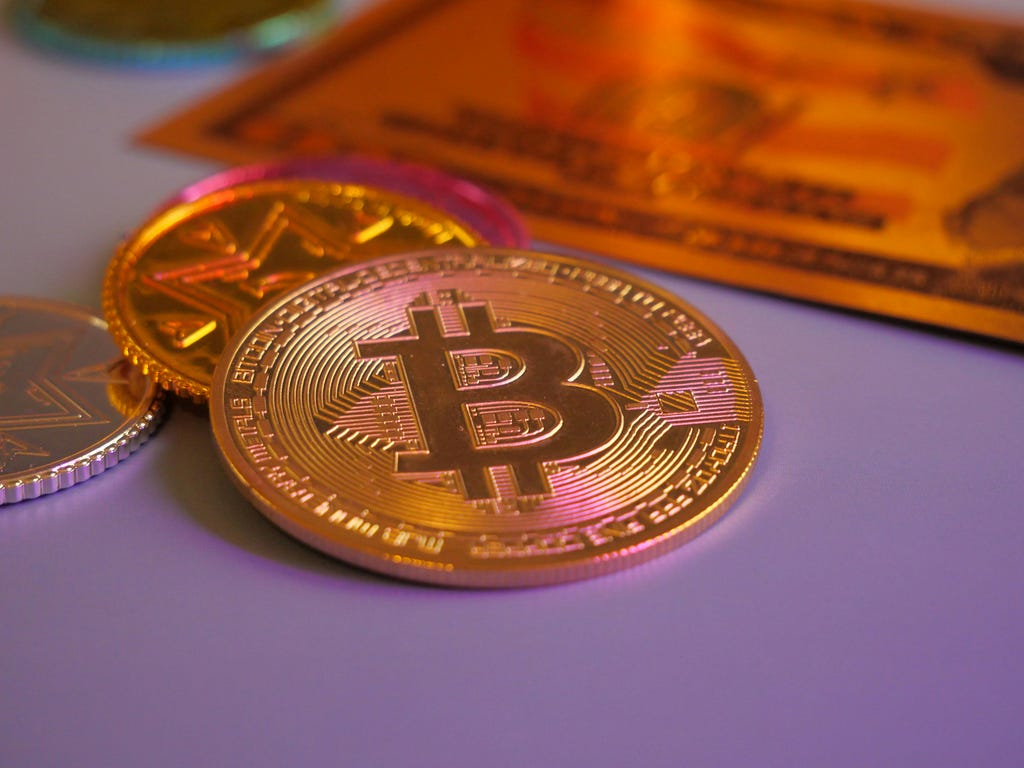
And then there is cryptocurrency, a blockchain ledger highly dependent on market demand and scarcity. Yet Islamic scholars across Pakistan and other countries continue to debate whether it can be considered maal.
Photo by Aleksandar Popovski on Unsplash
The Virtual Assets Act 2026, passed by the Senate on February 27, the National Assembly on March 3, and signed by President Zardari, mandates a Shariah Advisory Committee as part of PVARA’s structure. Licensed exchanges must ensure their services comply with Islamic finance principles under the guidance of this committee. Pakistan is being positioned as one of the first countries to formally integrate Islamic finance principles into crypto regulation.
Binance and HTX have already been given NOCs by the government. Our military forces are well aligned on this agenda. In fiscal year 2025, the government allocated 2,000 megawatts for Bitcoin mining. Phase 1 licensing for large scale miners completed in the later part of the same year, and PVARA confirmed that operations would begin soon.
Then Comes a Religious Challenge
One man allegedly bought an online course and books to understand crypto trading, and then checked the religious ruling on this. That one single inquiry resulted in a mass ruling over cryptocurrency and digital assets.
While this ruling is likely to have an impact on the religious segment, there are others who will go on without caring. The real question is what it does to an environment already full of ambiguity and unanswered legal questions.
Pakistan is not the first Muslim country to confront this question. The answers elsewhere have been far from uniform.
How Other Muslim Jurisdictions View It
Photo by Harry Singh on Unsplash
The Perlis State Fatwa Committee in Malaysia issued a fatwa in 2019 classifying Bitcoin as mubah, meaning permissible. The Securities Commission Malaysia’s Shariah Advisory Council has accepted Bitcoin, Ethereum, Ripple, Litecoin and eleven other cryptocurrencies as Shariah compliant since 2020. In 2021, the Selangor State Fatwa Committee provided a legal framework allowing digital currency as a medium of exchange, remittance, store of value and tradeable asset through licensed platforms.
The Federal Territories Mufti later ruled that cryptocurrency can even be used as the bridal mahr, the obligatory gift in an Islamic marriage, because it is a tradeable commodity fitting the definition of an asset. Malaysian scholars distinguish between two categories of digital assets. Technology based cryptocurrencies with no underlying asset are treated as urudh, or trade goods, exempt from currency exchange rules while still recognized as property. Asset backed digital currencies such as those linked to gold, silver or fiat are treated as currency and subject to the corresponding exchange rules.In October 2025, Malaysia’s Labuan Financial Services Authority granted Fasset a provisional licence to operate as the world’s first stablecoin powered Islamic digital bank.
The UAE and Bahrain regulate cryptocurrency within established Shariah compliant frameworks supported by licensing, governance and Shariah audits. South Africa’s Darul Uloom Zakariyya considers Bitcoin to fulfil the conditions of maal and therefore permissible to trade.
On the flip side, Egypt’s former Grand Mufti Sheikh Shawki Allam declared cryptocurrency impermissible in 2018, and Indonesia’s National Ulema Council followed in 2021, citing fraud risks, volatility, criminal misuse and the absence of regulation. Not because it failed the definition of maal.
The Practical Problem
There are many freelancers and legally registered businesses that use cryptocurrency out of necessity, not out of choice.
Pakistan does not have direct access to PayPal. Wise has stopped opening new accounts for Pakistan. The digital payment platforms available locally do not support outward international remittances, while banks impose limitations on recipients and transaction limits. In this environment, crypto exchanges offer a practical alternative for international payments.
Amid the religious ruling and continuing ambiguity, this option is likely to become more constrained. The economic impact may not be visible immediately. It will surface much later, when it is already too late to course correct.
A Possible Middleground
The Malaysian approach offers a possible middle ground.
Treat unbacked cryptocurrency as urudh, or trade goods, rather than currency. Allow it to be recognized as property, traded, taxed and regulated without requiring it to function as state money. It could allow regulation and Shariah compliance to evolve together rather than in opposition.
Photo by Niklas Hamann on Unsplash
A Question Worth Asking
I remain optimistic about futuristic technology and cryptocurrency’s long term future. What interests me more, however, is how institutions define reality and whether that reality is backed by consistent reasoning.
If paper currency, digital wallets and reward points all qualify as wealth (maal) despite existing largely as ledger entries and institutional promises, then the real debate is no longer whether digital assets exist. It is whether the principles used to define wealth are being applied consistently.
Technology will continue to evolve. The definitions we use to understand it may need to evolve with it as well.
Originally published at https://samarikram.substack.com on July 29, 2026.
Is Your Mobile Wallet Balance Wealth? Is it permissible? was originally published in Coinmonks on Medium, where people are continuing the conversation by highlighting and responding to this story.