
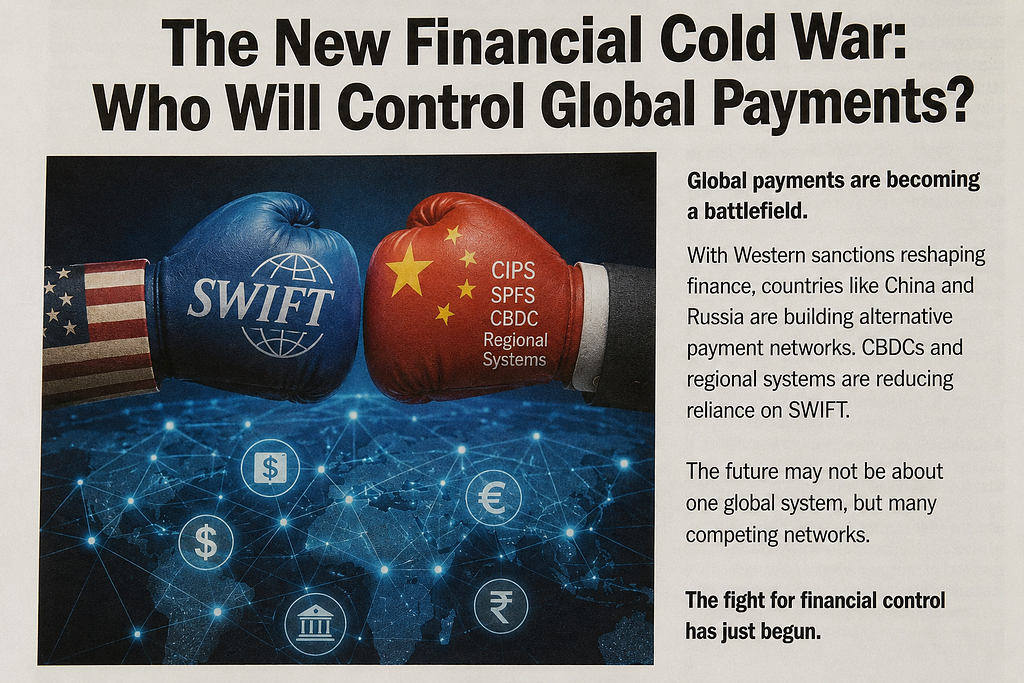
As sanctions reshape global finance, nations are building new payment rails, digital currencies, and regional networks that could challenge SWIFT’s decades-long dominance.
Half a century ago, the world’s money networks began leaning on a single backbone SWIFT stepped into that role. Ever since, banks everywhere have funneled transactions through this quiet engine humming beneath finance. Time passed, yet its presence stayed steady, woven deep into how nations move value. Not loud, not flashy, just there connecting ledgers, enabling trade. Through shifts and shocks, it held. One thread, stretched across decades, still ties the system together.
Across borders, every single day, trillions shift through SWIFT, linking over 11,000 banks globally. Behind the scenes, it quietly powers how nations trade, lend, and exchange value.
Yet a quiet shift stirs just out of sight.
Out there, governments team up with central banks to shape new paths. Take China’s payment network CIPS — for moving money across borders without old systems. More nations now explore digital cash backed by their own central banks. These steps sidestep long-standing Western-led finance setups. Change is slow, yet clear in its direction.
Far off? Not anymore — alternatives are already on their way.
Is it possible that global financial influence is splitting into separate parts now.
Payments Turned Into Political Tools
Years went by before anyone questioned how money moved across borders. The system just worked, like plumbing beneath the surface of trade.
Faster than a shift in wind, the view flipped once cash penalties started shaping global talks. The moment money got locked up, everything felt different overnight.
Out of nowhere, some nations saw their money pathways shut down when tensions rose. When borders tighten, those relying on outside networks often find themselves stuck cut off without warning. A single decision elsewhere might leave whole economies scrambling. Power over payments means power over survival, it turns out. Control shifts fast when trust vanishes.
Because of this shift, countries see payment systems less as gadgets, more like vital public foundations. Instead of just tech tools, they’re viewed on par with roads or power grids. Now governments guard them like borders or water supplies. What once seemed like background code feels closer to defense planning. These networks shape how money moves, who controls it, when things break. Their role has quietly grown into something harder to replace. Losing them would ripple through daily life fast. So their status changed without fanfare steady, serious, central.
Faster money links now matter just like power grids, phone lines, or strong armies do.
The Rise of Alternative Payment Networks
Now more than ever, people want control over their money. This shift pushes regions to build payment systems that serve local needs. One result? Homegrown networks replacing distant solutions. What drives it? A mix of pride, security concerns, and practical access. Each country shapes its own path slowly detaching from global giants. Independence isn’t just political it shows up in how payments move. Local tech rises when trust in outside options fades.
Little by little, China’s CIPS stretches further overseas, handling yuan payments across borders while backing Beijing’s push to shift trade finance worldwide. Outward steps grow firmer each year, linking banks beyond Asia into a system built for one currency’s quiet rise.
Now running on homegrown tech, Russia built a local payment network after facing message blockages abroad. Payment traffic once rerouted by penalties now flows through internal channels forged during pressure times. Cut off from global financial signals, Moscow answered with a system of its own design. Sanctions pushed the shift — response came in code and circuits made inland.
Out of step with old systems, nations in Asia, the Middle East, Africa, and parts of Latin America now test new ways to pay each other directly. While global banks watch quietly, these regions shift toward deals without relying on standard financial pipelines. Some agreements grow slowly, others take root fast yet all aim to move money differently than before.
Most of these efforts aren’t meant to swap out SWIFT right away. They work more like safety nets. Nations want options.
When it comes to world money systems, choices can become power. A single path limits influence flexibility shifts the balance. Holding alternatives quietly shapes outcomes behind closed doors. Power hides not in what you have but how many ways you can act. Leverage grows where decisions aren’t forced.
CBDCs Could Change How Money Works?
Though other payment systems matter, central bank digital money might turn out to be what changes worldwide transactions the most. Yet again, it’s not just about new tech it’s where trust meets speed in ways few saw coming.
Not like crypto, a CBDC comes straight from the government built as digital cash tied to a country’s money. It moves differently through systems, yet stays locked to real-world value by design.
What matters most is the way they connect beyond boundaries.
Picture global companies paying each other instantly, linked through digital money that skips traditional banking chains. Different nations’ systems talk straight to one another. No long lines of middlemen slow things down. Transactions clear fast, peer to peer. Money moves like messages now. Trust comes from networks, not institutions. Each country’s currency connects yet stays distinct. The path between them is open, constant. Payments happen in steps that vanish almost as they begin.
Faster processing might turn lengthy waits into moments. Seconds may replace what once took whole business days.
Fees tied to trades might shrink a lot.
Faster movement across borders might just redefine how goods flow worldwide. Efficiency gains may quietly reshape global commerce in ways few expect.
Right now, some major banks are trying out small tests to see if this idea could work. They’re running trials to check how it might play out in real life.
One way things might shift: CBDCs changing how cross-border money flows work. A different path opens if they take hold — rewriting payment structures quietly. Behind the scenes, movement gains ground through digital cash experiments. Not noise, but steady steps alter global transfer systems. Shifts emerge where code meets currency across borders.
The Growing Shift Toward Regional Financial Systems
Faster connections across countries built a network where money traveled along fixed main routes. A few big hubs handled most of the movement, shaping how value shifted worldwide.
Phase two could surprise you. What comes now might not match the past. Expect shifts nobody saw coming.
Instead of a single powerful system, different areas could link up through several smaller networks.
Over there in Asia, a payment route could work unlike its European counterpart. Sometimes ways money moves shift across regions. One place handles transfers not quite like another. Across continents, systems for sending cash might contrast sharply. The Middle East may develop specialized settlement networks for energy trade.
African nations may increasingly leverage regional payment systems to support intra-continental commerce.
Picture scattered routes linking local zones rather than one endless thruway stretching across continents. This change might still leave worldwide commerce untouched. Money might move differently because of it.
Businesses and Fintechs Need to Notice
Payment systems often sit unnoticed in the background, treated like unseen machinery. Some companies fail to see their role beyond routine tasks. Behind closed doors, they handle transactions without drawing attention. These setups rarely get spotlight in boardroom talks. Quietly running, they support daily operations without fanfare.
Soon, that way of thinking could feel old-fashioned.
Whatever sticks around past ten years probably gets what’s happening with money systems worldwide.
Faster ways to move money across borders now give companies an edge. Digital cash is changing how people pay. Finance tucked into apps works quietly behind the scenes. Rules that keep things legal matter more every day. Moving funds through different systems at once turns out to be useful. Each of these shifts helps businesses stand apart.
Fintechs need room to adapt so do payment firms, digital banks, even large international businesses. Flexibility matters more now than ever before.
Soon, linking to various payment systems could outweigh depending on just one. What counts might shift from loyalty to flexibility across platforms. Not tied down by a lone network, broader access begins to take priority. Instead of putting all weight behind a single option, spreading connections gains importance. As things change, working within many ecosystems becomes the steadier path.
Businesses built to move money through varied systems will shape what comes next. Shifting between currencies matters just as much as navigating diverse rules. Those able to adapt across borders, using different pathways, stand where change is happening. Flexibility in finance isn’t rare it’s required. Operating widely means working within uneven landscapes without missing pace.
Swift s influence may be fading?
Even with more talk about other options, claims that SWIFT is fading tend to be overstated.
Still today, SWIFT holds a quiet grip on how money moves worldwide.
One thing’s certain its web of connections runs deep. Trust builds slowly among big players, that much is clear. Rules favor it now, after years of grinding through approvals. Getting everywhere took time, something newcomers won’t fake fast.
Far from standing still, SWIFT pours effort into updating its systems, linking with digital assets, also testing central bank digital currencies — just to stay in step with what’s coming in global finance.
What happens probably won’t be an abrupt swap.
It is gradual diversification.
Even if newer payment paths rise, SWIFT could still hold its ground. Alongside digital cash and local clearing setups, it might keep playing a key role. Not replaced just sharing space. Where tech pushes forward, old structures sometimes adapt instead of falling. New layers form without wiping out what came before. Its place isn’t guaranteed but persistence has weight.
Coexistence matters more than ever, even if nobody talks about it that way. What comes next isn’t about swapping one thing for another.
Right now, change goes beyond just new gadgets. It touches how things work behind the scenes.
Money power shifts hands. Power moves where cash flows shift. Influence changes direction when funds reroute. Control follows the new flow of coins. Where money goes, sway tags along. Wealth travel redirects who holds weight.
Money flows matter more now, so nations push for tighter oversight. Settlements need speed, which central banks are chasing through upgrades. Cross-border payments slow business down that is why firms demand quicker, less expensive options.
What really drives them forward? That single query shapes everything else What power steers the paths where worldwide trade moves?
Years ahead, how things turn out could shift who trades what across borders. Power lines between nations might redraw themselves slowly. New ways to handle money may grow from this moment. What happens now holds weight beyond today.
Change isn’t happening fast enough to leave SWIFT behind just it’s shaping different paths forward.
One thing stands out now, having options across different payment systems could matter more than anything else. A shift is happening where picking your network might just be the key advantage. Right in the middle of change, flexibility finds its worth.
Not every system fits all needs, so switching freely begins to stand above the rest. Value hides not in one single path but in having paths at all.
The New Financial Cold War Over Global Payments? was originally published in Coinmonks on Medium, where people are continuing the conversation by highlighting and responding to this story.