
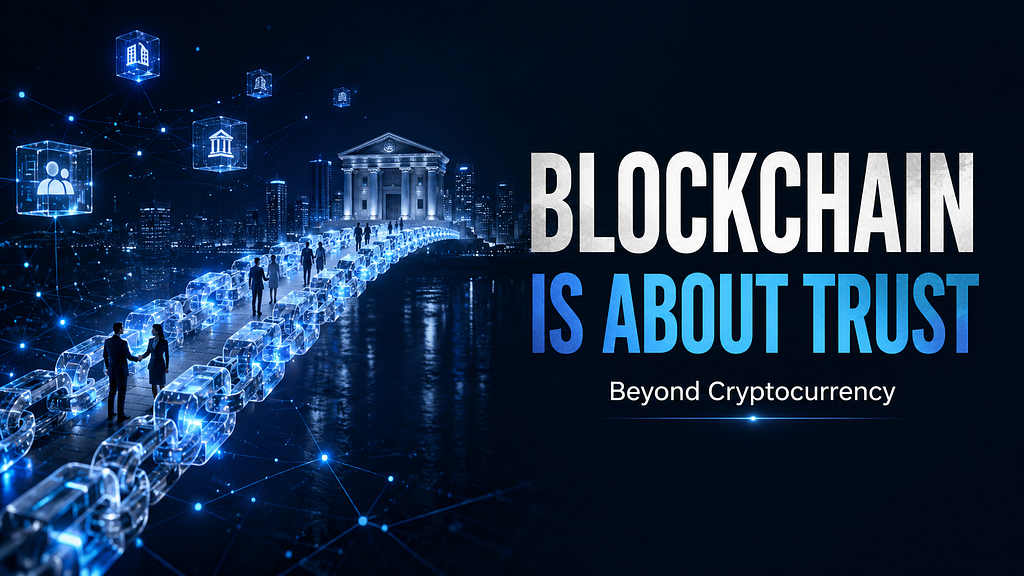
When everything runs on screens, blockchain asks why power should sit in one place. Trust might grow sideways now.
Nowhere is the connection stronger than today. Still, secrets move at light speed because offices stretch beyond countries while voices join through walls that aren’t there any more. Even so, faith between people hasn’t caught up.
Computers handling money or data usually need helpers — banks, officials, agencies to confirm who owns what or whether a deal went through. These middlemen do useful work, yet bring extra steps, fees, plus risks when things break down.
Image Generated by chatgpt
Here’s when blockchain starts to matter.
Even if people mostly link it to crypto, blockchain really focuses on building confidence online. Different users can exchange data securely, checking its truth together instead of relying solely on one central power.
The Problem With Believing Online
A house changes hands. Before it does, several people need to check who owns it, handle paperwork, look over files — only then moves forward. That happens since no single group holds the full confidence of everyone involved.
From the start, blockchain offers a single version of truth everyone sees. No longer stuck with mismatched records, people rely on one system they all check together. It runs openly, so each person confirms changes without needing middlemen. Shared access means updates appear instantly for every participant involved.
Just cut the struggle, boost trust along the way.
What if trust lived inside the code itself? That is what blockchain quietly proposes.
What Blockchain Means Without the Jargon
Blockchain is essentially a digital record-keeping system.
Across a network, blockchain keeps data instead of leaving it in one company’s hands. After verification locks the information in place, altering it feels nearly impossible.
A bit like a journal everyone checks, yet nobody changes behind closed doors.
Confidence grows when collaboration happens under clear rules. Resilience shows up where accountability is built into the design.
Lessons Beyond Technology
Out of code comes a set of ideas useful elsewhere. Chains of trust show up where you might not expect.
Transparency Creates Confidence
When folks see how choices happen, faith in the system grows. Knowing the why behind outcomes clears fog, builds stronger connections between people.
Verification Strengthens Trust
Truth matters more when it can be checked. Blockchain skips guesswork by building on proof instead of belief.
Decentralisation Improves Resilience
When many people take part, flexibility usually grows compared to setups relying on just one leader.
Benefits and Challenges
Out of nowhere, blockchain might just shift how supply chains operate. Records that stay clear and trustworthy? That could mean fewer hiccups across hospitals managing patient data. Think about diplomas sitting safe on a digital ledger schools and learners both benefit. Financial systems may run smoother when built on open yet secure logs. Efficiency sneaks in where confusion once lived. Innovation tends to follow such changes.
Still, blockchains have flaws. Problems like speed limits stick around even as rules tighten. Power use climbs while people hesitate to join in. Tools by themselves fix nothing real unless built with care. Only smart planning makes any difference.
Leading Change and Building Tomorrow
Out of nowhere, blockchain’s growth hints at changing views on trust within companies. Instead of top-down oversight, new solutions now build responsibility into their design often skipping central authority altogether.
When change speeds up, those in charge find themselves caught between machines and people. Growth that lasts leans less on new gadgets, more on whether folks believe what they hear.
Looking Ahead
Out of the spotlight now, blockchain settles into real tasks. These days, focus lands on useful roles ones that stick around.
What matters most isn’t about shifting the flow of cash, rather it reshapes how confidence travels between people. Across banking, medical records, schools, or running cities, this tech pushes a fresh look at proof and access to data.
Truth feels harder to find now. Still, blockchain pushes us to ask better questions. Who gets to decide what’s real? Maybe fairness starts with visibility. Systems could answer to everyone, if built right.
What comes next depends on how we answer them. Still, their weight lingers in every choice made online.
Join the Conversation
Thoughts on blockchain shaping trust? Drop them below. Curious about tech shifts. Hit follow for fresh takes. Years ahead could look different because of today’s moves.
Curious minds who write, dig into ideas, or explore tech can join in too bringing fresh angles keeps things moving forward.
Blockchain Was Never Only About Money But About Trust was originally published in Coinmonks on Medium, where people are continuing the conversation by highlighting and responding to this story.