
Technology is really powerful. It affects parts of our lives. It changes how we work, talk to each other, travel, learn and even how governments work. This is because every industry today uses systems that are powered by software, cloud infrastructure, artificial intelligence, data networks and online platforms.
As we use digital systems Europe is asking a tough question: how much control does it really have over the technology it uses every day?
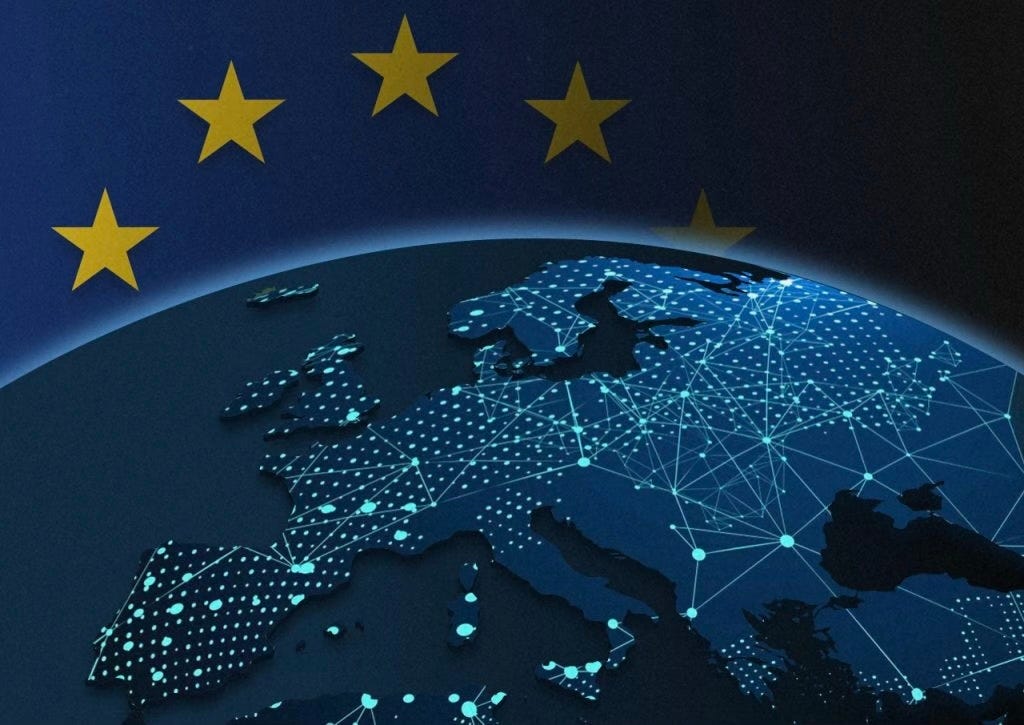
This is where the idea of sovereignty comes in. Tech sovereignty is not a term anymore. It’s a talk about Europe’s future, its economic independence, its cybersecurity and even its democratic values. Tech sovereignty means a country or region has control over its own technological infrastructure, data, innovation and digital systems without relying too much on other countries.
For Europe this conversation is important because most of the technology people use daily comes from outside the continent. American tech companies are big in areas like cloud computing, social media, online advertising and operating systems. China is also growing fast in telecommunications, manufacturing and digital infrastructure.
Europe has economies, talented researchers and great universities. It still depends heavily on technology created elsewhere. This dependence raises concerns not about competition but also about privacy, security, economic stability and long-term inter-independence.
The challenge Europe faces today is not about creating startups or building better apps. It’s about deciding whether the continent can stay competitive in a world where technology is becoming more and more important.
Why Tech Sovereignty Has Become Important
Ten years ago technology was seen as a business sector. Today it’s seen as infrastructure. Digital systems are now deeply connected to banking, healthcare, defense, transportation, communication, education and energy networks.
If these systems are controlled by companies or governments from other countries, then they can become vulnerable in ways that go far beyond economics.
Europe has started to realize that depending on technology from countries can create risks such as losing control over data, depending much on foreign companies, being vulnerable to cyber attacks, having limited say over how ecosystems revolves.
These issues became more visible during global supply chain disruptions, cyber attacks and rising tensions between super powers. Technology is no longer about convenience. It’s now connected to a country’s sovereignty.
Europe’s Dependence on Foreign Tech Companies
One of the concerns in Europe is how much the continent relies on technology from other countries. Most Europeans use services created by companies every day. Google is big in search engines and online advertising. Apple and Google control mobile operating systems. Amazon is leading in cloud computing infrastructure. Meta owns media platforms. Microsoft powers business software and cloud services used by governments and companies across Europe. These companies have become a part of Europe’s economy and daily life.
While these technologies offer innovation and convenience they also create dependence. Europe does not fully control the infrastructure behind many of its digital systems. This raises some questions.
Who controls data? Where is data stored? Which laws apply to it? What happens if tensions between countries increase? How influential do foreign companies have over Europe’s digital future?
These concerns are not just theoretical anymore. Data has become one of the valuable resources in the modern economy. Companies that control data often control markets, advertising systems, consumer behavior and digital ecosystems.
Europe is worried that depending much on external platforms could weaken its long-term economic and political position.
Privacy and Data Protection Concerns
Privacy has always been an issue in Europe. Compared to other regions, Europeans generally care more about personal privacy and digital rights. This is why the European Union introduced GDPR, the General Data Protection Regulation. GDPR became one of the world’s privacy laws and forced companies to be more transparent about collecting data, getting user consent, storing information, tracking practices and sharing data.
The regulation changed how companies around the world handle user data because businesses operating in Europe had to follow standards. For Europe GDPR was more than a regulation. It was a statement that digital rights matter. However regulation alone cannot solve the issue of dependence. With privacy laws, Europe still relies heavily on foreign platforms and infrastructure. This is why the conversation around tech sovereignty keeps growing.
The Economic Side of Tech Sovereignty
Technology is now one of the world’s economic sectors. The valuable companies globally are often technology companies and many of them are based outside Europe. This creates an imbalance. When European consumers and businesses use platforms, most of the profit leaves the region. At the same time, local startups often struggled to compete against big global corporations with a lot of financial resources.
Europe has talented entrepreneurs and researchers.. Scaling technology companies across Europe can be difficult because markets are fragmented, regulations vary between countries, investment ecosystems are smaller and venture capital is less available than in the US.
As a result many promising European startups struggle to grow or get acquired by foreign companies. This limits Europe’s ability to create technology firms of its own.
Can Europe Build Its Own Tech Giants?
This question is at the center of the tech sovereignty debate. Europe has educational institutions, advanced industrial sectors and highly skilled workers. Countries like Germany, France, the Netherlands, Sweden and Finland have produced technology companies and engineering talents.
However Europe still lacks technology giants like Google, Amazon, Apple, Microsoft, Alibaba and Tencent. Part of the challenge comes from Europe’s structure. The European Union is made up of countries with languages, legal systems, business environments and tax rules.
While the EU works towards creating a digital market, fragmentation makes scaling companies harder than in bigger unified economies like the US or China.
Europe is now trying to solve this through policies that encourage investing in startups, cross-border digital services, research funding, innovation partnerships and infrastructure development. Whether these efforts will produce tech giants remains to be seen. Europe is increasingly recognizing that building stronger domestic technology industries is necessary..
Artificial Intelligence and Europe’s Position
Artificial intelligence is becoming one of the important technologies of our time. AI is expected to change industries such as healthcare, finance, manufacturing, education, defense and transportation. The countries and companies leading AI development may have geopolitical advantages in the future. Europe wants to stay competitive in AI. It also wants AI development to follow standards.
Unlike some regions that prioritize growth above everything, Europe often focuses on transparency, accountability, human rights, ethical AI systems and privacy protection. This creates both strengths and challenges.
On one hand Europe’s ethical approach may increase trust in AI technologies. On the other hand, too much regulation could slow innovation and make it harder for European companies to compete globally. Finding the balance between innovation and regulation will likely shape Europe’s AI future.
The Semiconductor Problem
Semiconductors may not be visible to consumers. They are essential to modern life. These tiny chips power smartphones, computers, cars, equipment, military systems and machinery.
Recent supply chain disruptions showed how dependent Europe is on semiconductor production outside the region. Much of the world’s chip manufacturing is concentrated in Taiwan, South Korea, China and the US. This creates vulnerabilities because disruptions in supply chains can impact industries. Europe now sees semiconductor independence as a priority. The European Chips Act was introduced to strengthen chip production, improve research capabilities and reduce dependence on suppliers. This is not about economics. It’s about ensuring that Europe can maintain access to technologies for modern society.
Cloud Computing and Digital Infrastructure
Cloud computing is another area where Europe wants independence. Currently many European businesses and governments rely on cloud services provided by Amazon Web Services, Microsoft Azure and Google Cloud. These systems power a part of Europe’s economy. While these services are highly advanced, relying heavily on foreign cloud providers creates concerns regarding data sovereignty, security, jurisdiction and strategic dependency.
Europe has launched initiatives, like GAIA-X to encourage independent cloud infrastructure built around European governance standards. As more businesses move operations online, cloud infrastructure will only become more important in the future.
Cybersecurity Is Now a National Priority
Cybersecurity is no longer an issue for tech experts. It’s a matter of security for Europe. As dependence increases, the risk of cyber attacks grows too. Governments, businesses and institutions all face threats that can disrupt operations and weaken trust in systems. This is why cybersecurity has become a part of Europe’s sovereignty strategy.
Education and Digital Skills Matter More Than Ever
The people who work with technology are what matter the most. Europe will only be competitive in the future if it can develop people like engineers, AI researchers, software developers, cybersecurity experts and digital entrepreneurs.
This means Europe needs to invest in education and make sure people have the skills they need. As technology keeps changing the way we work people will need to have skills to do any job. Europe’s universities are some of its assets but to stay competitive Europe will need to keep investing in people for a long time.
Can Europe Actually Bridge the Gap?
The answer is not easy to find. Europe will probably not be able to replace the United States or China as the leader in technology. The reason is that the United States and China have a lot of money and power. Europe does not need to be just like the United States or China.
Instead Europe can focus on building a technology system that is centered around innovation, privacy protection, values, sustainable development and digital rights. This approach could become one of Europe’s strengths. People and governments around the world are getting more concerned about data privacy, AI ethics, monopoly power and digital surveillance. Europe’s focus on regulation and responsible innovation may make it different in the global technology race.
Final Thoughts
The conversation about tech sovereignty is really about what Europe’s place will be in a world that is controlled by systems. Technology now affects economies, politics and national security. It also affects what people think is important. Countries that do not build capabilities may have a hard time being independent in the future.
Europe faces challenges. It relies much on technology from countries. It has a time making big tech companies. It also has to compete with companies from other countries. At the same time Europe has some great stuff too. It has schools and advanced industries. It excels in prudentials rules and human rights advocacy.
Whether Europe can actually bridge the technology gap is entitled to any benefit of the doubt. One thing is clear: Europe needs to work towards tech sovereignty. It is necessary for Europe’s digital future. Europe needs to focus on sovereignty to be successful. Europe needs tech sovereignty to compete. Europe’s future depends on it.
Tech Sovereignty: Can Europe Bridge the Gap? was originally published in Coinmonks on Medium, where people are continuing the conversation by highlighting and responding to this story.