
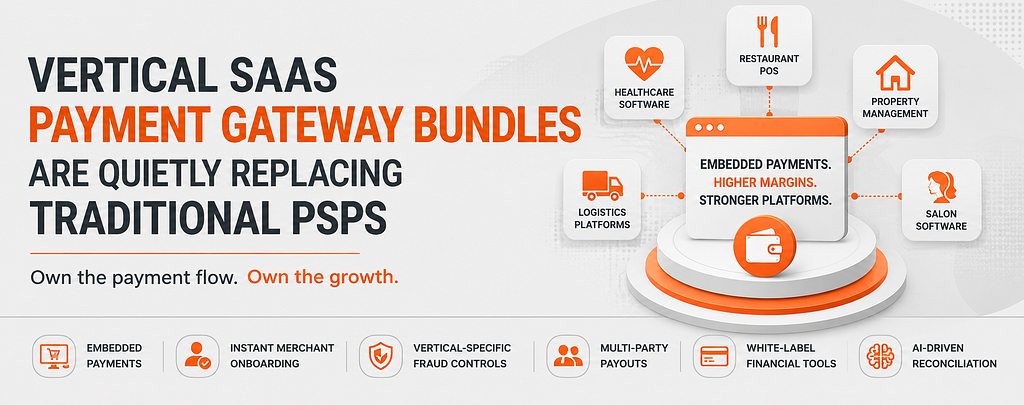
Why Industry-Specific Payment Infrastructure Is Becoming the New Growth Engine for Digital Platforms
The payments industry is evolving faster than ever, but the biggest transformation is not happening inside traditional banking. It is happening inside software platforms built for specific industries. From healthcare and education to logistics, hospitality, legal services, and e-commerce, vertical SaaS platforms are rapidly embedding payment infrastructure directly into their products.
ChatGPT Generated Image
This shift has created a new category of fintech innovation known as vertical SaaS payment gateway bundles. Instead of offering standalone payment processing, these platforms combine software, payments, compliance, analytics, invoicing, subscription billing, and financial automation into a single ecosystem tailored for one industry.
For modern businesses, this model is no longer optional. It is becoming the standard.
The demand for embedded finance, faster onboarding, personalized user experiences, and industry-specific workflows is pushing SaaS providers to rethink how they monetize and scale. Payment gateway bundles are now one of the strongest revenue drivers for SaaS companies because they create recurring transaction-based income while increasing customer retention.
More importantly, they solve real operational problems.
A restaurant platform needs table management, QR payments, split billing, and inventory synchronization. A healthcare SaaS provider needs recurring billing, insurance-related workflows, compliance management, and secure patient payment systems. A logistics company requires automated settlements, driver payouts, escrow systems, and real-time transaction visibility.
A generic payment processor cannot fully solve these challenges.
That is why vertical SaaS payment gateway bundles are gaining momentum across global markets.
What Are Vertical SaaS Payment Gateway Bundles?
A vertical SaaS payment gateway bundle is a combination of industry-specific software and integrated financial infrastructure designed for a particular market segment.
Unlike generic payment gateways that simply process transactions, these bundles include:
Embedded payment processingSubscription billingAutomated invoicingVendor or partner payoutsCompliance managementFraud monitoringFinancial reportingCustomer analyticsBanking integrationsMulti-currency settlementTax automationWallet infrastructure
The key difference is specialization.
Instead of building a product for everyone, vertical SaaS providers focus deeply on one industry and optimize the payment experience around its operational realities.
This specialization creates stronger customer loyalty because businesses prefer solutions that understand their workflows.
For example:
A salon management platform can offer appointment scheduling with integrated payments and tip distribution.A real estate SaaS product can automate escrow payments and rental collections.A fitness platform can bundle memberships, recurring billing, and trainer payouts.An education platform can support installment payments, fee reminders, and parent billing dashboards.
The result is a seamless experience where payments become invisible inside the software workflow.
Why This Model Is Growing So Fast
Several market forces are accelerating the adoption of vertical SaaS payment gateway bundles.
1. Businesses Want Fewer Vendors
Companies are tired of managing disconnected systems.
Using separate vendors for accounting, payment processing, invoicing, fraud prevention, reconciliation, and reporting increases complexity and operational costs. Vertical SaaS platforms simplify operations by consolidating these functions into one platform.
This reduces:
Technical integration challengesVendor management overheadData inconsistenciesOperational inefficienciesCustomer support dependency
Businesses prefer unified ecosystems because they save time and improve visibility.
2. Embedded Finance Is Becoming Mainstream
Embedded finance has transformed how companies deliver financial services.
Instead of redirecting users to external payment providers, SaaS platforms now integrate financial products directly into their applications. This creates a smoother customer experience and improves conversion rates.
Embedded finance capabilities now include:
PaymentsLendingInsuranceWalletsCard issuingCross-border settlementBuy now pay later services
Vertical SaaS companies that control payment flows gain stronger customer relationships and higher lifetime value.
3. Transaction Revenue Is Highly Scalable
Traditional SaaS businesses rely heavily on subscription revenue.
However, payment gateway bundles create an additional revenue stream through transaction fees. Even a small percentage of processed volume can become a major profit center when scaled across thousands of users.
This creates:
Recurring transaction incomeBetter unit economicsIncreased platform valuationHigher customer retentionMore predictable revenue growth
Many SaaS founders now view payments as a core business strategy rather than an add-on feature.
4. Industry-Specific Workflows Require Customization
Different industries have unique financial processes.
Generic payment solutions often fail because they do not address:
Compliance requirementsSettlement timelinesApproval hierarchiesMulti-party paymentsRefund structuresTax obligationsLocal regulatory standards
Vertical SaaS platforms build payment logic specifically for these workflows, giving them a competitive advantage.
Key Industries Driving Adoption
Healthcare
Healthcare platforms increasingly integrate:
Patient billingInsurance claim supportSecure payment collectionInstallment plansSubscription wellness services
Compliance and data security are critical in this sector, making specialized payment infrastructure essential.
Education
Education technology platforms use bundled payment systems for:
Tuition collectionCourse subscriptionsParent billingScholarship managementInstallment-based fee payments
Integrated payment systems improve administrative efficiency and student experience.
Hospitality
Hotels, restaurants, and travel platforms benefit from:
Contactless paymentsDynamic pricing integrationLoyalty programsMulti-currency transactionsAutomated refunds
Hospitality businesses prioritize speed and customer convenience.
Logistics and Mobility
Mobility and logistics platforms require:
Driver payoutsFleet settlementsFuel card systemsReal-time reconciliationEscrow payment capabilities
This industry depends heavily on fast and transparent financial operations.
Professional Services
Legal firms, consultants, and accounting platforms increasingly adopt integrated financial systems for:
Retainer paymentsAutomated invoicingSubscription billingTime-based billing automationClient payment tracking
This reduces administrative work while improving cash flow.
The Technology Behind Payment Gateway Bundles
The rise of APIs and modular fintech infrastructure has made vertical SaaS payment bundles easier to build.
Modern platforms now leverage:
API-first payment gatewaysBanking-as-a-Service infrastructureCard-as-a-Service platformsCloud-native compliance toolsAI-based fraud detectionOpen banking integrationsDigital identity verification
This modular architecture allows SaaS providers to launch financial products faster without building an entire banking infrastructure from scratch.
Companies can now integrate:
Virtual accountsWhite-label walletsPayment routingCrypto payment supportMulti-bank connectivityInternational remittance features
The flexibility of modern fintech infrastructure has dramatically lowered entry barriers.
Compliance Is No Longer Optional
As payment ecosystems expand, regulatory compliance becomes increasingly important.
Vertical SaaS providers handling financial transactions must prioritize:
PCI DSS complianceGDPR data protectionAML and KYC proceduresTransaction monitoringFraud preventionSecure cloud infrastructure
Regulators worldwide are increasing scrutiny around payment processing and customer data management.
Businesses that ignore compliance risk:
Financial penaltiesReputational damagePlatform restrictionsCustomer trust lossLegal exposure
Modern payment gateway bundles are expected to include compliance as a built-in capability rather than a separate process.
The Role of AI in Vertical Payment Ecosystems
Artificial intelligence is becoming a major differentiator in payment infrastructure.
AI-powered systems now help vertical SaaS platforms:
Detect fraud patternsPredict payment failuresOptimize routing decisionsPersonalize financial recommendationsAutomate support operationsImprove risk scoring
AI-driven automation improves operational efficiency while reducing transaction friction.
For SaaS providers, this means:
Faster approvalsLower fraud lossesBetter customer insightsSmarter financial forecastingImproved customer retention
The combination of AI and embedded finance is expected to shape the next phase of fintech innovation.
Challenges Facing Vertical SaaS Payment Bundles
Despite strong growth, this model also presents challenges.
Regulatory Complexity
Financial regulations vary across jurisdictions.
SaaS companies expanding globally must navigate:
Licensing requirementsCross-border transaction lawsTax obligationsData localization rulesRegional compliance standards
This requires strategic partnerships and strong legal infrastructure.
Infrastructure Reliability
Payment downtime directly impacts customer trust.
Platforms must ensure:
High uptimeSecure transaction handlingReal-time monitoringDisaster recovery systemsScalable cloud architecture
Reliability becomes a critical competitive advantage.
Customer Education
Some businesses still hesitate to adopt integrated financial systems due to:
Migration concernsData security fearsOperational disruption risksInternal resistance to change
SaaS providers must clearly communicate the operational and financial benefits.
Why Investors Are Paying Attention
Investors are increasingly attracted to vertical SaaS payment businesses because they combine:
Software scalabilityFintech revenue modelsRecurring incomeHigh retention ratesTransaction-driven growth
This hybrid model creates stronger monetization opportunities than traditional SaaS alone.
Payment-enabled SaaS platforms often achieve:
Higher valuationsFaster revenue growthBetter customer stickinessExpanded lifetime value
As embedded finance adoption rises globally, vertical SaaS companies are becoming attractive acquisition targets for fintech firms, banks, and enterprise software providers.
The Future of Vertical SaaS Payments
The future of payment infrastructure is highly contextual.
Businesses no longer want generic tools. They want industry-specific ecosystems that integrate seamlessly into daily operations.
Over the next few years, vertical SaaS payment bundles are expected to evolve toward:
Fully embedded banking servicesReal-time global settlementsAI-driven financial automationStablecoin payment supportMulti-currency treasury managementSmart contract-based workflowsHyper-personalized financial experiences
The distinction between software companies and financial companies will continue to blur.
SaaS providers that successfully integrate payments into their ecosystems will gain stronger competitive advantages because financial infrastructure increases both customer dependency and operational efficiency.
This transformation is not just about convenience.
It represents a fundamental shift in how digital businesses generate revenue, retain customers, and scale globally.
Final Thoughts
Vertical SaaS payment gateway bundles are reshaping the future of fintech and enterprise software.
By combining industry-specific workflows with embedded financial infrastructure, these platforms deliver more value than standalone payment processors ever could.
Businesses today expect faster onboarding, integrated payments, compliance automation, real-time visibility, and seamless user experiences. Vertical SaaS providers that can deliver these capabilities inside one ecosystem are positioned to lead the next era of digital transformation.
The companies that succeed will not simply process payments.
They will become the financial operating systems for entire industries.
And in a market increasingly driven by automation, embedded finance, and operational efficiency, that positioning may become one of the most valuable advantages in modern technology.
Vertical SaaS Payment Gateway Bundles was originally published in Coinmonks on Medium, where people are continuing the conversation by highlighting and responding to this story.