
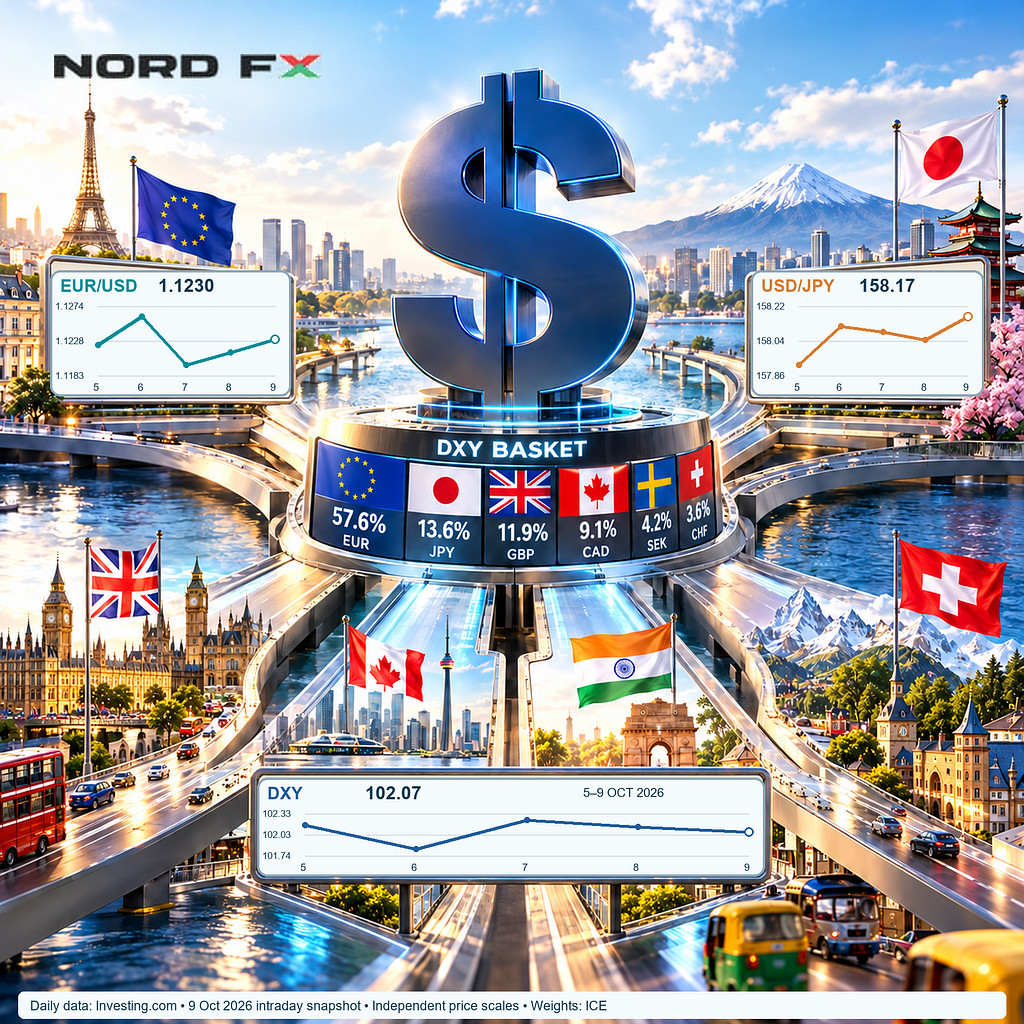
DXY says the dollar is strong. 💵
Does that mean every USD pair should behave the same way?
No. And today’s market is a good example. 👀
DXY is around 102.0, but look under the hood:
🇪🇺 EUR — 57.6% of DXY
🇯🇵 JPY — 13.6%
🇬🇧 GBP — 11.9%
🇨🇦 CAD — 9.1%
🇸🇪 SEK — 4.2%
🇨🇭 CHF — 3.6%
So almost 58% of DXY is the euro alone.
Right now, EUR/USD is near 1.123, pressured partly by French fiscal and political uncertainty. USD/JPY is around 158.3, where Japanese policy and inflation have their own influence. Meanwhile, the Indian rupee is near 96.6 per dollar, affected by oil prices and RBI intervention — yet INR has zero weight in DXY. 🌍
🛢️ Add Iran, Hormuz risks and volatile oil prices, and the differences can become even larger. Oil importers, exporters and safe-haven currencies can react very differently to the same headline.
⚠️ DXY up ≠ every USD pair up
⚠️ DXY down ≠ global dollar demand down
DXY is one lens on the dollar, not a universal USD thermometer. 🌡️
🎯 When trading a USD pair, analyse both sides of the pair, not just DXY.
👉 Trade with NordFX: https://my.nordfx.com/en/registration?utm_source=social&utm_medium=post&utm_campaign=nordfx
#NordFX #DXY #USD #Forex #TradingEducation
📚 NordFX Education: DXY Is Not the Dollar was originally published in Coinmonks on Medium, where people are continuing the conversation by highlighting and responding to this story.