
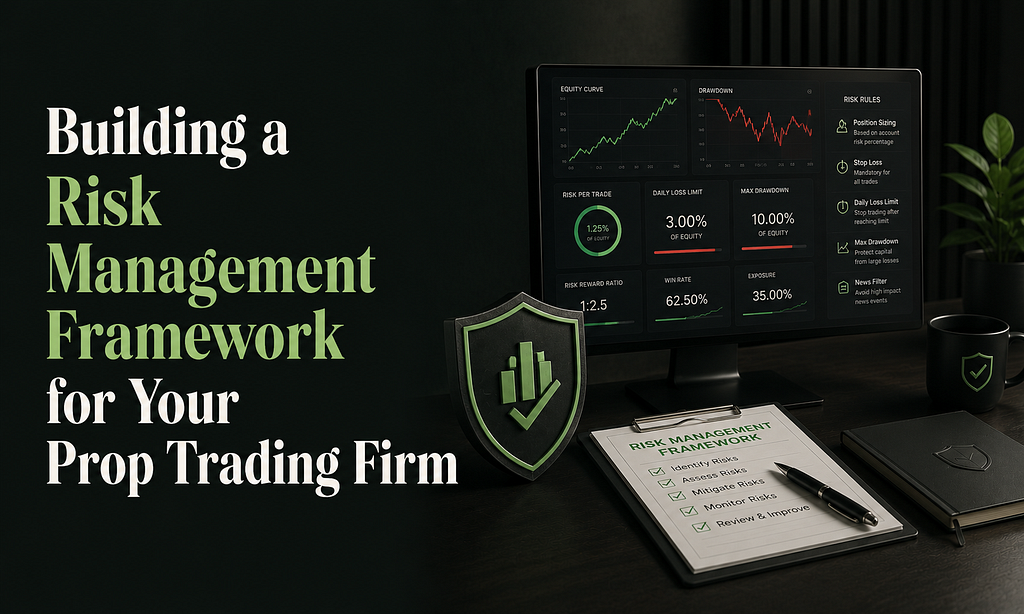
Most prop firms focus on finding traders, creating challenges, and building their platform. But one thing that often gets less attention is risk management.
The truth is, having trading rules is not enough. You also need a system that checks whether those rules are being followed.
A risk management framework helps with exactly that. It allows firms to monitor accounts, review trading behavior, and take action when needed.
In this article, we’ll explain how prop firms can create a simple and effective risk management framework.
What a Risk Management Framework Actually Means for a Prop Firm
A risk management framework is the system a prop firm uses to track trading risks and protect its capital. It includes the rules, limits, and processes that help the firm understand how much risk traders are taking.
For example, it can include daily loss limits, maximum drawdown rules, account monitoring, and checks on trader activity. These rules apply during challenges and after traders receive funded accounts.
A risk management framework is not just one feature or tool. It connects different parts of the firm, from tracking trader accounts to reviewing performance and managing potential risks. It gives prop firms a clear way to control trading activity and make better decisions.
How to Build a Prop Trading Risk Management Framework
Building a risk management framework is something you need to plan before giving traders access to funded accounts.
A strong framework helps you decide how much risk you are comfortable taking, how you will monitor traders, and what actions you will take when rules are broken.
Here are the important steps to consider
Set Your Risk Limits First
The first thing you need to decide is how much risk your firm is willing to take.
This includes setting rules like daily loss limits, maximum drawdown, and other trading conditions. You also need to decide whether these rules should be the same during challenges and funded stages.
Many firms make the mistake of copying another company’s rules without thinking about their own situation. What works for one firm may not work for another.
Decide How You Will Handle Trades
After setting your risk limits, you need to decide how trader orders will be handled.
Some firms send trades directly to the market, while others manage them internally. Some use a combination depending on the trader’s stage and performance.
This decision affects how much risk your firm carries, so it should be planned early rather than changed later.
Add Real Time Monitoring
Having risk rules is not enough if you cannot see what is happening in trader accounts.
You need a system that allows you to monitor trades, check account activity, and identify when a trader crosses your limits.
Real time monitoring helps you take action when needed instead of discovering problems after they have already affected your business.
Watch for Rule Abuse
Not every trader will try to break rules, but every prop firm needs to be prepared for situations where someone looks for ways around them.
This can include copying trades between accounts, using multiple accounts together, or taking advantage of gaps in your rules.
Adding detection methods early helps you maintain fair conditions for all traders.
Decide Whether to Build or Use Existing Software
At some point, you will need to decide whether you want to build your own risk management system or use software from an existing provider.
Building everything yourself gives you control, but it also requires development time and technical resources.
Using the right prop firm solutions can make this process much easier. Instead of building every risk management feature from the beginning, firms can use software that already includes tools like drawdown tracking, account monitoring, and rule enforcement. This helps firms manage trader accounts, monitor activity, and handle risk in a more organized way.
Core Components of a Risk Management Framework
A complete risk management framework includes different parts working together. Each part helps prop firms monitor trading activity, manage risk, and protect their capital.
Setting Loss Limits
Clear loss limits help define how much a trader can lose before reaching the allowed risk level. These limits create a safety point for both the trader and the firm.
Managing Trade Size and Risk
Firms need rules around trade size and total exposure. This helps prevent traders from taking positions that create unnecessary risk for the account.
Tracking Account Activity
Monitoring trader activity allows firms to see what is happening across funded accounts. It helps identify unusual behavior and possible rule violations.
Applying Rules Automatically
Automation helps firms apply trading rules without checking every account manually. Actions like account restrictions can happen when specific limits are reached.
Identifying Unusual Trading Patterns
Firms need ways to detect activities like copy trading, account sharing, or attempts to avoid trading conditions.
Reviewing Payout Requests
Before approving payouts, firms can review trading activity to confirm that traders followed the required rules and met the account conditions.
How A Book and B Book Routing Fit Into Your Risk Management Framework
A Book and B Book routing are two ways prop firms decide where trader orders go after a trade is placed. This choice affects how the firm manages risk from funded accounts.
In A Book routing, the trader’s order is sent to the real market through a broker or liquidity provider. For example, if a trader opens a $50,000 position on EUR/USD, the firm may pass that trade to the market instead of keeping it internally. The firm’s risk is then connected to the actual market movement.
In B Book routing, the trade stays within the firm’s own system. For example, if a trader opens a position and makes a profit, the firm pays that profit from its own funds because it is managing the trade internally.
Many prop firms use a combination of both methods. The choice depends on how the firm wants to manage its risk across different trader accounts.
Common Mistakes Firms Make With Risk Management
➜ Not Reviewing Trading Rules Regularly
Many prop firms create trading rules but do not check if those rules are still working properly. Regular reviews help firms understand whether their limits and conditions are protecting the business.
➜ Depending Only on Manual Monitoring
Some firms check accounts manually and manage everything through separate reviews. As the number of traders grows, it becomes harder to track every account and notice problems on time.
➜ Applying Rules Inconsistently
Giving different treatment to different traders can create confusion. Clear and consistent rules help traders understand what they need to follow.
➜ Ignoring Trading Data
Trading reports can show important information about trader behavior and account performance. Ignoring this data can make it harder to improve risk decisions.
➜ Treating Risk Management as a One Time Task
Risk management needs regular attention. Firms should review their rules and processes as their business grows and trading conditions change.
Conclusion
Risk management is one of the most important parts of running a prop trading firm. Trading rules alone are not enough. Firms need a proper framework to monitor accounts, control risk, and handle different trading situations.
A strong risk management framework helps you set clear limits, track trader activity, and make better decisions when managing funded accounts. It also helps your firm stay prepared as the number of traders and trading activity increases.
By building the right processes from the start, you can create a better structure for managing risk and supporting your prop firm’s long term growth.
Building a Risk Management Framework for Your Prop Trading Firm was originally published in Coinmonks on Medium, where people are continuing the conversation by highlighting and responding to this story.