
The Question Exposing Deeper Change in How Leaders Govern
One thing people keep asking lately could robots ever do the jobs human leaders now handle in government and police work? Machines already study patterns, guess what happens next, and spot risks fast. Still, swapping real officers with code feels like science fiction at first glance. Yet looking deeper shifts the thought entirely. Not whether tech takes over but how authority itself is quietly changing shape behind the scenes.
Truth sits heavy when you face how offices run. People move papers, yes, but they also carry worries, loyalties, fears. Rules bend under pressure from events no planner foresaw. Swap humans out completely? That thought cracks under its own weight.
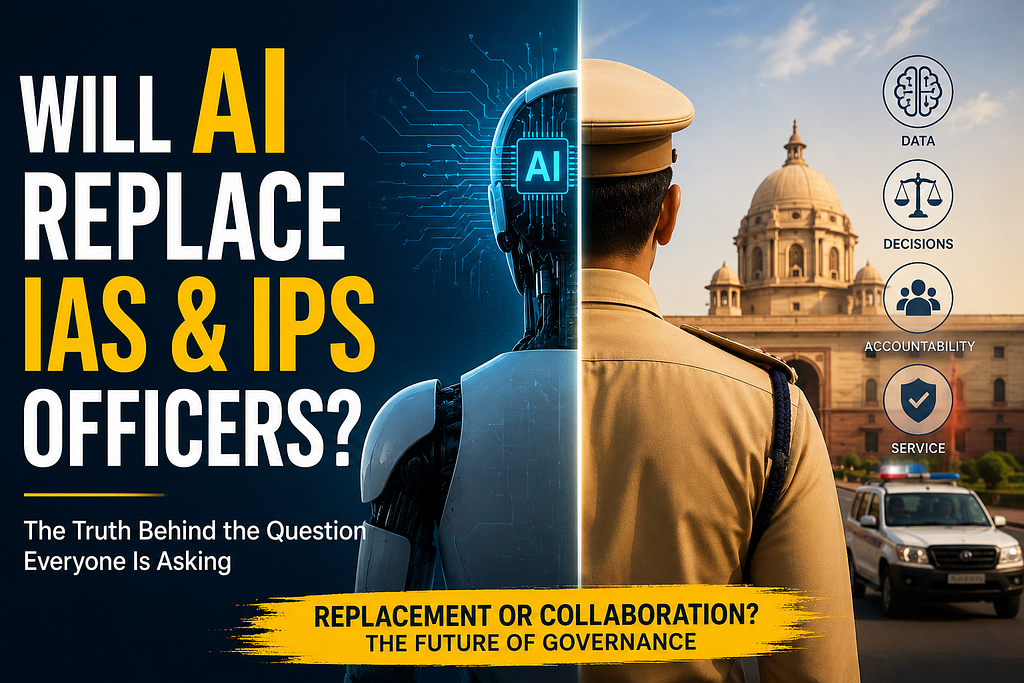
Image Generated by chatgpt
AI in administration today
Nowhere is tech shaping policy more quietly than through everyday decision systems. Public offices run on digital records that sort benefits, follow spending, and shape responses. When it comes to safety, pattern scanners spot trends in incidents, flag odd behaviour, and speed up alerts behind the scenes. Slow shifts like these reshape how rules meet reality.
Now picture this: IAS roles get sharper when AI dives into massive data, speeding up insights on disasters, farming strategies, or where supplies go, tasks that’d eat weeks if done manually. Watch how tech reshapes the IPS side not through flash but quiet pattern tracking, studying surveillance feeds, spotting shifts in criminal behaviour before they spike.
Every time, it’s the human who stays in charge. Machines help weigh options yet judgment always rests with the person wearing the badge.
IAS and IPS roles have unique responsibilities that resist complete replacement
Most times, artificial intelligence struggles with blame and choice in government roles. When unrest hits, people rely on civil servants who understand right from wrong in messy moments. Handling crises like floods or violence isn’t just about data; it hinges on instinct, too. Judgment under pressure? That belongs to those present, not machines scanning inputs.
Out here, artificial intelligence lacks real human feelings. Though pattern recognition comes naturally to machines, grasping subtle social emotions doesn’t. While a system might propose a result, ownership of consequences stays beyond its reach.
Who answers when things go wrong? That question gets messy once algorithms enter government. People expect choices to link back to someone they can challenge face-to-face. Courts and constitutions have no way to pin blame on code or circuits.
The Real Future Human and Machine Working Together
What’s showing up isn’t substitution it’s teamwork. Alongside people still guiding choices, artificial intelligence helps smooth out office tasks. Rather than taking over, it fits in. Humans keep calling the shots, while smart systems handle routine work behind the scenes.
Down the line, those training to lead India’s civil services might lean heavily on number-based clues. Instead of gut feeling, choices could come from forecasts shown live on screens. Law enforcement may shift toward sharper awareness, where tools spot danger long before trouble hits. What once relied on experience now ties closely to what systems detect early.
Officers still matter just as much. Their job now? Less collecting facts, more making choices based on what smart systems reveal.
opportunities and challenges ahead
Most times, problems get fixed faster when machines assist leaders. When disasters strike, reactions become sharper thanks to smart tools working behind the scenes. Resources go where they’re needed most, simply because data guides the way instead of guesswork. Public services run more smoothly once out dated methods are replaced. Hidden signs of misuse often surface through pattern tracking others might miss. Openness grows naturally as decisions leave clearer traces.
Still, problems linger. When data carries bias, decisions often turn lopsided. Relying too much on monitoring tools risks stepping over personal boundaries. Where internet access falls short, government reach tends to stretch unevenly.
Because machines lack judgment, people must stay involved. Tools help get work done, yet they never answer for right or wrong.
A Shift in How Rules Are Made and Followed
Out there, behind the scenes, machines are learning to help people run things better. Not instead of humans alongside them. What comes next hinges on getting that mix right. Too much tech? Problems. Too little? Missed chances. Smooth moves matter most.
Out front, machines take charge of moving fast, handling massive loads, working through reams of information. People step in where values matter making tough calls about right and wrong, owning outcomes, and reading between the lines. Only together does it hold steady: quick enough to keep up, grounded enough to stay fair.
Final Thought
True change rarely follows straight lines. Decisions matter less than who answers for them afterwards. Machines may shift daily routines inside government offices, yet people still bear the weight when things go wrong. Responsibility sticks to humans, not software. What runs behind policies stays rooted in judgment you cannot code.
What really matters isn’t swapping one thing for another, but how we adjust. Those who blend smart tools with thoughtful choices will shape what comes next, aiming to support people better.
Can Artificial Intelligence Take Over the Roles of IAS and IPS Officers? was originally published in Coinmonks on Medium, where people are continuing the conversation by highlighting and responding to this story.