
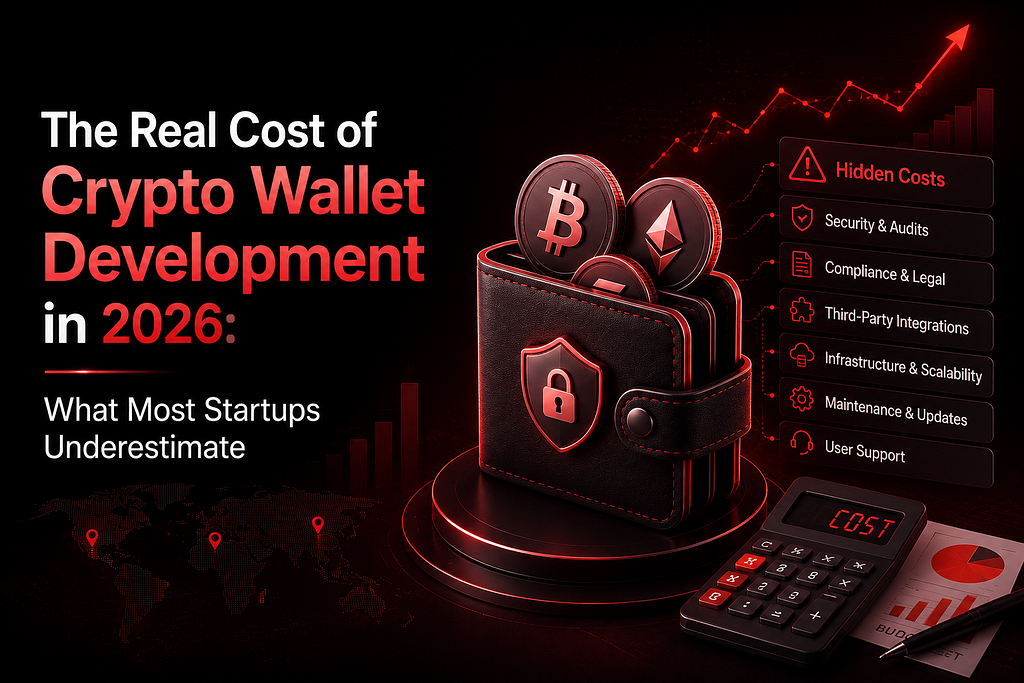
Crypto wallet development cost in 2026 typically falls somewhere between $10,000 and $200,000+, and the exact number depends heavily on architecture decisions, how deep the security work goes, and how many blockchains the wallet needs to talk to. That range looks tidy on a landing page, but it glosses over what actually goes into building a wallet that can survive production traffic.
Founders searching for crypto wallet development cost, blockchain wallet price, or Web3 wallet development cost usually want one clean figure. There isn’t one, not if the wallet is meant to hold real user funds.
A crypto wallet isn’t really an app in the traditional sense. It behaves closer to a financial-grade system that leans on security engineering, distributed infrastructure, compliance tooling, and a steady stream of updates across multiple networks. How those layers are designed and how well they’re maintained afterward is what ends up setting the final price tag.
Why Crypto Wallet Development Costs Are Hard to Estimate
A wallet isn’t one system stacked on top of itself it’s several engineering layers working in parallel:
Blockchain connectivity layerWallet core responsible for key generation and signingSecurity architecture protecting user assetBackend infrastructure handling transactions and data flowMulti-chain integration supporting different ecosystemsMonitoring and compliance systems keeping things reliable and safe
Most early quotes only account for the interface and a basic backend, which is exactly why those first estimates tend to feel lower than what the project eventually costs.
The real complexity shows up once the wallet hits real usage. That’s when scaling pressure, security hardening, and the quirks of different blockchains start pushing both cost and engineering time upward.
Market Reality Behind Rising Wallet Development Costs in 2026
Search trends around Web3 wallet development cost and multi-chain wallet pricing point to a clear shift happening across the industry.
A few market forces are pushing costs higher:
Over 560 million crypto users are now active worldwideMulti-chain support has gone from “nice to have” to expectedDeFi and NFT ecosystems demand cross-chain compatibilitySecurity expectations now sit closer to fintech standards than to typical app standardsNon-custodial wallets are dominating new product adoption
Put simply: wallets stopped being lightweight apps a while ago. They’re now infrastructure-level financial systems built on top of blockchain networks and priced accordingly.
Real Crypto Wallet Development Cost Breakdown (2026 Model)
Rather than treating a wallet as one product with one price, it helps to break it down by engineering components.
1. Wallet Architecture and System Design
This is the foundation everything else sits on. Get it wrong here, and the mistakes ripple outward later.
Key decisions at this stage include:
Custodial vs. non-custodial architectureKey generation and recovery designTransaction flow and signing logicMulti-chain support structureSecurity-first system design
Cost range: $3,000 — $15,000
Weak choices made at this stage are usually what trigger expensive rebuilds once the product needs to scale.
2. Core Wallet Application Development
This is the layer users actually see and touch.
It covers:
Wallet onboarding and account creationSend and receive transaction flowToken and NFT balance trackingWeb3 and dApp connectivityWallet recovery and restore system
Cost range: $10,000 — $60,000
Add support for multiple blockchains at once, and this figure climbs quickly.
3. Security Engineering (Highest Cost Driver)
If there’s one part of a wallet that can’t be cut corners on, it’s this one.
It includes:
Private key encryption and storageSeed phrase generation and recovery systemsMulti-signature authenticationSecure enclave or hardware-backed protectionAnti-phishing and fraud prevention systemsTransaction validation and integrity checks
Cost range: $15,000 — $80,000+
In most production wallets, security eats up a disproportionate share of total engineering hours — and for good reason. Protecting user assets isn’t optional.
4. Blockchain Infrastructure and Node Operations
This is what keeps the wallet responsive and online.
It includes:
RPC node providers or self-hosted nodesTransaction broadcasting systemsBlockchain indexing servicesCloud infrastructure across AWS, GCP, or AzureMonitoring, uptime, and load balancing systems
Cost range: $500 — $5,000 per month
As user numbers grow, this stops being a fixed line item and turns into an ongoing, scaling expense.
5. Multi-Chain Integration Complexity
Every blockchain behaves a little differently under the hood:
Different transaction models — UTXO-based vs. account-basedDifferent gas fee mechanismsDifferent APIs and SDK structuresDifferent confirmation and validation logic
Try to support Ethereum, Bitcoin, Solana, Polygon, BNB Chain, and Avalanche together, and both the build and the ongoing maintenance get noticeably more complex.
Cost range: $10,000 — $70,000+
6. Security Audits and Testing
No serious wallet skips this step before launch:
Penetration testingSmart contract auditsVulnerability scanningLoad and stress testingFull code review cycles
Cost range: $5,000 — $50,000+ per audit cycle
For a production-grade blockchain product, this isn’t optional — it’s table stakes.
7. Maintenance and Scaling (Ongoing Cost)
Launch day isn’t the finish line. The system keeps evolving alongside the ecosystem it runs on:
Blockchain protocol updatesSecurity patchesPerformance optimizationFeature upgradesUI and UX improvements
Annual cost impact: 15%–30% of total development cost
This is also the part founders most often underestimate when they’re first budgeting.
Real Startup Cost Escalation Example
Here’s a pattern that comes up again and again in practice:
Initial MVP:
Single-chain walletBudget: $25,000
After product validation:
Multi-chain supportNFT functionalityStaking featuresSecurity upgradesFull audit requirements
Final cost: $60,000 — $120,000+
This kind of jump isn’t the exception in blockchain product development — it’s closer to the norm.
Why Leading Crypto Wallets Cost More Over Time
Looking at the wallets people already trust says a lot about what long-term investment actually looks like:
MetaMask is built around deep Web3 ecosystem connectivityTrust Wallet handles large-scale, multi-chain asset managementCoinbase Wallet leans heavily into institutional-grade securityLedger Live pairs hardware security with cryptographic protection
None of these are simple apps. They’re long-term blockchain infrastructure platforms that keep evolving, year after year.
Common Crypto Wallet Budgeting Mistakes
A lot of startups run into trouble for the same handful of reasons:
Ignoring infrastructure scaling costsTreating security as something to add after launchUnderestimating audit and compliance requirementsBudgeting only for the MVP instead of the full product lifecyclePicking a dev team based on price alone
Crypto Wallet Development Cost Summary (2026)
Cost Range
Basic Wallet
$10000 — $30000
Multi-currency wallet
$30000 — $80000
Advanced Web3 Wallet
$80000- $200000+
Enterprise Wallet Platform
$200000 — $50000
On top of these figures, expect ongoing costs from:
Node infrastructureSecurity monitoring systemsMaintenance and scaling upgrades
Key Insight
The real cost of a crypto wallet isn’t the initial build. It’s everything that comes after the continuous work needed to keep up with:
Blockchain compatibilitySecurity integrityInfrastructure scalabilityProtocol updates across multiple networks
That ongoing lifecycle is really what separates a basic wallet from a Web3 system built to scale.
How to Build a More Realistic Budget
Start with a minimum viable product before scalingTreat security as a core system, not a bolt-on featurePlan for compliance requirements earlyAccount for infrastructure growth as usage increasesKeep a contingency buffer for the scaling costs you didn’t see coming
Conclusion
Crypto wallet development in 2026 comes down to engineering depth, not just the hours spent writing initial code. Search results tend to flatten this into a single number, but real systems demand ongoing investment in security, infrastructure, and blockchain compatibility.
Startups that plan for this upfront end up with sturdier products. Those that don’t usually run into cost shocks the moment they try to scale.
FAQ
Q1. How much does crypto wallet development cost in 2026?
Crypto wallet development cost typically ranges from $10,000 to $200,000+, depending on the features, the level of security, and how many blockchains need to be integrated.
Q2. What is the most expensive part of crypto wallet development
Security engineering and blockchain infrastructure are usually the two biggest cost drivers.
Q3. Why is crypto wallet development expensive?
Because it demands a multi-layer architecture — security systems, blockchain nodes, audits, and ongoing maintenance — rather than a single, static build.
Q4. How long does it take to build a crypto wallet? A basic wallet usually takes 2–4 months. Advanced multi-chain wallets can run 6–12 months.
Q5. Is multi-chain wallet development more expensive?
Yes — every additional blockchain adds its own integration work, testing, and ongoing maintenance burden.
The Real Cost of Crypto Wallet Development in 2026: What Most Startups Underestimate was originally published in Coinmonks on Medium, where people are continuing the conversation by highlighting and responding to this story.