
The real cause was not what most people blamed
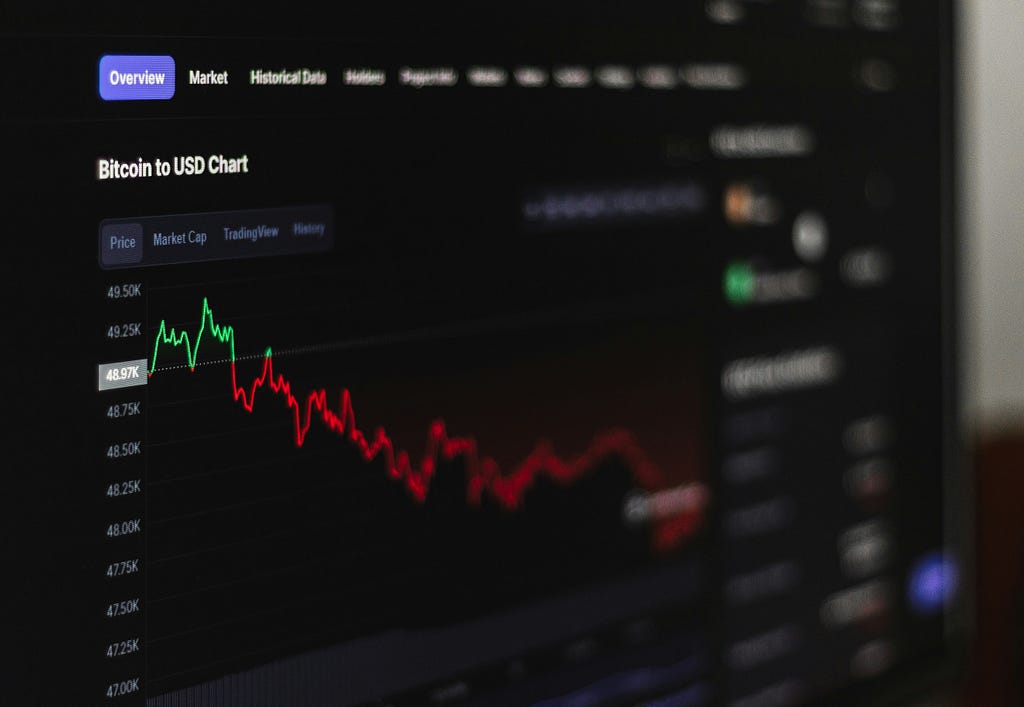
Photo by Behnam Norouzi on Unsplash
If you were in the market during the kind of session that gets remembered for years, you know the specific feeling. Something changes fast. What was a manageable position becomes something else entirely within hours. The math that justified the trade in the morning no longer holds by afternoon. And by the time the closing price is set, the damage across the market is not measured in individual losses but in the aggregate ruin of an enormous number of accounts.
These events happen. They are not as rare as they feel like they should be. And what makes them so consistently destructive is not just the magnitude of the move but the specific conditions that had accumulated before the move began, conditions that made the losses possible at the scale they occurred.
The pattern behind these episodes is more consistent than most people appreciate. Understanding it does not protect anyone from ever being caught in one. Markets are too uncertain for that kind of protection. But understanding it gives you a framework for recognizing when the conditions for this kind of damage are present, so you can reduce your exposure before the ignition happens rather than scrambling to respond afterward.
What Actually Destroys Traders in These Events
The surface-level explanation for mass trader destruction in a single session is usually the size of the move. Bitcoin dropped twenty percent. A major stock reversed thirty percent. A macro event sent everything in one direction simultaneously.
The move matters. But the move alone does not destroy thousands of traders. Small, unlevered positions absorb a twenty percent decline at a cost, but not a devastating one. What turns a twenty percent move into account-ending damage is leverage.
Specifically, what turns a violent move into mass destruction is the combination of high leverage, concentrated positioning in one direction, and the cascade mechanics that result when leveraged positions are forcibly liquidated.
When a large percentage of market participants are leveraged in the same direction and the market moves sharply against them, the liquidations are not staggered gently across time. They happen almost simultaneously as cascading prices trigger each successive layer of stops and margin calls. Every forced liquidation creates more selling, which creates lower prices, which triggers more liquidations. The cascade continues until enough positions have been eliminated to slow the selling pressure.
This mechanism is not a new or obscure concept. It has been described in the context of market crashes for decades. What makes it so consistently effective at catching traders is the psychological environment that produces the concentrated leveraged positioning in the first place.
How Concentrated Positioning Develops
The leverage cascade is a mechanism. The concentrated positioning that makes it catastrophic is a psychology.
Before the big move occurs, there is almost always an extended period where the market has been moving in a specific direction and the narrative around that direction has become highly compelling. Prices have been rising (or falling). The thesis for continuation has accumulated supporting evidence. The participants who positioned early have been rewarded and their confidence has grown. New participants have entered, attracted by the visible returns.
This dynamic produces a progressive concentration of positioning. More traders are long (or short) in a situation where the price has already moved significantly in that direction. The average cost basis of the long (or short) position in the market is now at a level where a reversal of sufficient magnitude can cause widespread losses.
The funding rates in perpetual futures markets provide a direct window into how concentrated this positioning has become. When funding rates are elevated and have been elevated for an extended period, it means the imbalance of leveraged longs over shorts is significant. The people who are long are paying a continuous fee to maintain that position, and they are willing to do so because their confidence in the direction is high.
But the elevated funding rate is simultaneously a signal of fragility. The market is loaded with leveraged positions that need the price to continue in their favor. Any sustained reversal does not just hurt those positions. It triggers the cascade that creates a self-reinforcing reversal that goes far further than the fundamental selling pressure alone would have pushed it.
The Session Itself: What Happens Inside the Cascade
For traders who are inside a cascade, the experience is specific and worth describing.
The move begins. For the first few percent in the adverse direction, it feels like a normal pullback. The thesis that justified the position still holds. The stop that was placed seems safely away. Some of the more nervous participants start exiting, adding some downward pressure but nothing alarming.
Then the first wave of liquidations begins. The traders with the least cushion in their margin get forced out. Their forced selling accelerates the move. Now the price is at a level where the next wave of positions is vulnerable. A larger group of traders is watching prices approach their liquidation levels.
The price moves faster. Each additional percentage drop in price triggers not just a proportional increase in losses for the surviving positions but a cascading increase in the number of positions that are now at risk of forced liquidation. The speed of the move creates a lag between when positions should be exited and when they actually can be, because in a fast-moving market the price that appeared on the screen when the decision was made is not the price that was available when the order was executed.
This slippage is a feature of these events that most pre-event analysis does not account for. The stop was placed at a level that would have been manageable. But the stop fills at a significantly worse level because the price gapped through the stop in the cascade. The planned loss becomes a substantially larger actual loss.
And then the session ends. The dust settles. The losses are counted.
What Survivors of These Events Actually Did
Not everyone in the market during these sessions loses catastrophically. Some participants emerge with smaller losses or no losses. Understanding what distinguished them from the participants who were destroyed is practically useful.
The first distinguishing characteristic is position size. The traders who emerge with manageable losses almost uniformly had positions sized below what the leverage environment would have permitted. They were not maximizing their available leverage. They were using a fraction of it, sized to the specific risk of the trade rather than to the maximum position the account allowed.
The second is stop placement that genuinely reflected the invalidation condition rather than the maximum loss tolerance. A stop placed at the level where the thesis is demonstrably wrong tends to survive more cascade events than a stop placed at the edge of the maximum acceptable loss. The thesis-based stop is often further away in percentage terms, which feels dangerous, but it is placed at a level with structural meaning. The cascade often does not reach it because the structural level provides genuine support.
The third is the absence of leverage concentration awareness. Traders who had been monitoring the funding rate environment and recognized that extended elevated funding represented fragility had already reduced their size or their leverage before the session began. They were positioned for a market that was loaded, even if they did not know when the spark would come.
The Structural Lesson That Applies to Every Market
These cascade events happen in crypto, in equities, in forex, and in any market with leveraged participation. The specific mechanics vary somewhat. The underlying pattern does not.
The conditions that produce them are always some version of: extended one-directional move, concentrated leveraged positioning in the direction of that move, and then a catalyst sufficient to initiate the cascade that the positioning made inevitable.
The lesson is not to avoid leverage. Leverage, used appropriately and with full understanding of its mechanics, is a legitimate tool. The lesson is to treat the leverage environment as information that affects the risk profile of your own position, even when you are not levered.
If you are holding an unlevered long position in a market where funding rates have been elevated for weeks and long-term holders have been distributing, the crash risk from a leverage cascade affects your position even though you are not part of the cascade itself. The cascade will take prices to levels that, depending on your entry, produce losses you did not anticipate.
The risk assessment for any position in a leveraged market has to include the structural fragility of that market, not just the individual setup quality of the specific trade. That broader assessment is what makes the difference between being prepared for the session that destroys thousands and being among the thousands who were not.
One Market Move Destroyed Thousands of Traders in 24 Hours and Here Is Why was originally published in Coinmonks on Medium, where people are continuing the conversation by highlighting and responding to this story.