
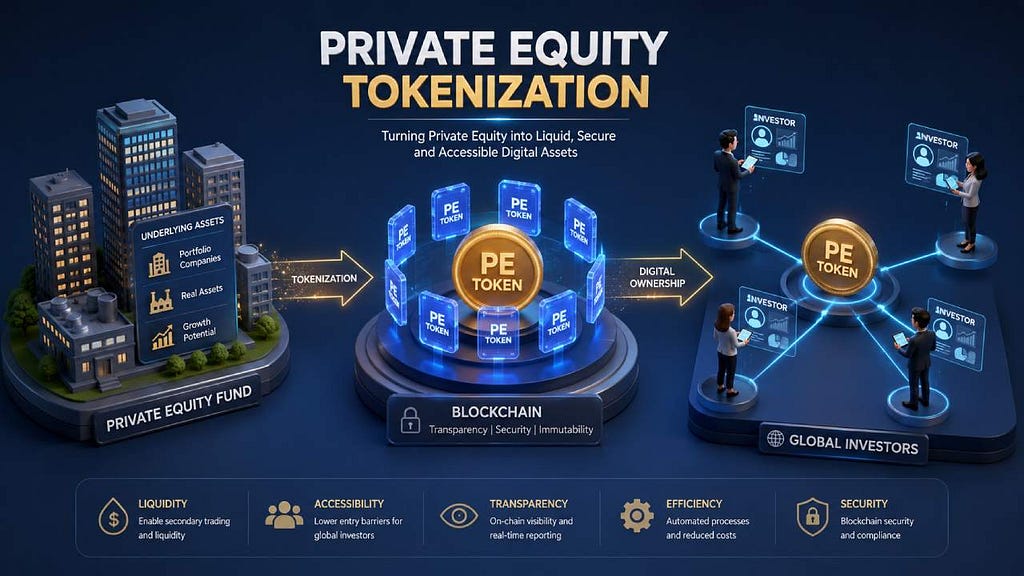
Private equity has long been one of the most attractive investment classes for institutions, venture capital firms, family offices, and high-net-worth individuals. It offers access to companies with significant growth potential and provides opportunities for higher returns compared to many traditional investment vehicles. However, private equity has historically been associated with high entry barriers, limited liquidity, lengthy investment periods, and complex transaction processes.
The emergence of blockchain technology has introduced a new approach to investing in private markets through Private Equity Tokenization. This innovative model is transforming how investors access, trade, and manage private equity assets. By converting ownership rights into digital tokens on a blockchain network, private equity investments become more accessible, transparent, and efficient.
As financial markets continue to evolve, Private Equity Tokenization is gaining attention from investors, asset managers, and financial institutions worldwide. This article explores what private equity tokenization is, how it works, its benefits, challenges, and its impact on the future of investing.
What Is Private Equity Tokenization?
Private Equity Tokenization is the process of converting ownership interests in private companies, private equity funds, or investment vehicles into digital tokens recorded on a blockchain.
Each token represents a fractional ownership stake in the underlying private equity asset. These digital tokens can be bought, sold, transferred, and managed through blockchain-powered platforms while maintaining compliance with regulatory requirements.
Traditionally, investing in private equity required substantial capital commitments and lengthy legal procedures. Tokenization digitizes ownership structures, allowing investors to participate in private equity opportunities with greater efficiency and flexibility.
Through Private Equity Tokenization, ownership rights are represented digitally while retaining the legal and financial characteristics of traditional private equity investments.
Understanding the Traditional Private Equity Market
Before exploring the benefits of tokenization, it is important to understand how traditional private equity operates.
Private equity investments typically involve:
Investing in private companiesAcquiring ownership stakes in businessesParticipating in venture capital roundsFunding company expansion initiativesSupporting mergers and acquisitions
Traditional private equity investments often present several limitations:
High Capital Requirements
Most private equity opportunities require large minimum investments, making them inaccessible to many investors.
Limited Liquidity
Investors may need to hold assets for several years before realizing returns.
Lengthy Settlement Processes
Transactions often involve extensive documentation, legal reviews, and administrative procedures.
Geographic Restrictions
Cross-border private equity investments can be complicated due to varying regulations and operational challenges.
Limited Investor Access
Most private equity opportunities are generally limited to accredited investors and large financial institutions.
Private Equity Tokenization addresses many of these limitations through blockchain-based solutions.
How Does Private Equity Tokenization Work?
The process of Private Equity Tokenization involves several stages that convert traditional ownership interests into blockchain-based digital assets.
Asset Identification
The first step involves selecting the private equity asset to be tokenized. This may include:
Startup equityGrowth-stage companiesVenture capital portfoliosPrivate investment fundsSpecial purpose vehicles (SPVs)
Legal Structuring
Legal frameworks are established to ensure token holders receive recognized ownership rights associated with the underlying asset.
The structure may define:
Equity ownershipVoting rightsProfit-sharing rightsDividend distributionsExit participation rights
Asset Valuation
Independent assessments determine the value of the underlying private equity asset.
Accurate valuation is essential for determining token pricing and investor participation levels.
Token Creation
Blockchain-based tokens are issued to represent ownership interests.
Each token corresponds to a fractional share of the underlying investment.
Smart Contract Deployment
Smart contracts automate investment operations such as:
Ownership trackingDividend distributionsCompliance monitoringVoting mechanismsTransfer restrictions
Investor Participation
Investors purchase tokens through regulated platforms and gain exposure to private equity opportunities.
Ownership information is recorded transparently on the blockchain.
Key Components of Private Equity Tokenization
Several technological and financial elements contribute to the success of tokenized private equity investments.
Blockchain Infrastructure
Blockchain technology provides secure and immutable recordkeeping.
Benefits include:
TransparencySecurityAuditabilityReduced fraud risks
Security Tokens
Private equity tokens are generally classified as security tokens because they represent ownership interests in investment assets.
Security tokens are subject to applicable securities regulations and compliance requirements.
Smart Contracts
Smart contracts automate administrative functions and reduce manual intervention.
These programmable agreements help streamline investment management processes.
Digital Asset Custody
Custody solutions safeguard investor assets and private keys while maintaining regulatory compliance.
Compliance Frameworks
Identity verification, anti-money laundering checks, and investor accreditation processes help ensure legal compliance.
Benefits of Private Equity Tokenization
Private Equity Tokenization offers numerous advantages for investors, asset managers, and businesses seeking capital.
Increased Liquidity
One of the most significant advantages is improved liquidity.
Traditional private equity investments often lock capital for extended periods.
Tokenization introduces secondary trading opportunities, allowing investors to transfer ownership more efficiently.
Fractional Ownership
Tokenization enables investors to purchase smaller ownership portions.
Instead of investing hundreds of thousands of dollars, investors may participate with significantly lower capital commitments.
This expands access to a wider range of investors.
Global Investment Access
Blockchain technology allows investors from multiple jurisdictions to participate in tokenized private equity offerings.
This creates larger investor pools and increases capital formation opportunities.
Enhanced Transparency
Blockchain records provide transparent ownership tracking and transaction histories.
Investors gain greater visibility into investment activities and asset management processes.
Faster Transactions
Traditional private equity transactions may require weeks or months to complete.
Tokenized transactions can be processed significantly faster through digital infrastructure.
Lower Administrative Costs
Automation reduces costs associated with:
Legal documentationRecordkeepingOwnership transfersInvestor management
Lower operational expenses can improve overall investment efficiency.
Improved Portfolio Diversification
Fractional ownership enables investors to allocate capital across multiple private equity opportunities.
This diversification helps reduce concentration risks.
How Private Equity Tokenization Transforms Investing
The investment landscape is undergoing significant changes due to blockchain innovation.
Private Equity Tokenization introduces several transformative benefits that reshape traditional investment models.
Democratizing Investment Opportunities
Historically, private equity was limited to elite investors.
Tokenization opens access to a broader audience by lowering minimum investment thresholds.
This democratization creates new opportunities for retail and accredited investors alike.
Expanding Capital Markets
Companies seeking capital can access global investor networks through tokenized offerings.
This broader reach improves fundraising efficiency and market participation.
Increasing Market Efficiency
Automated processes reduce friction throughout the investment lifecycle.
Faster settlements and digital ownership management improve operational performance.
Enhancing Investor Confidence
Transparent blockchain records improve accountability and trust.
Investors can verify ownership positions and transaction histories more easily.
Enabling New Investment Models
Tokenization supports innovative financial structures such as:
Fractional investingGlobal syndicationHybrid investment vehiclesAutomated dividend systems
These models create new opportunities within private capital markets.
Use Cases of Private Equity Tokenization
Private Equity Tokenization is being applied across various investment sectors.
Venture Capital Investments
Startup equity can be tokenized to attract broader investor participation.
This helps startups raise capital more efficiently while providing investors with exposure to high-growth companies.
Growth Equity Funding
Established businesses seeking expansion capital can tokenize equity interests to reach global investors.
Private Equity Funds
Fund managers can tokenize fund units and improve accessibility for qualified investors.
Family Office Investments
Family offices can leverage tokenization to diversify holdings and improve liquidity management.
Cross-Border Investment Opportunities
Tokenization facilitates international investment participation without many traditional barriers.
Challenges of Private Equity Tokenization
Despite its advantages, Private Equity Tokenization also faces several challenges.
Regulatory Complexity
Financial regulations vary across jurisdictions.
Tokenized private equity offerings must comply with securities laws and investor protection requirements.
Investor Education
Many investors are still unfamiliar with blockchain technology and tokenized assets.
Education is necessary to encourage broader adoption.
Market Infrastructure Development
The tokenized asset ecosystem is still evolving.
Additional exchanges, custody solutions, and compliance platforms are needed to support widespread growth.
Valuation Considerations
Private companies may have limited financial transparency compared to public corporations.
Accurate asset valuation remains critical for investor confidence.
Technology Risks
While blockchain is highly secure, cybersecurity risks and operational challenges must be managed effectively.
Private Equity Tokenization vs Traditional Private Equity
Accessibility
Traditional private equity requires substantial capital.
Private Equity Tokenization lowers investment barriers through fractional ownership.
Liquidity
Traditional investments often have multi-year lockup periods.
Tokenized assets may offer enhanced liquidity through secondary marketplaces.
Transparency
Blockchain-based ownership records provide greater transparency compared to conventional systems.
Transaction Speed
Tokenized transactions can settle more quickly than traditional private equity transfers.
Global Participation
Tokenization expands access to international investors and capital sources.
The Role of Smart Contracts in Private Equity Tokenization
Smart contracts serve as the technological backbone of tokenized private equity ecosystems.
These automated agreements perform critical functions including:
Dividend distributionOwnership verificationCompliance enforcementInvestor votingReporting automation
By eliminating manual processes, smart contracts improve operational efficiency and reduce administrative overhead.
Industries Benefiting from Private Equity Tokenization
Several sectors are actively exploring tokenized investment models.
Technology Startups
Emerging technology companies can access alternative funding channels.
Healthcare
Healthcare businesses seeking growth capital can attract diversified investor participation.
Renewable Energy
Green energy projects can leverage tokenization to support fundraising efforts.
Artificial Intelligence
AI companies increasingly seek innovative capital solutions to accelerate expansion.
Financial Services
Investment firms are incorporating tokenization into portfolio management strategies.
Future Trends in Private Equity Tokenization
The future of Private Equity Tokenization appears highly promising as institutional adoption continues to increase.
Institutional Participation
Major financial institutions are actively exploring tokenized investment products.
Improved Regulatory Frameworks
Governments and regulators are developing clearer guidelines for digital asset investments.
Enhanced Secondary Markets
Dedicated trading platforms will likely increase liquidity and investor participation.
Integration with Traditional Finance
Tokenized assets may become integrated with conventional financial infrastructure.
Growth of Real World Asset Tokenization
Private equity tokenization is expected to become a major segment within the broader Real World Asset tokenization market.
Why Investors Are Paying Attention to Private Equity Tokenization
Investors recognize several compelling advantages:
Greater accessibilityIncreased liquidityGlobal diversificationOperational efficiencyTransparencyFractional ownership opportunities
As blockchain adoption expands, these benefits continue attracting interest from both institutional and individual investors.
Conclusion
Private Equity Tokenization represents one of the most significant innovations in modern investing. By converting private equity ownership interests into blockchain-based digital tokens, this model introduces greater accessibility, liquidity, transparency, and efficiency to traditionally exclusive investment markets.
The ability to fractionalize ownership, automate investment processes, and connect global investors with private market opportunities is transforming how capital is raised and managed. While regulatory and infrastructure challenges remain, ongoing technological advancements and institutional adoption continue to accelerate market growth.
As the digital asset ecosystem matures, Private Equity Tokenization is expected to play a central role in reshaping private capital markets. For investors seeking innovative opportunities and businesses looking for more efficient fundraising methods, tokenized private equity offers a compelling glimpse into the future of investing.
What Is Private Equity Tokenization and How Does It Transform Investing? was originally published in Coinmonks on Medium, where people are continuing the conversation by highlighting and responding to this story.