
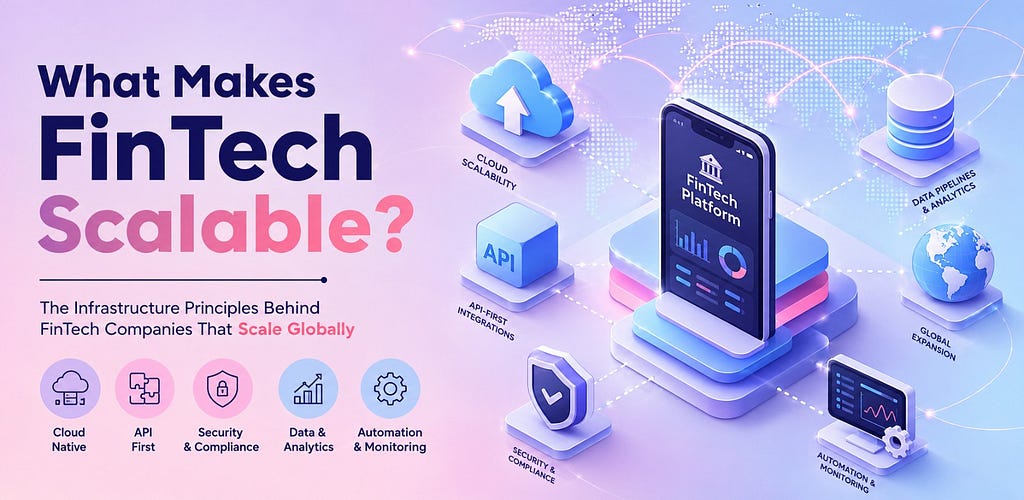
The Basic Ideas Behind FinTech Companies That Grow Big Around The World
FinTech has changed how people move money.
From online banking and finance to crypto payments and global money transfer platforms financial technology is getting better faster than traditional banking systems can keep up.
There is a big difference between starting a fintech product and making it work for a lot of people.
Making a payment app is hard.
Making a fintech platform that can support millions of people handle a lot of transactions follow rules in places and stay safe is a really big challenge.
This is where many fintech startups have problems.
Because making something work for a lot of people in fintech is not about getting more users.
It is about having systems.
Generated by chatGPT
What Does It Mean For FinTech To Work For A Lot Of People?
Working for a lot of people in FinTech means a platform can handle a lot of growth in:
UsersTransactionsDataPlaces it works
without having problems with:
How well it worksSafetyIf it is reliableFollowing rulesCostIn words: a fintech platform that works for a lot of people can grow ten times bigger without its systems failing.
The companies that are leading financial technology are not just making nice apps or easy to use interfaces.
They are making digital systems that can support global financial systems.
Why Most FinTech Platforms Have Problems Growing
Most fintech startups start by trying to go
They focus on:
Starting quicklyGetting usersGetting moneyAdding features fast
At first this approach works.
Many early platforms use:
Temporary fixesSimple systemsManual ways of following rulesDepending on companiesWeak backend systems
When it is small these problems are not seen.
When it is big they become risks.
Suddenly:
Transactions start getting slowCosts get higherFollowing rules gets hardWhen it is down it affects usersSafety problems get bigger
The platform that was once easy to use becomes hard to maintain.
Using Cloud Systems Is the Foundation
Modern fintech platforms that work for a lot of people are built on cloud systems.
Platforms like:
AWSMicrosoft AzureGoogle Cloud
let fintech companies change how resources they use based on what is needed.
This is important during:
Times when a lot of payments are madeWhen there are a lot of tradesWhen there are a lot of transactions
of using fixed systems cloud systems let platforms change how many resources they use in real time.
This makes it better and more reliable.
Cloud systems also reduce downtime. Make it more reliable across different places.
Why Small Services Matter
One of the changes in fintech is moving from simple systems to small services.
Instead of having one application, fintech platforms that work for a lot of people separate systems into small services.
For example:
Payment processingWallet systemsFinding transactionsHelping users sign upLending money
can all work on their own.
This lets companies grow parts without affecting the whole system.
Technologies like:
KubernetesDockerTools for managing services
help fintech platforms manage these services well.
The result is:
Faster new ideasupdatesLess downtimeBetter system strength
Making APIs First Enables Faster Growth
Modern fintech depends heavily on working with other companies.
A fintech platform rarely works alone.
It needs to connect with:
BanksPayment processorsCard networksCompanies that help with rulesCustomer management systemsOther financial servicesThis is why fintech companies that work for a lot of people prioritize API- architecture.APIs let systems communicate well while keeping infrastructure simple and flexible.
Of rebuilding systems every time, a new feature or partner is added API-driven platforms can integrate quickly and grow more effectively.
This approach prepares fintech systems for ideas like:
Using intelligence to find fake transactionsAdding finance to servicesUsing blockchain for settlementsReal-time analysis
Event-Driven Systems and Transaction Growth
Handling millions of transactions needs more than basic backend systems.
Fintech companies that work for a lot of people use event-driven systems.
Using technologies like:
KafkaRabbitMQDistributed event streaming systems
platforms can process transactions without blocking of forcing every action through one bottleneck.
This enables:
More transactionsprocessingBetter reliabilityBetter fault tolerance
For global payment systems this is necessary.
Safety and Following Rules Must Be Built into The Core
In fintech growing without safety becomes dangerous.
As platforms grow so do:
Cybersecurity risksFake transaction attemptsscrutinyData privacy obligations
This is why fintech companies that work for a lot of people build safety into infrastructure from the start.
Modern fintech safety frameworks typically include:
Encrypting everythingZero-trust architectureRole-based access controlsContinuous monitoringPenetration testingInfrastructure redundancy
Following rules frameworks such as:
PCI DSSGDPRSOC 2AML/KYC regulations
are no longer optional.
They are necessary for operations.
Why Automation of Following Rules Matters
Manual following of rules processes do not grow efficiently.
As user bases grow globally fintech companies must automate:
KYC verificationAML monitoringFinding transactionsAudit loggingRisk analysis
Automation reduces problems while helping platforms follow rules across multiple places.
Importantly it helps fintech companies grow without overwhelming internal teams.
Data Is One of the Biggest Growth Assets
fintech platforms generate enormous amounts of data.
This includes:
Transaction logsUser behaviour analysistransaction signalsPayment routing insightsRisk indicators
Managing this data efficiently becomes a major growth advantage.
Fintech systems that work for a lot of people use:
Kafka for streamingDistributed databases like CassandraNoSQL infrastructureReal-time analysis systemsThese tools let platforms process and analyze data volumes without performance degradation.
Artificial Intelligence and Predictive Growth
Artificial intelligence is becoming a driver of fintech growth.
AI and machine learning systems help platforms:
Predict transaction growthFind behaviourOptimize payment routingPersonalize financial servicesImprove operational efficiency
Predictive growth also let’s cloud infrastructure allocate resources before demand spikes occur.
This improves reliability during high-volume events while reducing infrastructure costs.
Automation of Operations Is Essential for Global Growth
Manual operations become bottlenecks as fintech platforms grow.
This is why automation is one of the important growth drivers in financial technology.
Modern fintech companies use:
CI/CD pipelinesInfrastructure-as-Code (IaC)TerraformAutomated deployment systems
These tools let companies:
Roll out features faReduce downtimeMinimize errorDeploy globally with consistency
Automation becomes especially critical in:
Digital bankingPayment gatewaysCrypto exchangesEmbedded finance ecosystems
where operations run 24/7 across places.
Observability and Monitoring at Scale
Fintech infrastructure that works for a lot of people requires real-time visibility into systems.
Observability tools like:
PrometheusGrafanaELK Stack
help teams monitor:
Infrastructure healthTransaction performanceSystem latencyError ratesSafety anomaliesThis lets fintech companies:Find failures earlyTrigger automated growthRoll back deploymentsMaintain uptime availability
In financial services reliability directly impacts customer trust.
Strategic Growth Is Not Technical
Growth is not purely an engineering problem.
It is also strategic.
Many successful fintech companies grow by focusing resources on potential areas while reducing operational complexity elsewhere.
This approach lets companies:
Improve efficiencyFocus innovationAllocate capital effectively
Partnerships also play a major role in growth.
Collaborating with:
BanksBanking-as-a-Service providerspartnersPayment networks
can accelerate expansion while reducing operational burdens.
Why Infrastructure Thinking Defines the Future of FinTech
The next generation of fintech leaders will not succeed because they have the most attractive mobile app.
They will succeed because they build:
systemsSmarter infrastructureSafe automationGlobal-ready platforms
Because fintech is no longer just a software category.
It is becoming an infrastructure industry.
Challenges of Building Scalable FinTech Platforms
Building fintech systems that work for a lot of people requires:
engineering investmentSafety expertiseRegulatory readinessOperational maturityContinuous infrastructure optimization
The challenge is complex.
Ignoring growth creates even greater risks later.
Real-World Examples of Scalable FinTech
Digital BanksScaling -country banking operations using cloud systems.Payment GatewaysHandling millions of transactions in real time.Crypto PlatformsManaging wallets, liquidity following rules and settlements at scale.Embedded Finance Providers
Integrating services directly, into other ecosystems.
Fintech that works for a lot of people is not built through fixes alone.
It is built through:
InfrastructureAutomationAPIsSafetyFollowing rulesIntelligent system design
The fintech companies that master these foundations will not just grow faster.
They will become the infrastructure powering the generation of global finance.
What Makes FinTech Work For A Lot Of People? was originally published in Coinmonks on Medium, where people are continuing the conversation by highlighting and responding to this story.