
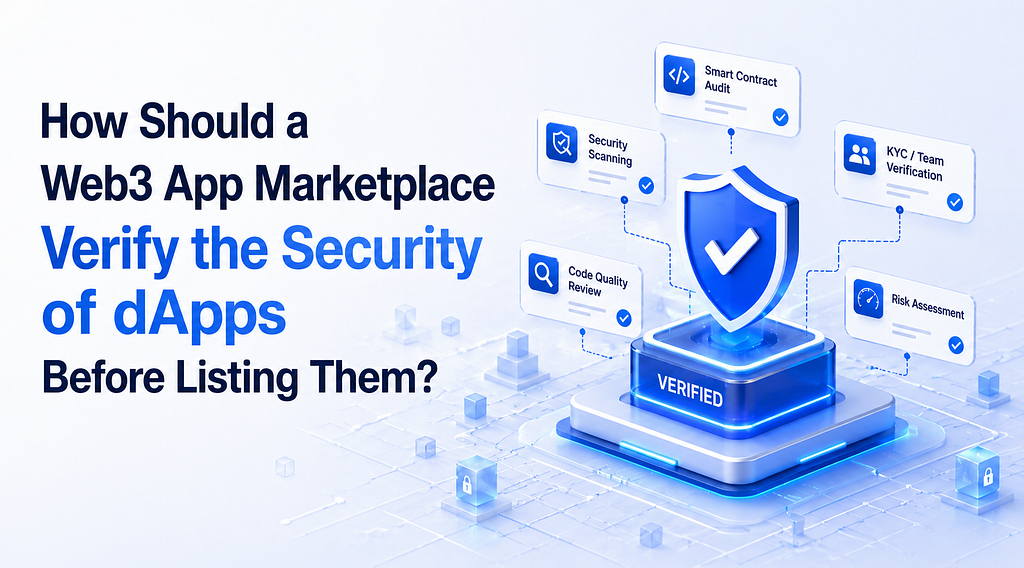
Web3 app marketplaces must verify dApp security before listing to protect users and build trust. Audits, transparency, monitoring, and verification are essential for safe and sustainable Web3 adoption.
Web3 is growing fast. Every day, new decentralized applications promise better finance, gaming, identity, and ownership experiences. But with innovation comes risk. Hacks, exploits, rug pulls, and smart contract bugs have cost users billions of dollars. For a Web3 app marketplace, trust becomes the most valuable asset. If users cannot trust the apps listed on the platform, the marketplace itself loses credibility. Security verification is not just a feature. It is the foundation of a successful Web3 app marketplace.
Why Security Verification Matters
In traditional app stores, users rely on centralized companies to filter unsafe apps. In Web3, users interact directly with smart contracts that control real money and digital assets. Once funds are lost, there is usually no customer support to recover them.
This makes the marketplace a critical gatekeeper. Users expect that every listed dApp has passed a basic level of trust and security. Without this trust, adoption slows down and the entire ecosystem suffers.
A strong verification process protects users from financial loss, protects developers from reputational damage caused by scams in the same marketplace, and builds long-term credibility for the platform.
Accountability Behind Every Project
Security begins with accountability. While anonymity is common in Web3, a marketplace still needs to confirm that real people are responsible for the project. Private identity verification and background checks help ensure there is a legitimate team behind the dApp.
When developers know their identities are verified, the likelihood of scams decreases. Transparency creates responsibility, and responsibility builds trust.
Smart Contract Security Is Non-Negotiable
Smart contracts are the backbone of decentralized applications. If they contain vulnerabilities, users’ funds are immediately at risk. Professional smart contract audits play a critical role in identifying weaknesses such as reentrancy attacks, access control issues, or hidden upgrade risks.
However, simply having an audit is not enough. The marketplace must ensure that the findings are reviewed and resolved. Visible audit badges and public reports help users understand the level of security testing completed.
The Power of Transparency and Open Source
Closed source code forces users to rely on blind trust. Open source development allows the global developer community to review and verify smart contracts independently.
Public repositories create an additional layer of protection. Even if an audit misses a vulnerability, community researchers often discover it quickly. Openness signals confidence and demonstrates a long-term commitment to security.
Continuous Security Monitoring
Security is not a one-time event. Automated scanning tools can continuously check smart contracts for suspicious patterns, risky permissions, or hidden malicious logic. This ongoing monitoring ensures that security remains strong even after an app is listed.
Updates, new features, and contract upgrades can introduce new risks. Continuous monitoring helps detect these changes early and prevents new vulnerabilities from going unnoticed.
Economic and Token Risk Awareness
Not all risks come from code. Some originate from poor or manipulative economic design. Reviewing token distribution, minting permissions, and liquidity controls helps identify projects that could pose financial risks.
This type of evaluation protects users from rug pulls and unsustainable token models that may collapse after launch.
Respecting User Wallet Permissions
Many dApps request wallet permissions that go beyond what is necessary. Users often approve transactions without fully understanding the risks.
A secure marketplace reviews how dApps request permissions, how clearly transactions are explained, and whether users are warned before granting access. Clear communication reduces mistakes and builds user confidence.
The Role of Ethical Hackers and Community Feedback
No system is perfect. Encouraging bug bounty programs invites ethical hackers to discover vulnerabilities before attackers do. These programs transform the global security community into active defenders of the ecosystem.
User reviews and feedback also play an important role. Over time, community insights create a reputation layer that helps new users make safer decisions.
Ongoing Trust After Listing
Security verification does not end when a dApp is listed. Continuous observation ensures that updates or new features do not introduce new vulnerabilities. Re-reviews and ongoing monitoring maintain long-term safety for users.
Providing risk labels such as audited, community reviewed, or experimental allows users to understand the level of maturity of each project. Transparency empowers users to make informed decisions.
Building Trust for the Future of Web3
Web3 promises decentralization, ownership, and global access. But without trust, adoption slows. A Web3 app marketplace has the responsibility to create a secure environment where innovation can thrive safely.
By combining identity verification, audits, transparency, monitoring, and community participation, marketplaces can build a foundation of trust that supports long-term growth.
Security is not about slowing innovation. It is about enabling sustainable progress. The future of Web3 depends on trust, and trust begins with strong security verification.
How Should a Web3 App Marketplace Verify the Security of dApps Before Listing Them was originally published in Coinmonks on Medium, where people are continuing the conversation by highlighting and responding to this story.