
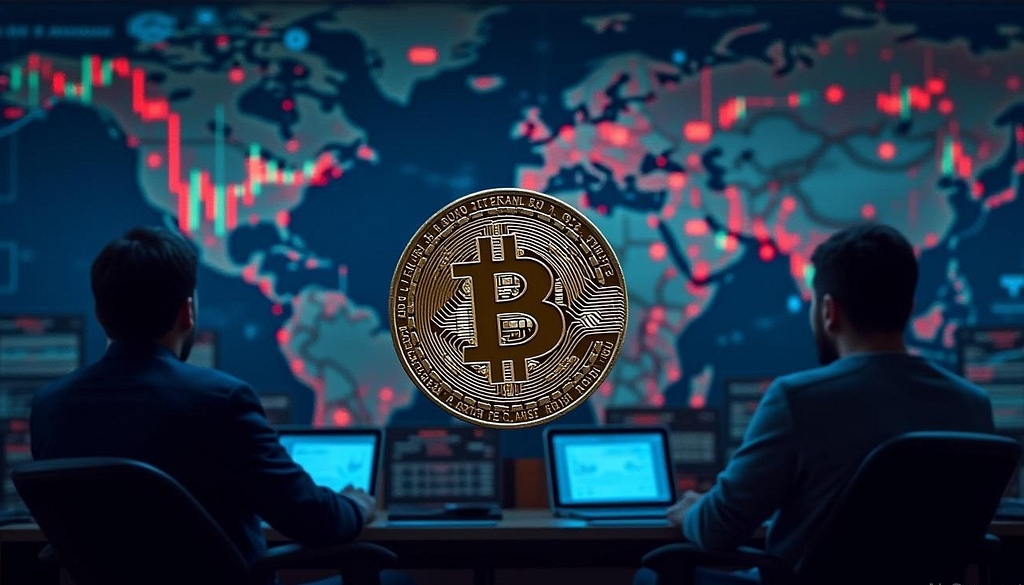
Wars have become a test for the global financial system. No part of the system feels the effects more than fintech and blockchain.
From the war between Russia and Ukraine to the conflict in Iran in 2025–2026 fights between countries have changed how digital money works, how fintech companies operate and how people get money when traditional systems are not working.
This analysis uses research from institutions and looks at the complicated ways that war changes digital finance.
Image is generated by ChatGPT
The New Situation: Crypto Markets Show How People Feel About Geopolitics
Crypto markets are different from stock markets. They are open 24 hours a day 7 days a week. When something big happens, like a missile launch Bitcoin is the market to react. It shows how people feel about risk in time.
This shows two sides of Bitcoin during wartime:
It can be an asset: Prices can drop fast when there is a big geopolitical event
It can be a tool for independence: It can help people move money when banks are not working and governments are controlling money
The Iran conflict in 2025–2026 showed both of these sides. Bitcoin kept working when Irans mining system was destroyed. This shows that Bitcoins price can change a lot. It will always work.
Different Effects: Winners and Losers in Cryptocurrencies
Research has shown that not all digital assets are affected the way by war. A study of the Russia-Ukraine war found some results:
* Cardano and Dogecoin were affected negatively
* Bitcoin, Ethereum and Tether were affected positively
* Litecoin and XRP had different effects
These results show that different cryptocurrencies have different weaknesses. It is not an idea to think that all cryptocurrencies will react the same way to big events.
Fintech and Blockchain Stocks: How People Feel Affects Prices
Researchers have created tools to measure how war affects the finance system. The Russia-Ukraine War and Economic Sanctions Sentiment Index shows how blockchain and fintech stocks react to war sentiment.
Some key findings include:
* When people feel positive about war, fintech and blockchain stocks go up
* When people feel negative about war, fintech and blockchain stocks go down
* After a big event like an invasion people feel more negative
* War sentiment can cause big changes in the market
The effects of this are significant: negative sentiment can make investors act irrationally and follow the crowd.
Economic Destruction: Why Blockchain is Necessary
War creates situations where decentralized finance’s necessary for survival. In areas where there is conflict, traditional financial systems often break down:
* Banks are. Cannot be used
* Sanctions and internet shutdowns cut off entire countries from the global financial system
* Blockchain wallets provide access to money when other systems are not working
War also causes foreign investment to leave, which makes the economy less stable. Traditional finance loses peoples trust. They turn to decentralized systems.
Image is generated by ChatGPT
Money Loses Value: Why People Use Bitcoin
When there is war governments print money, which causes inflation. People in Ukraine the Middle East and other conflict areas have started using Bitcoin and stablecoins as a way to store value when their local currency is losing value.
The Strait of Hormuz: A Risk to Global Finance
The Strait of Hormuz is a very important place for global finance. If it is closed it could cause problems for energy markets, supply chains and cryptocurrency valuations.
For the blockchain industry this is both a risk and an opportunity. Mining operations could cost more. It also shows why decentralized financial systems are necessary.
Cybersecurity: Blockchain Networks Are Targets
Modern war is not about guns and bombs. It is also about cyber attacks. Blockchain networks are a target in areas where there is conflict.
This creates a paradox:
* Decentralized systems are resilient: They can survive even if some parts are destroyed
* Individual users are still vulnerable: People in conflict areas face risks to their personal wallets and exchange accounts
Making sure that blockchain networks are safe has become a matter of national security for people who rely on cryptocurrency as a financial system.
Helping People: Blockchain as a Tool for Humanitarian Aid
War has accelerated the use of blockchain for purposes:
* Tracking aid: Transparent ledgers can prevent corruption
* Identity verification: Decentralized identity systems can help refugees prove who they are
* Automating relief: Smart contracts can ensure that funds reach the people who need them
These uses show that blockchain can be more than a way to make money. It can be a tool for human survival in crisis situations.
The Problem of Sanctions
Global blockchain platforms face a lot of pressure from governments during wartime. Governments want exchanges and DeFi protocols to block wallets tied to sanctioned countries or individuals.
This puts the industry in a position:
* Centralized exchanges could face legal risks if they do not comply
* Decentralized protocols cannot technically implement sanctions
* Users in countries may find that cryptocurrency is their only way to access the global economy
The tension between censorship resistance and regulatory compliance is a big challenge for the industry during wartime.
What Investors, Policymakers and Users Should Know
For Investors
* Short-term volatility is normal: Expect changes in price during geopolitical events
* Different cryptocurrencies react differently: Do not assume that all cryptocurrencies will react the way
* Sentiment transmission is important: War-related sentiment can cause changes in the market
For Policymakers
* Cryptocurrency cannot be fully controlled during crises: People will find ways to access decentralized finance when they need to
* Regulatory frameworks must account for scenarios: Static compliance models do not work during wartime
* Blockchain can be a tool for aid: Encourage the use of blockchain for aid transparency and identity verification
For Users in Conflict Zones
* Diversify your assets: Do not put all your money in one cryptocurrency
* Prioritize security: Cyber attacks are more common during wartime
* Use stablecoins: They can help you keep your money safe when local currencies are losing value
War as a Big Test for Blockchain
War shows us the truth about financial systems that we do not see in peacetime. The fintech and blockchain industry has shown that it can be vulnerable to short-term sentiment shocks. It is also resilient as a financial system. People in conflict areas have found that cryptocurrency can be a lifeline when other systems are not working.
The evidence is clear: geopolitical instability is now a factor in digital asset valuation models, fintech strategic planning and blockchain development priorities. Investors, builders and policymakers who ignore this reality do so at their risk.
Bitcoin can be volatile, in price. It is always working. That is important when there is war.
How Wars Have Changed the Fintech and Blockchain Industry: A Complete Analysis was originally published in Coinmonks on Medium, where people are continuing the conversation by highlighting and responding to this story.