
Crypto Is Back Above $80K: Why Bitcoin, Solana, and Perp DEXs Are Driving the Next On-Chain Trading Wave
Bitcoin’s biggest three-day rally since 2023, record institutional flows, and surging Solana activity are bringing volatility — and opportunity — back to crypto.
Crypto traders have spent much of 2026 waiting for momentum to return.
Now, the market is moving again.
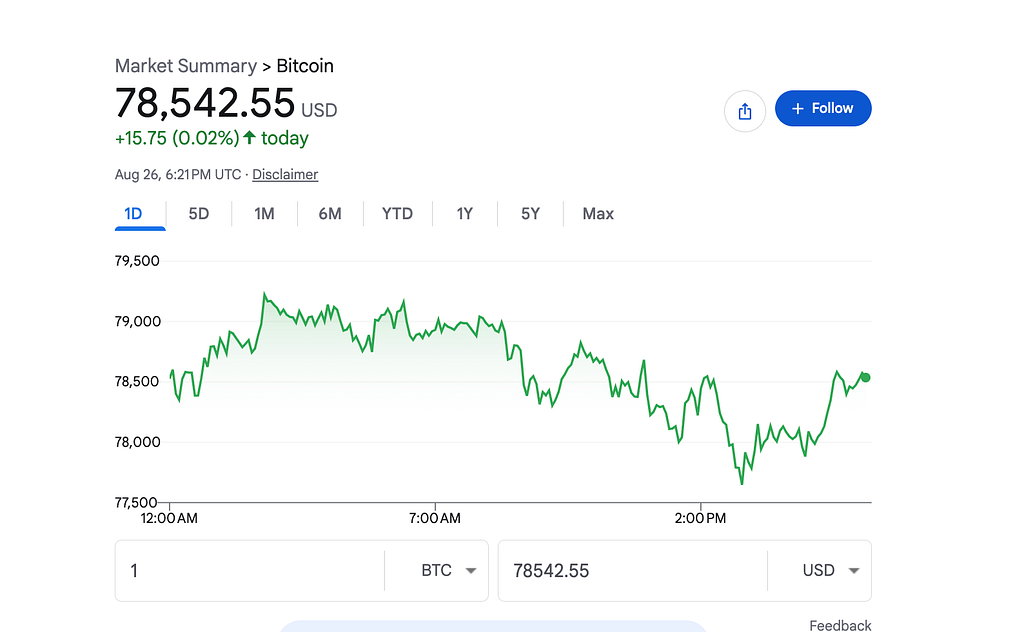
Bitcoin broke above $80,000 for the first time since May, extending a dramatic recovery from its summer lows. Solana is simultaneously posting record ETF inflows and record on-chain activity. And across decentralized markets, traders are increasingly turning to perpetual futures to express directional views, hedge portfolios, and trade volatility without leaving the on-chain ecosystem.
The result is more than another Bitcoin bounce.
It could represent a broader shift in where crypto liquidity — and crypto trading itself — is heading.
Bitcoin’s $80K Breakout Changes the Market Conversation
Bitcoin’s latest move has been unusually aggressive.
CNBC reported that BTC gained more than 20% in three days, its strongest three-day rally since 2023. The move pushed Bitcoin out of the range that had constrained it for months, while Ether also moved toward its strongest levels since January. More than $4 billion in bearish crypto positions were liquidated during the surge, adding fuel to the rally.
CoinDesk reported that Bitcoin has recovered roughly 38% from its late-June/early-July lows below $58,000. More importantly, institutional capital appears to be returning: U.S. spot Bitcoin ETFs attracted approximately $1.9 billion in a single week, their largest weekly inflow since October 2025.
Three forces are therefore interacting:
Macro liquidity is improving. Falling long-term Treasury yields and expectations around Treasury bond purchases helped ease financial conditions, making risk assets more attractive.
Institutional demand is returning. ETF inflows suggest the recovery is not being driven exclusively by leveraged retail traders.
Short positioning was crowded. Once BTC broke higher, liquidations forced bearish traders to buy back positions, accelerating the move.
That combination explains why the rally moved so quickly.
But it also introduces an important question for traders:
What happens after the short squeeze?
The next stage will depend less on forced liquidations and more on whether spot demand, ETF inflows, liquidity, and broader on-chain participation continue.
Solana Is Sending an Even More Interesting Signal
Bitcoin may be leading the price rally, but Solana is showing what is happening underneath the surface.
Cumulative U.S. Solana ETF inflows have reached a record $1.22 billion, according to BeInCrypto. One Monday session alone brought in $33.5 million, the largest single-day inflow of 2026.
At the same time, Solana processed a record 4.2 billion transactions in July, representing a 91% increase compared with December 2025.
Meme-coin trading is also returning.
Weekly Solana meme-coin spot volume recently reached approximately $5.2 billion, its highest level of 2026 and almost three times the roughly $1.8 billion seen near the end of May.
Yet there is a fascinating disconnect.
Despite record ETF flows and record network activity, SOL remains significantly below its historical highs. BeInCrypto reported SOL around $96 at the time of publication, roughly 67% below its previous all-time high.
For traders, that divergence matters.
Network activity → liquidity → speculation → price is not always an immediate process.
Sometimes price moves first. Sometimes fundamentals move first.
Right now, Solana appears to be giving traders a real-time example of the latter.
The Market Is Moving From “What Should I Buy?” to “How Should I Trade It?”
During quieter markets, crypto participants tend to accumulate spot positions.
When volatility returns, behavior changes.
Traders begin asking different questions:
Is BTC’s breakout sustainable?Is SOL undervalued relative to network activity?Which altcoins will outperform if BTC consolidates?Where are smart-money wallets moving?Are funding rates becoming overcrowded?Should I hedge my spot exposure?Can I profit if the market reverses?
These questions naturally push traders toward perpetual futures — or perps.
Unlike spot trading, perpetual contracts allow traders to take both long and short positions without a fixed expiration date. They can be used for directional speculation, leverage, hedging, and relative-value strategies.
And increasingly, that activity is moving on-chain.
Why Perp DEXs Matter More in a High-Volatility Market
The original DeFi narrative was primarily about swapping and yield.
The next phase increasingly revolves around on-chain derivatives.
Platforms such as Hyperliquid demonstrated that decentralized perpetual markets can offer an experience much closer to centralized exchanges while maintaining blockchain-native settlement and transparency.
Ave.ai is building around this same shift.
Its on-chain platform now brings markets, perpetual trading, trading signals, copy trading, wallet monitoring and asset discovery into a broader trading interface. Ave.ai also describes its perp infrastructure as integrating decentralized perpetual protocols including Hyperliquid, Aster, and edgeX, connecting execution with on-chain analytics.
That combination becomes especially relevant during a market like the current one.
A trader might discover accelerating Solana activity, analyze wallet flows, examine liquidity and market positioning, check perp conditions, and then decide whether to trade spot, go long, short, or hedge.
Instead of treating analytics and execution as separate workflows, the goal is to bring them closer together.
The Ave.ai View: Follow the Data, Not Just the Candle
One of the biggest mistakes traders make during sharp rallies is assuming that price itself is the signal.
It isn’t.
Price is the result.
The more useful signals often appear elsewhere first.
1. Watch Smart Money
Ave.ai uses on-chain data such as historical PnL, win rate, trading activity, token performance and wallet behavior to identify high-performing addresses. Its Smart Money tools also support wallet monitoring and copy-trading workflows across major chains.
When volatility returns, watching where consistently profitable wallets are allocating capital can provide more context than simply chasing the day’s biggest percentage gain.
2. Watch Funding and Positioning
A rising market does not automatically mean a good long entry.
When too many leveraged traders become bullish, funding rates can rise and positioning can become vulnerable to a long squeeze.
The opposite happened during Bitcoin’s latest breakout: crowded bearish positioning helped amplify the move upward.
For perp traders, therefore, the question isn’t only “Where is price going?”
It is also:
“Where is leverage already positioned?”
3. Watch Liquidity
Strong price action without improving liquidity can disappear quickly.
A more sustainable market expansion usually brings broader participation: higher volumes, increased active wallets, deeper liquidity and more activity across multiple assets.
Solana’s record transaction count and rising meme-coin volume are therefore important — not because they guarantee SOL will rise, but because they show that speculative activity is returning on-chain.
4. Watch Rotation
Bitcoin usually leads major crypto recoveries.
But traders rarely stop at Bitcoin.
If BTC stabilizes after a major move, capital often begins exploring higher-beta opportunities across ETH, SOL, meme coins, ecosystem tokens and newer on-chain markets.
That rotation is where multi-chain discovery becomes particularly valuable.
Ave.ai says its broader platform integrates 160+ blockchains and 300+ decentralized exchanges, combining market discovery with on-chain analytics and execution.
For traders, the advantage is not simply access to more tokens.
It is the ability to compare where liquidity and attention are migrating.
What Traders Should Watch Next
The $80,000 Bitcoin milestone is psychologically important, but the next several weeks will provide more useful information than the headline itself.
Bitcoin ETF flows: Continued institutional inflows would strengthen the argument that the move is backed by real demand rather than primarily short covering.
Bitcoin consolidation: After a 20%+ three-day move, traders should expect volatility. Holding newly reclaimed levels would be more constructive than another vertical move.
SOL versus network activity: Solana currently presents one of the market’s most interesting divergences. If price begins catching up with ETF inflows and record network usage, SOL could become an important indicator of broader risk appetite.
Meme-coin liquidity: Solana meme-coin volume returning toward 2026 highs suggests speculative traders are returning. Whether that expands across multiple chains could indicate whether a broader on-chain risk cycle is developing.
Perp positioning: Funding rates, open interest, liquidations and trader positioning may reveal when momentum becomes overcrowded before price charts do.
The Bigger Picture: Crypto Trading Is Becoming On-Chain
Bitcoin reclaiming $80,000 matters.
But arguably the more important story is what is happening around it.
Institutional investors can increasingly access crypto through ETFs.
Retail traders can discover opportunities directly from blockchain data.
Smart-money behavior can be analyzed wallet by wallet.
And decentralized perpetual markets increasingly allow traders to express sophisticated long, short and hedging strategies without relying entirely on centralized exchanges.
The boundaries between market discovery, analytics, spot trading and derivatives trading are starting to disappear.
That is the direction platforms such as Ave.ai are betting on: an environment where traders can move from discovering on-chain alpha to analyzing it and executing a trade from a unified workflow. Ave.ai’s current interface already brings together Perp markets, trading signals, wallet monitoring, copy trading and broader asset discovery.
Bitcoin’s breakout may ultimately continue — or it may cool after one of its fastest rallies in years.
Either way, volatility has returned.
And for the next generation of crypto traders, the opportunity may not simply be deciding what to buy.
It will be understanding where capital is moving, how traders are positioned, and how to act on that information on-chain.
Crypto Is Back Above $80K: Why Bitcoin, Solana, and Perp DEXs Are Driving the Next On-Chain Trading… was originally published in Coinmonks on Medium, where people are continuing the conversation by highlighting and responding to this story.