
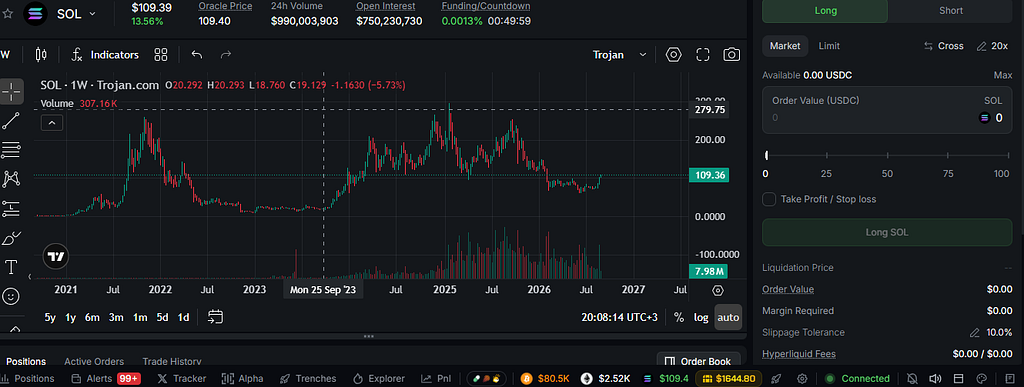
On-chain cryptocurrency trading has undergone a fundamental paradigm shift. The days of connecting a web browser extension wallet to traditional Decentralized Exchange (DEX) interfaces like Uniswap or Raydium, waiting for RPC nodes to broadcast transactions, and manually approving popups are officially over. In modern fast-moving crypto markets — where new token liquidity can emerge, peak, and collapse within seconds — native DEX user interfaces introduce unacceptable execution friction. When milliseconds determine whether a trader enters a token bonding curve before a vertical price rally or gets dumped on by automated arbitrage scripts, reliance on standard web interfaces is a failing strategy.
Initial attempts to solve this execution bottleneck saw the rise of Telegram-based trading bots. These tools allowed traders to trigger swaps instantly inside chat channels via programmatically generated non-custodial wallets. However, as trade complexity evolved, chat-based interfaces hit a hard ceiling. Managing multiple active live charts, configuring laddered limit orders, tracking portfolio exposure across dozens of speculative assets, and analyzing developer wallet histories cannot be done efficiently within a single vertical text window.
This operational gap led to the creation of modern web trading terminals. Leading this evolutionary shift is Trojan Web Terminal. Developed by the engineering team behind Unibot on Solana (led by founder Reethmos), Trojan expanded from its origins as a high-speed Telegram bot into a unified desktop web trading engine. By combining Telegram’s instant notification infrastructure with a browser-native workspace, Trojan Web Terminal balances low-latency execution with visual portfolio management.
This guide provides a detailed breakdown of Trojan Web Terminal in 2026, exploring its architecture, operational settings, sniping protocols, and security practices.
Read more about how to be ‘safe’ in any market below
The Safe Trader’s Mind: A Complete Framework for Capital Preservation, Custody, and Resisting the…
Technical Architecture & Core Execution Mechanics
Trojan Web Terminal is a non-custodial, high-speed trading interface built specifically for the Solana blockchain ecosystem. Rather than acting as an isolated decentralized exchange, Trojan serves as a control layer that aggregates real-time token discovery, execution routing, predictive analytics, and automated order management into a single browser interface.
Key Architectural Components
Client-Side Key Encryption & Non-Custodial Infrastructure: Trojan operates on a strictly non-custodial basis. When a user generates an embedded Web Terminal wallet, private keys are generated on the client side, encrypted locally using user-defined credentials, and protected using enterprise-grade Hardware Security Module (HSM) standards. Private keys are never stored unencrypted on centralized servers.Low-Latency Price Feeds: Standard DEX aggregators often rely on cached public RPC nodes that introduce price latency. Trojan Web Terminal uses proprietary streaming connections to deliver real-time token price data with a 0.04-second refresh cycle.Proprietary Transaction Routing: Orders placed through Trojan bypass public mempools. Instead, the terminal routes transactions via private, high-speed RPC nodes directly into liquidity pools — including Pump.fun bonding curves, Raydium AMM/CLMM pools, Meteora vaults, and Jupiter liquidity aggregators.Integrated MEV & Anti-Sandwich Protection: In public blockchain environments, maximum extractable value (MEV) bots monitor public transaction queues to front-run or sandwich incoming market buys. Trojan routes trades through specialized Jito-Solana bundle relays. By grouping transactions into sealed atomic bundles directly submitted to block validators, Trojan prevents sandwich attacks and execution slippage.
Detailed Breakdown of Terminal Features
1. Token Discovery: The “Trenches” Engine
Finding promising setups early requires raw, unfiltered market visibility. Trojan Web Terminal addresses this through its integrated “Trenches” tab, which aggregates live token deployments across Solana launchpads.
Bonding Curve Migration Monitors: Tracks launch progress on platforms like Pump.fun in real-time, showing how close a token is to completing its curve and migrating liquidity to automated market makers like Raydium.
Developer Wallet Forensics: Runs automated background checks on the token deployer wallet address. It flags whether the developer has deployed previous tokens that resulted in fast liquidity pulls, honeypots, or rapid sell-offs.Social Acceleration Metrics: Computes a real-time momentum score based on unique buyer acquisition velocity, transaction frequency, and holder distribution balance.
2. Advanced Algorithmic Order Types
Trading speculative on-chain assets manually introduces psychological bias and human execution delay. Trojan Web Terminal automates these operations through algorithmic order options:
Migration & Liquidity Snipers: Enables traders to set pre-funded buy orders that execute instantly when a target token completes its bonding curve or when developer liquidity is added to Raydium.Automated Take-Profit & Stop-Loss (TP/SL) Latches: Allows users to attach multi-tier profit-taking and loss-mitigation rules to any buy order. For instance, a trader can configure an automated rule to sell 50% of a position upon reaching a 100% gain, sell an additional 25% at a 200% gain, and exit the remaining position if the token drops 20% from its peak.Dollar-Cost Averaging (DCA) Engines: Automates the accumulation or distribution of a position by breaking large orders into smaller trades over pre-set intervals (e.g., executing a 0.5 SOL buy every 3 minutes for 30 minutes) to minimize market impact.On-Chain Copy Trading: Allows users to input target Solana wallet addresses to automatically replicate their buy and sell transactions in real time with custom capital allocation controls.Learn more about Onchain Perpetual Trading, with Hyperliquid below
Understanding Hyperliquid: How On-Chain Perpetual Futures Actually Work
Complete Step-by-Step Setup Guide
Getting started with Trojan Web Terminal requires no KYC or central account creation. Follow these steps to set up and configure your workspace:
Step 1: Initialize Your Non-Custodial Wallet
Open your web browser and navigate to trade.trojan.app.Click Connect Wallet in the top right corner.Select whether to connect an existing browser wallet (e.g., Phantom or Solflare) or generate an embedded Trojan Web Wallet.If choosing the embedded wallet, export your 24-word recovery seed phrase and private key immediately. Store this key offline on physical paper or inside an encrypted password manager. Never store unencrypted screenshots of private keys.
Step 2: Deposit Operating Capital
Copy your public Solana wallet address displayed at the top of the interface.Transfer SOL from a centralized exchange or primary hardware wallet.Ensure you maintain a persistent buffer of at least 0.1 to 0.2 SOL in your trading wallet. This balance is required to pay for base network transaction fees, rent-exempt account creation, and Jito MEV tip bundles.
Step 3: Configure Transaction Execution Parameters
Open the Settings menu (represented by the gear icon).Set your default Slippage Tolerance. For liquid, established tokens, set slippage between 0.5% and 1.0%. For volatile token launches or Pump.fun migrations, adjust slippage to 5%–15% to prevent failed transactions.Configure Priority Fee Profiles:Standard Mode: 0.0015 SOL (Suitable for typical market conditions).Turbo Mode: 0.0075 SOL (Ideal during moderate network congestion).Custom Mode: User-defined fee caps designed for high-competition launches.Toggle MEV Protection / Jito Bundles to Enabled.
Step 4: Configure Global TP/SL Presets
Navigate to Preset Strategy Settings.Enable Auto Take Profit and define your target profit tiers.Enable Auto Stop Loss and set your maximum acceptable drawdown percentage.Save the configuration. These rules will automatically bind to all quick-buy trades executed within the terminal.
Practical Trading Protocols & Workflow Execution
Protocol A: Executing a Pump.fun Migration Snipe
When a token on Pump.fun reaches 100% of its bonding curve, its collected SOL liquidity is automatically transferred to Raydium to construct a permanent automated market maker (AMM) pool. The first transactions in the new liquidity pool often experience rapid price movement.
Execution Workflow:Open the Trenches tab and filter for tokens with a bonding curve progress equal to or greater than 95%.Open the token detail window and click Arm Migration Sniper.Specify your purchase amount in SOL, set your slippage cap to 10%, and set your custom Jito MEV Tip to 0.01 SOL.Click Confirm Snipe. The terminal will continuously poll the blockchain network and broadcast your purchase bundle within the exact block that Raydium liquidity pool creation is validated.
Protocol B: Mirroring Smart Money via Copy Trading
Copy trading allows users to automate their trading by mirroring the real-time transactions of experienced on-chain traders.
Identify profitable Solana wallet addresses using on-chain analytics platforms or historical performance data.Open the Copy Trade module inside Trojan Web Terminal and select Create New Target.Paste the target wallet address into the tracking field.Configure risk constraints:Fixed Trade Size: Execute a set SOL amount per buy (e.g., 0.25 SOL per trade), regardless of the copied wallet’s order size.Percentage Mirroring: Match a proportional percentage of the target wallet’s position size.Max Slippage & Daily Loss Limits: Restrict maximum slippage and set an automatic circuit breaker that halts copy-trading if cumulative daily drawdown exceeds a set threshold.
Security Framework & Risk Mitigation
While automated trading terminals provide speed advantages, operating on-chain presents inherent operational risks. Implementing a strict risk management framework is essential.
Private Key Management: Never store your backup seed phrase on cloud-synced storage drives or unencrypted digital notes. If using Trojan’s embedded web wallet, export your private keys and keep them written on physical paper stored in a secure location.Automated Honeypot & Rug Checks: Before entering unverified launchpad tokens, check contractual safety flags inside the terminal. Avoid contracts with active mint functions, un-renounced ownership settings, or top-10 wallet concentration ratios exceeding 30%.Slippage Control: Avoid setting slippage to Unlimited or extreme values above 25% during standard market operations. High slippage settings expose your order to excessive execution loss if network congestion or low liquidity occurs.Capital Segmentation: Never keep your entire liquid crypto net worth inside high-frequency trading sub-wallets. Routinely transfer accumulated profits out of your operational terminal wallet into cold storage hardware wallets.
Frequently Asked Questions (FAQ)
Is Trojan Web Terminal non-custodial?Yes. Trojan Web Terminal functions on a strictly non-custodial basis. Users maintain total custody over their private keys. The platform operates without centralized account balances, meaning funds cannot be frozen, locked, or seized by the interface operators.What fee structure does Trojan Web Terminal charge?Trojan charges a baseline platform fee of 0.9% to 1.0% per executed swap. Standard Solana network gas fees and optional Jito MEV priority tip allocations apply separately depending on user settings.How does Trojan sync data between Telegram and the Web Terminal?By syncing your authenticated wallet or Telegram identity, all active positions, wallet balances, open limit orders, and custom presetting profiles automatically synchronize across both the Telegram bot interface and the web terminal workspace.What should I do if my transaction fails during network congestion?Transaction failures during high-volatility events are typically caused by insufficient priority fees or low slippage allowances. To resolve this, navigate to Settings, switch your Priority Fee to Turbo or Custom (allocating 0.005 SOL or higher), and increase slippage tolerance incrementally.
This piece is for informational purposes only and isn’t financial advice. Perpetual futures and crypto trading carry real risk — always DYOR.
A Detailed 2026 Guide on Trojan Web Terminal: Master On-Chain Trading & Meme Coin Automation was originally published in Coinmonks on Medium, where people are continuing the conversation by highlighting and responding to this story.