
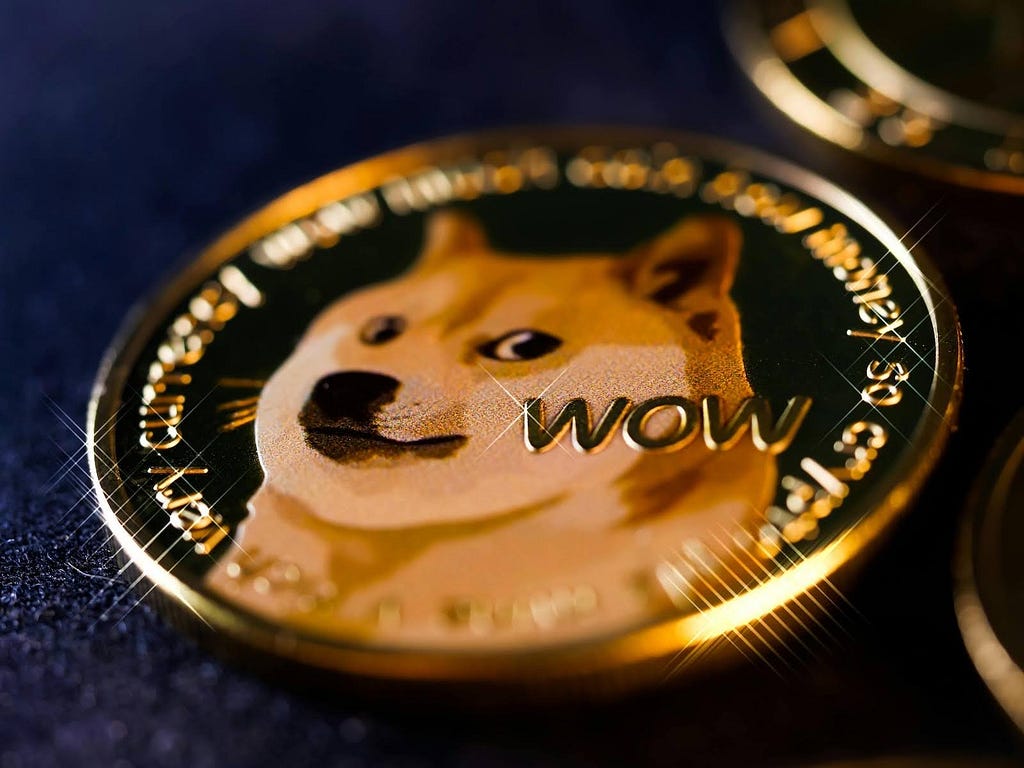
Risk appetite is returning, large-cap memes are waking up, and activity in the trenches is recovering. But this cycle may reward traders who follow liquidity and smart money — not those who simply chase green candles.
Meme coins are showing signs of life again.
After months of declining activity, compressed valuations, and fading retail attention, the sector has started to rebound alongside improving risk appetite across crypto. CoinMarketCap recently reported a roughly 15% week-over-week jump in total meme coin market capitalization during one rebound period, with Dogecoin, Shiba Inu, and Pepe all participating as Bitcoin strengthened and traders moved further out on the risk curve.
But there is an important distinction traders need to make:
A meme coin rebound is not automatically a new meme season.
Recent market data paints a much more interesting picture. Large-cap memes are recovering. Solana’s trenches are showing renewed activity. New narratives can still produce explosive runners.
At the same time, market breadth remains uneven, many smaller tokens continue to collapse after short-lived pumps, and attention rotates faster than ever. A more recent CoinMarketCap assessment similarly concluded that meme trading was heating up again, but that weak breadth meant a full sector-wide cycle had not yet been confirmed.
For meme traders, this may actually be the better environment.
Because when everything goes up, almost anyone can look smart.
When liquidity becomes selective, finding where capital is moving matters much more.
That is where on-chain platforms such as Ave.ai become increasingly useful: instead of asking only which meme is trending?, traders can examine who is buying, when they entered, how liquidity is changing, whether the buying is independent, and whether the narrative is translating into real on-chain demand. Ave.ai currently combines real-time market data, wallet intelligence, token analytics, and trading infrastructure across more than 190 blockchains and 300 decentralized exchanges.
So what is actually happening in the meme market?
And what should traders watch next?
First, Why Are Meme Coins Rebounding?
Meme coins sit close to the far end of crypto’s risk spectrum.
That means their strongest rallies rarely happen in isolation.
When Bitcoin is unstable, liquidity becomes defensive. Traders prioritize BTC, stablecoins, or simply cash.
But when Bitcoin stabilizes or moves higher, confidence starts spreading outward.
The flow often looks roughly like this:
BTC strength → broader crypto confidence → altcoin rotation → speculative risk → meme coins.
Recent market behavior fits that pattern.
CoinMarketCap reported that meme coins rallied sharply as Bitcoin pushed above $82,000 during a broader risk-asset recovery, with total meme market capitalization gaining roughly 15% over the week. DOGE rose around 7%, PEPE roughly 6%, and SHIB about 2.5% during the measured period.
Earlier periods showed the same basic mechanism on Solana.
When Bitcoin moved through $93,000 and market sentiment shifted toward neutral, SOL gained 3.2% over the week and moved above $140, while speculative activity across selected Solana assets accelerated. Yet meme coins simultaneously appeared among both the strongest and weakest performers — highlighting just how uneven the rotation remained.
That tells traders something important.
Risk appetite is returning. But capital is not returning equally.
And that changes how the rebound should be traded.
Signal #1: Large-Cap Memes Are Becoming Risk-On Proxies Again
One of the first signs of recovering meme appetite is usually strength in established names.
DOGE.SHIB.PEPE.BONK.FLOKI.
These tokens no longer behave exactly like newly launched micro-cap memes. They have deeper liquidity, larger communities, more exchange coverage, and much broader market recognition.
So when traders return to meme exposure, larger tokens can become the first destination.
CoinMarketCap’s rebound data showed DOGE, SHIB, and PEPE advancing together as broader crypto sentiment improved.
That is worth watching because large-cap meme strength can function as a liquidity bridge.
Consider the possible progression:
Stage 1: Traders buy BTC and major assets.
Stage 2: Risk appetite increases.
Stage 3: Capital enters established meme coins.
Stage 4: Traders begin searching for higher-beta opportunities.
Stage 5: Liquidity moves into smaller caps and newly launched narratives.
This is where meme season can become interesting.
The biggest percentage returns rarely come from the largest assets.
But those large assets can tell you when the market is becoming comfortable taking risk again.
Signal #2: The Trenches Are Waking Up
Large caps tell us about sentiment.
The trenches tell us about speculation.
And recent data suggests some activity is returning there too.
CoinMarketCap reported that Pump.fun’s token graduation rate reached 1.05% on February 17, its highest daily level since July 2025, as fresh launches began attracting attention again. AI-related narratives also rapidly produced new multi-million-dollar tokens during the rebound.
That distinction matters.
When DOGE rises 5%, the market is telling you traders are willing to take some additional risk.
When newly created tokens begin graduating, attracting liquidity, producing large volumes, and developing communities, the market is telling you something else:
Speculators are willing to enter the casino again.
But the trenches have changed.
There are more launches.
More automated traders.
More snipers.
More sophisticated wallets.
More copycats.
And vastly more competition for attention.
A revival in activity therefore does not mean the old strategy of buying random launches suddenly works again.
It means opportunity is returning at the same time as selection risk.
Signal #3: Solana Remains a Key Battleground
Any discussion of modern meme trading has to include Solana.
Its combination of inexpensive transactions, fast execution, large retail communities, and launchpad infrastructure helped make it one of the dominant environments for meme speculation.
Recent CoinMarketCap data showed that even when the wider Solana ecosystem remained relatively flat, meme tokens could still produce extreme dispersion: some surged by double-digit percentages while other memes ranked among the ecosystem’s biggest losers.
That is a defining feature of the current market.
The chain can be strong while your meme coin goes to zero.
Likewise:
The meme sector can rebound while most individual memes fail.
This is why traders should separate three different questions:
Is crypto bullish?
Is the meme sector bullish?
Is this particular token attracting sustainable capital?
They are not the same question.
The first can help the second.
The second can create opportunities for the third.
But neither guarantees it.
The Biggest Shift: This Is Becoming a Market of Selection
During peak speculative mania, traders can make money simply because liquidity is expanding everywhere.
Almost every narrative gets a bid.
Almost every launch attracts traders.
Almost every pullback gets bought.
That is not what the current data suggests.
The stronger interpretation is that meme liquidity is returning selectively.
CoinMarketCap’s later analysis noted that although large-cap positioning and isolated meme runs were recovering, overall breadth remained weak enough that it was premature to call a complete meme cycle.
This creates a different game.
Instead of:
Buy memes because memes are pumping.
The strategy becomes:
Find where attention, liquidity, narrative, and sophisticated capital are converging.
That is a much harder problem.
It is also exactly where on-chain intelligence becomes valuable.
The Ave.ai View: Don’t Just Follow Price. Follow Capital.
A traditional chart answers:
What happened to price?
On-chain data can answer:
What is happening underneath price?
That distinction becomes crucial during an early market rebound.
Ave.ai’s Smart Money framework evaluates wallets using factors including PnL, trading volume, win rate, trade history, and the distribution of profitable positions, rather than defining a wallet as sophisticated simply because it holds a lot of capital.
For traders, that produces a more useful question than:
“Which meme coin gained 50% today?”
Ask:
“Which tokens are profitable wallets accumulating before everyone else notices?”
That shift — from watching price to watching positioning — can dramatically change how traders interpret a rebound.
1. Smart Money: Who Is Actually Buying?
Not every whale is smart money.
And not every wallet labeled “smart money” should be copied blindly.
Ave.ai’s current documentation makes this distinction explicit: smart money should demonstrate qualities such as repeatable profitability, strong timing, or early participation in successful assets. Its wallet analysis lets traders compare PnL, win rate, transaction volume, token performance, holdings, and historical activity.
Imagine two meme coins.
Meme A
Price: +80%
Smart Money: Mostly selling
Liquidity: Flat
New buyers: Accelerating
Narrative: Already everywhere
Meme B
Price: +15%
Smart Money: Accumulating
Liquidity: Increasing
New buyers: Gradually expanding
Narrative: Just beginning to spread
Which one has the more interesting setup?
The answer is not automatically Meme B.
But Meme B may deserve more research.
Why?
Because price may be lagging capital formation rather than leading it.
That is often what traders are searching for.
2. Liquidity: Is the Move Actually Tradeable?
Market cap makes headlines.
Liquidity determines whether you can get out.
This is particularly important for small meme coins.
A token showing a $10 million valuation does not necessarily contain anything close to $10 million of executable liquidity.
So when a meme begins trending, traders should look beyond percentage gains and evaluate:
liquidity depth,transaction volume,buy versus sell activity,net buying,holder distribution,token security,and changes in liquidity over time.
Ave.ai surfaces transaction volume, buy/sell data, net buying, liquidity, and token-risk information directly alongside its meme-trading analytics.
That helps answer one of the most important questions in meme trading:
Is real capital entering — or is price simply moving because liquidity is extremely thin?
A 200% rally on weak liquidity can disappear almost instantly.
A smaller move accompanied by expanding liquidity, rising participation, and new capital can sometimes represent a healthier setup.
3. Narrative: Why Is This Meme Moving?
Every successful meme needs attention.
But not every kind of attention is equal.
The strongest meme narratives usually compress into something people can understand almost instantly.
An animal.
A celebrity moment.
An AI story.
A political event.
A viral video.
A cultural joke.
A new blockchain ecosystem.
A recognizable internet character.
CoinMarketCap’s recent coverage illustrates how quickly new narratives can reactivate speculative markets. AI headlines, for example, helped generate multiple fast-moving meme launches during one rebound in activity.
Ave.ai’s own trader education similarly emphasizes identifying emerging narratives and then monitoring community engagement and capital inflows to evaluate whether the theme has staying power.
The key word is then.
Narrative without money is just a meme.
Money without narrative can disappear quickly.
The stronger setup occurs when both are reinforcing each other.
4. Watch the Buyers Behind the Buyers
There is one more complication.
Suppose you see ten wallets buying a token simultaneously.
At first glance, that looks bullish.
But what if all ten wallets belong to the same person?
Or the same coordinated group?
Then ten apparent buyers may actually represent one source of capital.
Ave.ai’s updated smart-money methodology specifically warns traders to consider whether wallets are acting independently and to inspect holder relationships and bundled activity rather than interpreting several simultaneous purchases as automatic confirmation.
This is a subtle but increasingly important point.
As meme trading becomes more sophisticated, traders must distinguish:
wallet count from participant count.
The blockchain is transparent.
That does not mean the picture is immediately obvious.
A Better Framework for Trading the Meme Rebound
Instead of asking whether “meme season” is officially back, traders may benefit from monitoring five layers of confirmation.
Layer 1 — Macro Risk Appetite
Start with the broad market.
Is Bitcoin stable or trending higher?
Is capital rotating into altcoins?
Is overall crypto sentiment improving?
A healthier macro backdrop does not guarantee meme gains, but historical rebound patterns in the recent CoinMarketCap data show that improving crypto risk appetite has coincided with stronger meme performance.
Layer 2 — Meme Sector Breadth
Don’t look at DOGE alone.
Ask whether:
DOGE + PEPE + SHIB + BONK + smaller caps are strengthening together.
If only one token is moving, you may be looking at an isolated catalyst.
If multiple meme categories and chains begin strengthening simultaneously, the probability of a broader rotation becomes more interesting.
Layer 3 — Narrative Velocity
Which stories are accelerating?
Look for narratives moving from:
niche → conversation → meme → community → speculation.
The goal is not simply to find what is popular.
It is to find what is becoming popular faster.
Layer 4 — On-Chain Confirmation
Now use tools such as Ave.ai to ask:
Are smart-money wallets entering?
Is liquidity increasing?
Are buys strengthening relative to sells?
Are new holders appearing?
Are the wallets genuinely independent?
Does the token pass basic security checks?
Ave.ai provides wallet profiling, Smart Money monitoring, real-time DEX information, holder intelligence, token analysis, and meme discovery across a large multichain universe, allowing these questions to be investigated within the same trading workflow.
Layer 5 — Execution
Only then comes the trade.
Define:
Entry.Invalidation.Position size.Profit-taking levels.Maximum acceptable loss.
Meme coins can move extremely quickly in both directions.
Finding the right token is only half of the game.
Surviving the wrong ones is the other half.
The Meme Rebound May Be Different This Time
There is a temptation whenever meme coins begin recovering to immediately declare:
“Meme season is back.”
That may be too simplistic.
The evidence points toward something more nuanced.
Risk appetite has returned strongly enough at various points to push large-cap memes higher and revive speculative activity.
Solana remains an important meme ecosystem, but its meme tokens continue to show extreme performance dispersion even when SOL itself is strong.
More recent market analysis also suggests that activity is reviving without yet achieving the breadth associated with a full-scale meme boom.
So perhaps the better description is:
Meme liquidity is back — but it has become more selective.
And if that is true, this environment may favor traders who can identify capital flows earlier rather than simply chase whatever is already trending.
From “What Is Pumping?” to “Where Is Money Going?”
This may be the most important shift for meme traders.
During the last generation of meme speculation, discovery often began with social media:
See meme → find token → buy token.
The next generation increasingly looks like:
Spot narrative → identify token → verify contract → inspect holders → track smart money → confirm liquidity → monitor capital flow → execute.
That is a fundamentally more data-driven workflow.
Ave.ai reflects this transition.
Its Smart Money tools rank and analyze profitable addresses; its trading interface exposes liquidity, volume, net buys and wallet activity; and its meme discovery tools operate across major ecosystems including Solana, BNB Chain, Base, Ethereum, Tron, Sui and many others.
This does not eliminate meme coin risk.
Nothing does.
It simply allows a trader to replace:
“I think this looks bullish.”
with:
“Here is the evidence that capital may be positioning for it.”
That is a much stronger starting point.
What Could Confirm a Real Meme Season?
If the current rebound develops into something larger, several signals should begin appearing together.
Large caps keep strengthening.
DOGE, SHIB, PEPE and other established memes maintain momentum rather than producing isolated pumps.
Market breadth expands.
More mid- and small-cap memes participate instead of capital concentrating in a handful of tokens.
Launchpad activity accelerates.
More new tokens attract sufficient demand and liquidity to graduate into active markets.
On-chain volume grows sustainably.
Activity continues beyond one or two speculative spikes.
Fresh narratives create sustained runners.
New memes keep appearing — and capital continues rotating into them.
Smart money remains active.
Profitable wallets repeatedly deploy capital into the sector rather than rapidly withdrawing after short pumps.
The current market has shown pieces of this picture.
It has not consistently shown all of them at once.
That distinction matters.
The Real Opportunity May Come Before “Meme Season”
Waiting until everyone agrees meme season has arrived may feel safer.
It can also mean arriving late.
The more useful question for active traders is not:
“Are meme coins officially back?”
It is:
“Is the probability of a broader meme cycle increasing, and where is capital positioning if it is?”
Right now, the evidence suggests risk appetite can return quickly.
Large caps have demonstrated renewed strength.
The trenches have shown signs of revival.
New narratives are still capable of creating aggressive moves.
But the market remains highly selective.
That makes this less of a buy-everything meme season and more of a find-the-right-flow market.
For crypto traders, that may be the real opportunity.
The Bottom Line
Meme coins are not dead.
But the next phase probably will not reward traders simply because they own something with a funny ticker.
The market is becoming faster.
Attention is fragmenting.
Liquidity rotates quickly.
Wallet behavior is increasingly visible.
And the difference between an emerging narrative and a crowded trade can be measured in hours — or minutes.
The strongest meme traders will therefore look beyond price.
They will track:
Narrative.
Liquidity.
Smart Money.
Market structure.
Risk.
Platforms like Ave.ai make that increasingly possible by bringing real-time DEX data, wallet intelligence, meme discovery and on-chain execution into one environment.
Because during the next meme rebound, the question will not simply be:
What is pumping?
The more valuable question may be:
Where is the money going before the crowd gets there?
And on-chain, the answer is increasingly visible.
Ready to elevate your trading experience? Try Ave AI now:
Ave.ai – The Ultimate Web3 Trading Platform
Disclaimer: This blog post is for informational purposes only and does not constitute financial advice. Cryptocurrency trading involves significant risk. Always conduct your own research before making any investment decisions.
Meme Coins Are Rebounding — But Is Meme Season Really Back? was originally published in Coinmonks on Medium, where people are continuing the conversation by highlighting and responding to this story.