
Everyone is talking about stablecoins as the future of payments, but I think we are still looking at the smallest part of the story.
There is something slightly odd about the way stablecoins are discussed today, because almost every conversation eventually comes back to the same question: how much faster, cheaper and more convenient can they make payments?
It is a fair question, particularly when moving money across borders can still involve correspondent banks, foreign-exchange costs, settlement delays, compliance checks and a surprising amount of institutional machinery for what should, at least in theory, be a relatively simple economic transaction.
Stablecoins clearly improve parts of that experience, and the scale is already large enough to matter. Visa and its research partners estimate that adjusted stablecoin transaction volume reached roughly $10.2 trillion over a recent twelve-month period, even after removing activity that does not represent genuine economic transfers, which tells us that stablecoins have moved well beyond the stage where they can be treated as an interesting experiment confined to crypto markets.
But here is where I think the conversation gets stuck.
We are treating payments as though they are the destination when they may simply be the first application that makes the underlying infrastructure easy to understand.
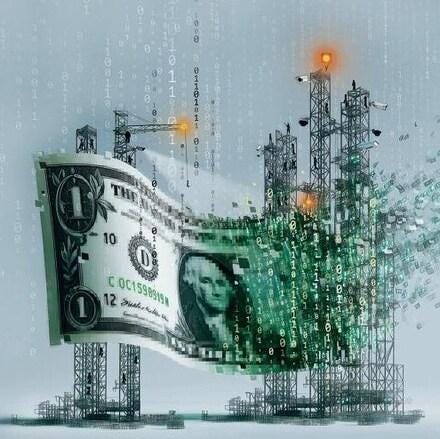
The internet had a similar problem. We initially thought about it as a better way to publish information, and then discovered that the really important thing was having a network through which almost anything digital could move. Stablecoins could follow a similar path, because their most important characteristic may not be that they move dollars faster, but that they allow dollars to exist inside software.
That distinction changes almost everything.
What Happens When Money Becomes Programmable?
For most of modern finance, money and software have lived in separate worlds.
Your money sits inside a bank, your business treasury is spread across financial accounts, and when you make a payment, software sends instructions into a financial system that processes, settles and reconciles the transaction somewhere else.
Stablecoins begin to blur that boundary because a dollar-denominated asset can exist directly inside a programmable environment, where applications can hold it, transfer it and build financial logic around it.
Imagine an importer in Kenya paying an overseas supplier, for example, where the invoice, payment conditions, settlement and reconciliation could eventually be connected through the same digital infrastructure rather than being handled as separate processes across several institutions.
The interesting part would not simply be receiving the money faster.
The interesting part would be that the payment becomes part of the business software itself, which means money can begin responding to the same rules, conditions and workflows that already govern the rest of the business.
Once that becomes possible at scale, the question stops being “How do we move money more efficiently?” and becomes “What can we build when money can interact directly with software?”
That is a much bigger market.
The Dollar Is Becoming an Internet Primitive
The timing is particularly interesting because money is not being tokenized in isolation.
Treasuries, money-market funds, private credit and other financial assets are increasingly being represented on programmable networks, which means we are gradually moving toward an environment where programmable money can interact with programmable assets.
That is where things start getting really interesting for financial institutions.
A corporate treasury could eventually automate liquidity management around predefined conditions, a financial application could release stablecoin liquidity against tokenized collateral, and a transaction could potentially move both the asset and the settlement cash through compatible infrastructure without requiring the same degree of reconciliation between disconnected systems.
The Bank for International Settlements has been exploring precisely this broader tokenization thesis, although its preferred architecture is different from the private stablecoin model, with the BIS emphasizing tokenized central-bank reserves, commercial bank money and government bonds as the foundations of a future monetary system.
The disagreement is important because it shows where the real battle is heading.
The question is becoming less about whether financial infrastructure will become programmable and more about who gets to provide the programmable money underneath it.
That could be banks through tokenized deposits, stablecoin issuers through regulated digital dollars, central banks through new forms of digital money, or some combination of all three.
I suspect the eventual system will be considerably messier than the “stablecoins replace banks” narrative suggests, because financial infrastructure tends to evolve by absorbing new technology rather than simply throwing away everything that came before it.
The Most Important Customer May Not Be You
There is another reason I think the payments narrative is too narrow, and it has to do with AI.
The traditional financial system was designed around people and institutions that make decisions, authorize transactions and manage accounts, whereas increasingly capable AI agents are beginning to operate continuously across digital environments without waiting for a human to manually initiate every action.
If an AI agent runs a digital business, it may eventually need to purchase computing resources, pay for data, hire other software services, receive revenue and manage its own operating expenses, which means it needs something very similar to what a human business needs: the ability to hold and move money.
The difference is that an AI agent does not want to fill out a bank form or wait two business days for an international transfer.
It needs money that software can use.
That is where stablecoins become particularly interesting, because a dollar-denominated digital asset that can be accessed programmatically fits naturally into an economy where software increasingly becomes capable of acting on behalf of people and businesses.
Circle’s push into infrastructure for AI agents is an early example of this direction, but the broader idea is more important than any individual company: if software becomes an economic actor, money needs to become software-compatible.
That could eventually create an economy where an AI agent pays another agent for a service, automatically purchases computing capacity when prices fall, receives revenue from customers and moves excess liquidity into another financial asset, all according to rules that have been encoded into its operating system.
At that point, we are no longer talking about payments in the conventional sense.
We are talking about economic activity becoming increasingly executable through software.
This Is Where Stablecoins Could Become Infrastructure
This is why I think the most useful way to understand stablecoins is not as “crypto dollars,” but as a potential form of financial middleware sitting between money and the digital economy.
They can provide dollar liquidity to applications, settlement to tokenized markets, payment infrastructure to global businesses and, eventually, a monetary interface through which autonomous software can participate in economic activity.
The token itself is only part of the story.
The bigger opportunity sits around custody, compliance, liquidity, treasury management, tokenized assets, settlement, developer infrastructure and institutional connectivity, because once programmable money becomes sufficiently widespread, an enormous ecosystem can develop around the ability to move and manage that money safely.
This is also why regulation matters so much.
The United States’ GENIUS Act, enacted in 2025, gave payment stablecoins a much clearer regulatory framework, and although regulation introduces constraints, it also gives banks, corporations and institutional investors something they desperately need before committing serious capital: greater certainty about the rules of the game.
The result could be a strange but powerful convergence in which banks tokenize deposits, asset managers tokenize securities, stablecoin issuers provide digital dollar liquidity, fintechs build the interfaces and blockchains provide some of the underlying settlement infrastructure.
The user may eventually see none of this.
They will simply move money.
The Endgame Is Bigger Than Payments
The stablecoin industry has spent years proving that a digital representation of the dollar can work, and the next stage is increasingly about proving that the dollar can become a programmable component of the global digital economy.
Payments will remain enormously important, particularly in cross-border commerce and emerging markets where access to reliable dollar liquidity can be expensive or difficult, but payments may ultimately be the beachhead rather than the destination.
The bigger opportunity is a world where money, financial assets and software can interact directly, allowing businesses to automate treasury operations, markets to settle more efficiently, applications to embed financial services into their products and AI agents to participate in economic activity without requiring humans to manually coordinate every transaction.
That is why I think we are asking the wrong question when we ask whether stablecoins will replace Visa, SWIFT or traditional bank transfers.
The more interesting question is whether stablecoins help turn the dollar into the native financial language of the internet.
If that happens, we may eventually look back at today’s obsession with payment volumes and realize that we were measuring the wrong thing, because the truly important development was never simply that dollars could move faster.
It was that dollars could finally become part of the software through which the economy operates.
The Stablecoin Endgame Is Not Payments was originally published in Coinmonks on Medium, where people are continuing the conversation by highlighting and responding to this story.