
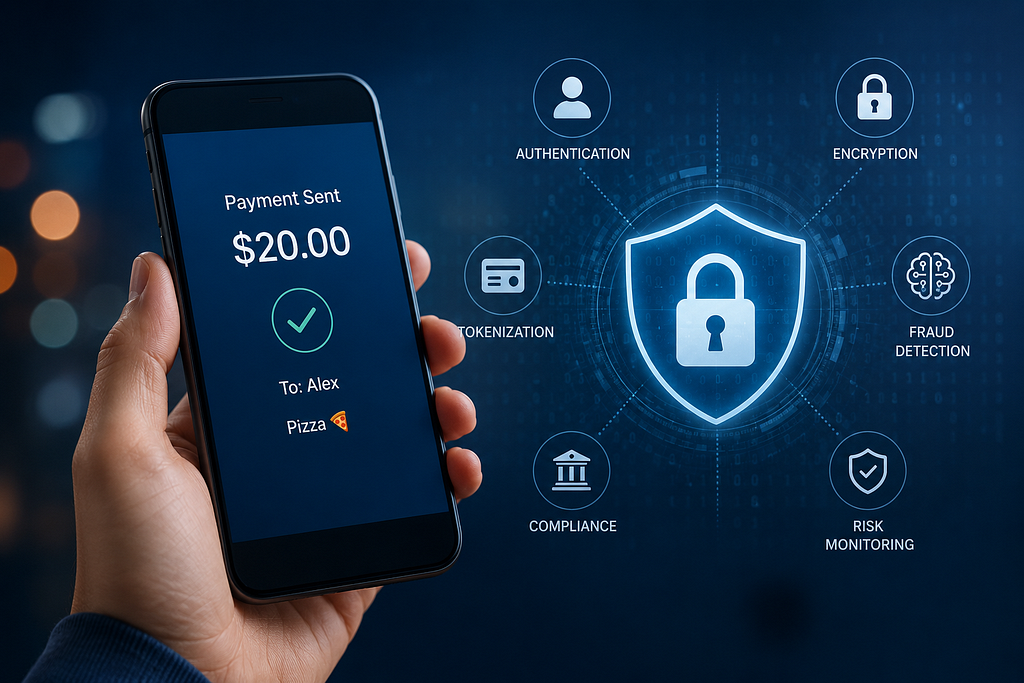
What actually happens, security-wise, when you Venmo someone $20
I sent my roommate $14 for pizza last week without thinking twice. Tap, done, gone. That’s kind of the whole selling point of apps like Venmo, Cash App, Zelle, moving money feels as casual as sending a text now. But there’s a surprisingly paranoid system running underneath that one tap, built by people who assume, correctly, that somebody somewhere is always trying to rip it off.
ChatGPT Generated Image
I went down a rabbit hole trying to figure out what’s actually happening back there. More than I expected, honestly.
Why these apps are such an easy target
Banks move money slowly, with a bunch of bureaucracy stacked in between. P2P apps did basically the opposite on purpose, they ripped out the friction to win users over. Good for us, less good from a security angle, because now you’ve got:
Transfers that are instant and often impossible to claw back once they’re sent. Signups that take under a minute, sometimes just a phone number and an email address, nothing more. A huge chunk of fraud that doesn’t touch the technology at all, it just cons a person directly. And regulation that, frankly, still hasn’t caught up with how these apps actually operate day to day.
Put all that together and criminals don’t even need to crack encryption. They just need to sound convincing on the phone.
What’s actually running in the background
There isn’t one big defense doing all the work. It’s more like a handful of imperfect systems stacked on each other, and everyone’s hoping the gaps don’t line up on the same day.
First layer is authentication, password plus something else, maybe your face, maybe a check on whether the app recognizes this particular device. Then encryption scrambles the data mid-transfer so if someone intercepts it, they just get garbage. Card numbers and account details get swapped for meaningless tokens too, so a data breach doesn’t actually leak anything usable.
Then it gets more interesting. Fraud models are watching transaction speed, location, behavior the kind of thing that’s hard to fake and every transfer quietly gets a risk score you never see. Do things the way you normally do, from where you normally are, and it just goes through.
Do something weird a big transfer, a brand new device, logging in from a country you’ve never touched before and it might pause and ask you to prove it’s really you. Compliance rules like PCI DSS sit under all of this too, setting a legal floor nobody’s allowed to go below.
The part no encryption can touch
Here’s the thing nobody really wants to say out loud: most P2P fraud isn’t a hack. It’s a con.
Scammers realized a while back that manipulating a person is a lot easier than breaking AES encryption. Same handful of tricks keep showing up, a “buyer” on some marketplace app sends a fake payment screenshot and pressures the seller to ship the item before the money’s actually cleared; someone calls pretending to be your bank and talks you into “verifying your account” by sending money to yourself; long romance scams that end in repeated transfers the victim genuinely believes are voluntary; or the classic reversal move, where a scammer sends you money, claims it was a mistake, asks for it back, and then the original payment bounces a few days later and you’re just out the cash.
You can’t patch somebody’s trust with a firmware update. Which is probably why the better platforms now spend almost as much energy on user warnings and education as they do on cryptography.
What’s changed lately
The industry’s actually gotten a lot sharper about this, and a few things stand out. Adaptive authentication is quietly replacing the old all-or-nothing password model, the system reads risk signals and only bugs you for extra verification when something looks off, instead of hassling everyone equally all the time. Confirmation of Payee checks are catching more misdirected transfers than you’d think, just by cross-checking the name you typed against the actual account before anything moves.
Behavioral biometrics, typing rhythm, swipe pattern, even how you hold the phone are confirming it’s you without you doing anything extra. A handful of platforms now quietly share anonymized fraud signals with each other, so a scam pattern one app catches can get blocked on a rival app within hours. And brand-new accounts, or transfers to someone you’ve never paid before, often get a temporary cap, just to buy the fraud systems a little time.
The tradeoff nobody really talks about
Every extra security check makes the app a little more annoying to use. Make someone verify their identity three separate times before they can send their roommate ten bucks, and they’ll just delete the app. That tension, smooth versus safe is basically the entire design problem every payments company on the planet is wrestling with.
The frameworks that actually work well are the ones you never notice. Checking constantly in the background, only stepping in when something’s genuinely off.
What you can actually do
None of the technical stuff above requires you to do anything. A few habits cover most of the risk:
Turn on multi-factor authentication and just leave it running. Never send money to “verify” your own account no legitimate bank or app is ever going to ask you for that, full stop. Actually read the recipient’s name before you hit send, instead of just trusting autocomplete. And if something feels rushed or urgent, slow down on purpose that pressure you’re feeling is usually the scam itself, not a real deadline.
P2P payments aren’t some passing fad, they’re just how money moves now. The frameworks behind them will keep getting smarter, but honestly, the best protection is still a quick “wait, does this feel off?” before you tap send.
The Invisible Wall was originally published in Coinmonks on Medium, where people are continuing the conversation by highlighting and responding to this story.