
The winners hide the blockchain. The losers sell it. That one difference is quietly deciding who owns the next financial system.
I did something slightly obsessive over the last few weeks.
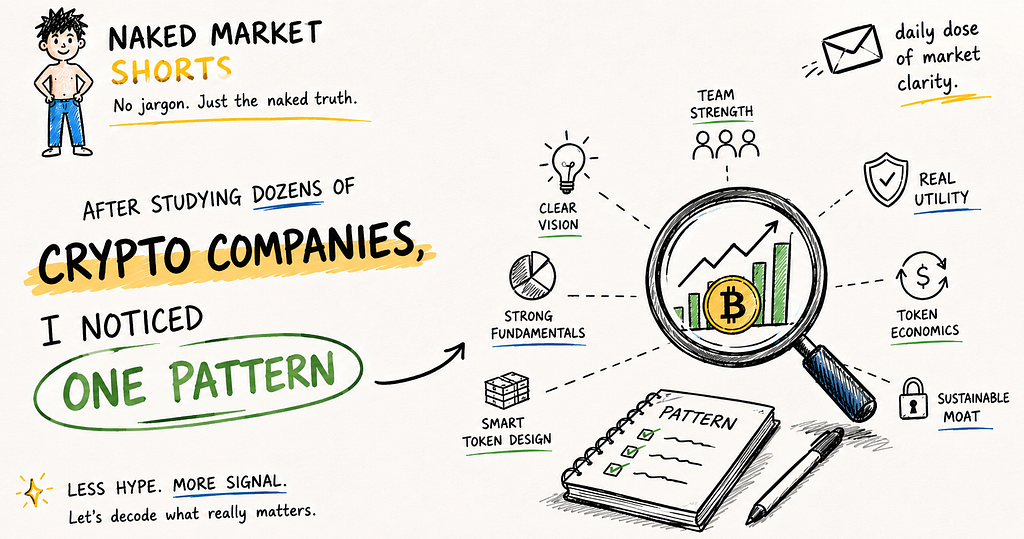
I pulled up a long list of blockchain companies, the ones raising serious money, the ones quietly shutting the lights off, and the small handful that somehow ended up moving money for hundreds of millions of real people and I dumped them all into one messy spreadsheet. I wanted to find the thing they had in common. The pattern underneath all the noise.
(Okay, “dozens” is doing some work there. It was somewhere north of forty before I stopped counting. Close enough.)
I found the pattern. And it’s almost the exact opposite of what the headlines train you to expect.
Here it is, in one line:
The blockchain companies that are winning have hidden the blockchain. The ones that are dying kept trying to sell it.
That’s the whole essay, really. But stay with me because why that’s true tells you more about where money is actually heading than any price chart ever will.
New around here? This newsletter has one job: show you what’s happening under the hood of the money system before it becomes obvious to everyone else. If you want the origin story of why I started it, begin with One Planet, 180 Currencies →
The story you’ve been sold
Everyone was waiting for the crowd to “get it”
For about ten years, the plan across the whole industry was basically the same. Build an app. Put the coin front and center. Teach people what a wallet is, what a “seed phrase” is (a long secret password you can never, ever lose or forget). Then wait for the masses to show up and finally understand how clever it all was.
The masses did not show up.
Depending on which survey you trust, roughly one in twenty people worldwide own any crypto at all and that number has barely moved in years. Not because the technology got worse. It actually got dramatically better and cheaper. It stalled because the experience stayed hostile to normal humans.
Think about how strange the old model was. To use many of these apps, you first had to go buy a separate little token just to pay the “gas”, the fee to make the app work. Imagine your bank telling you that before you can press Send, you must first acquire a second, unfamiliar currency, in a specific amount you have to guess, or the transfer silently fails. That was the actual experience. Nobody outside the club wanted it. They were never going to want it.
And when people did show up, it was usually for the wrong reason, the number going up. Remember Axie Infinity? For a beautiful, weird moment during the pandemic, people in the Philippines and elsewhere were earning real, above-minimum-wage income by breeding little cartoon monsters and cashing out the tokens. Then the token price cracked, the earnings evaporated, and almost everyone walked away overnight. The uncomfortable lesson: nobody actually wanted to play a game that felt like a job once the paycheck disappeared.
So that whole approach lead with the token, lead with the tech, treat “blockchain” as the selling point mostly produced graveyards.
Meanwhile, something much quieter was working.
What’s actually happening
The winners made the blockchain disappear
Look at who’s actually processing real volume in 2026, and you notice they’ve done the opposite of the old playbook. They took the blockchain and buried it so deep the user never sees it.
Take Stripe, the company that quietly powers the checkout on a huge chunk of the internet. In 2025 it paid around $1.1 billion to buy a startup called Bridge. What does Bridge do? It lets any business send and receive “stablecoins” digital dollars that don’t swing in price like Bitcoin without the business ever having to understand, touch, or even think about the blockchain underneath. To the company using it, it just feels like normal money moving faster. The chain is under the floorboards.
Same story everywhere you look now. Stripe also bought a company called Privy, which handles wallets for 110 million-plus accounts where people hold digital dollars without a seed phrase, without the scary password, often without knowing “crypto” is involved at all. Klarna, the buy-now-pay-later giant, rolled out its own digital dollar for its 100-million-plus customers. Even Meta the company regulators once dragged for trying to launch its own coin is creeping back in, except this time it’s not building the plumbing itself. It’s renting someone else’s and staying quiet about it.
There’s a phrase floating around the industry for this now: invisible crypto. You log in with an email. You tap a button. Something happens in the background. Fees get paid for you automatically, so you never buy a mystery token just to press send. And because it’s a stable digital dollar, you never watch the value jump around and get reminded you’re in some strange new system. It just feels like an app.
Here’s the part that should reframe how you see this entire space:
The rule of infrastructure
The best infrastructure is the kind nobody can name.
You use TCP/IP every time you open a webpage, you’ve probably never said those letters out loud in your life. Your salary and your rent move across an invisible mesh of bank codes and settlement systems you never think about. That anonymity isn’t a weakness. It’s the proof it won.
Stablecoins and blockchain rails are racing toward exactly that kind of silence. The migrant worker sending money home, the importer paying a factory overseas, the logistics firm paying suppliers — a lot of them are already running on this stuff. None of them say “distributed ledger.” They say “it’s faster and cheaper now.” That’s the finish line. Not fame. Invisibility.
If this idea, blockchain as boring plumbing rather than a casino is new to you, I unpacked the foundation of it in The New Rails: Blockchain as Infrastructure → and traced how the humble stablecoin grew up in Stablecoins: How a Casino Chip Became the House →
Follow the incentives
Why hide it? Because that’s where the money is
Companies don’t hide the blockchain out of modesty. They hide it because the real money was never in the token. It was in owning the pipe and quietly earning off everything that flows through it.
Let me show you the cleanest example, because once you see it you can’t unsee it.
When you hold a “digital dollar,” you hand real dollars to the company that issued it. They promise you can swap back to one real dollar any time. But while your money sits there, they get to park those dollars in something safe and boring that pays interest, mostly short-term U.S. government debt. Collectively, the companies behind these digital dollars now hold well over $150 billion in U.S. Treasuries, which quietly makes them one of the larger lenders to the United States government. You get a dollar that moves fast. They keep the interest. That’s the business. That’s the whole business.
You’re not the customer. Your idle dollar is the product.
Now scale that thought up. The world’s biggest asset manager, BlackRock, the folks quietly managing money for pension funds and governments launched a tokenized fund that’s essentially “boring government bonds, but on a blockchain so they settle instantly, 24/7.” It’s grown into the billions, and BlackRock is now managing tens of billions of dollars of reserves for the largest digital-dollar issuers too. Their CEO keeps describing this correctly not as “crypto,” but as an upgrade to the plumbing of markets. Tokenization doesn’t replace the bond. It replaces the slow, expensive paperwork around the bond: the custody, the clearing, the reconciliation, the two-day wait. Squeeze cost out of that machinery and it compounds across trillions.
And the old giants? They didn’t fight it. They absorbed it. Visa turned on digital-dollar settlement across dozens of countries. Mastercard bought its way in. The credit-card networks looked at the new rail and decided it was cheaper to swallow it than to battle it.
The tell is in the boring numbers. The headlines love a retail story someone buying a coin on their phone. But the real explosion is business-to-business: companies paying other companies in digital dollars. That volume jumped several hundred percent in a single year. It’s finance teams and treasurers, not day-traders, quietly rewiring how money settles. Invisible plumbing, moving invisible fortunes.
Who wins, who loses
Where this goes next
If the pattern holds and everything in that spreadsheet says it will then the next few years sort into winners and losers along one clean line: do you own an outcome, or do you own a story?
The winners are the invisible layers. The plumbing companies. The reserve managers earning yield on everyone else’s dollars. The distribution giants, the payment apps and banks and brokerages that already have the customers and are quietly bolting new rails underneath. You’ll know them because they almost never brag about the technology. They brag about the result: instant, cheaper, always-on.
The losers are anyone whose entire pitch is “we’re on the blockchain.” The token-first consumer apps. Even a lot of the crypto middlemen, the on-ramps and bridges you currently have to fumble through are on a countdown, because the whole direction of travel is to make those steps vanish. One founder in the space put it bluntly: people don’t want to convert dollars into crypto and back, they just want to use the app. The conversion step is friction, and friction gets designed away.
But here’s where I want you to keep your guard up because “invisible” cuts both ways.
When something gets wrapped in the language of innovation, it also gets easier to hide what you actually own. Take the shiny new “tokenized stocks” the ability to buy a token that tracks Apple or Nvidia. Sounds like owning the stock. Read the fine print in a lot of these products and you’ll find you’re holding a kind of IOU that tracks the price, not real shares with real shareholder rights. Same shine, different substance. Regulators have already flagged it. That’s not a reason to panic, it’s a reason to look under the hood, which is the entire job of this newsletter.
I traced where the genuinely huge version of this trend is heading, trillions of dollars of real-world assets moving on-chain in Tokenization: The $16 Trillion Shift →
The takeaway
The “strip it naked” test
You don’t need to track forty companies to use any of this. You need one small habit, a filter you run any new financial thing through the moment it shows up in your feed. Three questions. That’s the whole model.
What am I actually being sold — the outcome, or the technology?If the pitch leads with the outcome (”get paid instantly, anywhere”), that’s a product. If it leads with the technology (”powered by our revolutionary chain”), be careful. Sizzle is usually hiding a thin steak.Who earns while I sleep? Follow the money one layer down. Someone is collecting a fee, a spread, or the interest on your idle balance. Always. If you can’t figure out who, it’s probably you.If the fancy word vanished tomorrow, would this still be useful? Delete “blockchain,” “AI,” “web3” from the description. If a genuinely useful thing remains, it’s infrastructure. If nothing’s left, it was a story wearing a costume.
Run those three questions and the whole landscape reorganizes itself in front of you. The winners pass all three quietly. The losers fail at least one loudly. And you get to stop reacting to headlines and start reading the machine underneath them — which, if you strip everything else away, is the only edge that actually lasts.
That’s the pattern. Forty-something companies, one lesson: the future of money is being built to be invisible. Your advantage is refusing to look away.
If you want to see the financial system the way it actually works before it becomes obvious to everyone else, subscribe to Naked Market.
Keep pulling the thread
Start here → One Planet, 180 Currencies (why this newsletter exists)The New Rails: Blockchain as InfrastructureStablecoins: How a Casino Chip Became the HouseTokenization: The $16 Trillion Shift
-More soon
After Studying Dozens of Crypto Companies, I Noticed One Pattern was originally published in Coinmonks on Medium, where people are continuing the conversation by highlighting and responding to this story.