
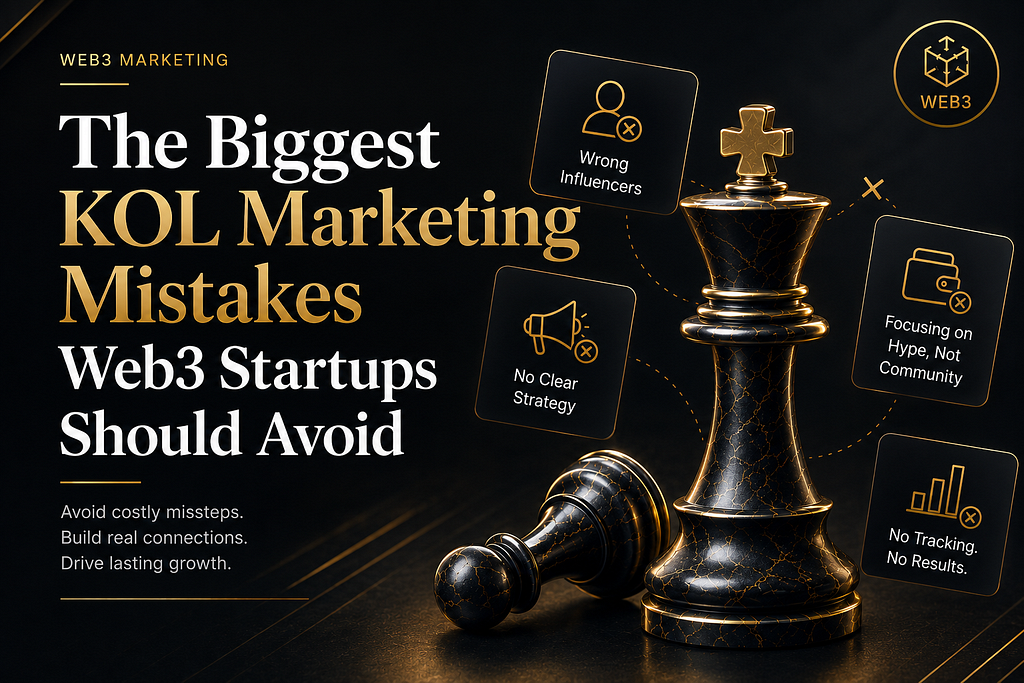
Most campaigns don’t fail because the budget was too small. They fail because of five decisions that get made before a single post goes live.
There’s a version of this story that plays out almost every month in Web3. A startup raises a seed round, sets aside a chunk of it for “influencer marketing,” reaches out to a handful of accounts with big follower counts, wires payment, and waits for the token or app to take off. Three weeks later, the engagement graph looks like a heartbeat monitor flatlining, the Discord has forty new members who never say anything, and nobody can explain where the money actually went.
This isn’t a talent problem or a budget problem. It’s almost always a process problem, and it repeats itself because the mistakes are quiet. They don’t show up until the campaign is already over and the reporting call is awkward.
Those three numbers sit next to each other for a reason. Fraud eats budget before a campaign even starts. Weak vetting turns a $5.78 return into a loss. And missing disclosure turns a “successful” campaign into a legal problem months after everyone’s moved on. Every mistake below connects back to one of these.
1- Hiring by follower count instead of on-chain impact
This is the mistake that funds all the others. A KOL with 400K followers looks impressive in a pitch deck screenshot, but followers are the easiest metric in the world to fake, and in crypto specifically, engagement pods and bot farms have gotten good enough that a quick profile scroll won’t catch them.
The number that actually matters is what happens after the post wallets connected, TVL movement, and whether the community members who joined during the campaign are still around ninety days later.
Agencies that can’t show proof of vetting beyond a follower count usually aren’t running the campaign for results; they’re running it for a screenshot. If you ask a KOL marketing partner one question before signing anything, make it this one: how do you verify an audience is real before the contract is signed, not after the post underperforms.
2- Skipping compliance and disclosure
This mistake is the one that ages worst. Crypto influencer content sits closer to financial promotion than lifestyle sponsorship, and regulators increasingly read it that way. Every paid post and every gifted-token allocation counts as a material connection that has to be disclosed clearly inside the post itself, not tucked into a bio or a reply three tweets down. FTC guidance on this has only gotten stricter through 2025 and 2026, and SEC enforcement on token promotion hasn’t slowed down either.
A campaign becomes legally risky the moment incentives are unclear, messaging drifts into investment framing, and responsibility for what gets said stays informal.
3- Treating KOL marketing as a one-off blast
A lot of startups budget for KOL marketing the same way they’d budget for a launch-day ad buy one wave of posts around a token generation event or mainnet launch, then nothing. The problem is that Web3 communities don’t form from a single post.
They form from repeated, consistent exposure to a handful of creators the audience actually trusts, which is why micro-KOLs and long-term crypto-native personas are increasingly outperforming one-time mega-influencer placements. A creator who mentions your project once gets skimmed past. A creator who’s been talking about it, honestly, across six posts over two months builds actual recall.
What a sustained approach looks like in practice
Creator retainers instead of single-post invoices, so the relationship outlasts one campaign cycleContent that evolves -announcement, deep-dive, AMA, follow-up instead of repeating the same post formatA mix of two or three long-term voices rather than fifteen one-off mentions
4- Chasing top-tier names with no audience-geo fit
A creator with a huge U.S.-based audience isn’t automatically useful if your token’s actual demand is concentrated in Southeast Asia or if your product only supports a handful of specific chains and regions. Campaigns that skip geographic and audience-fit checks tend to fail before they even start, because the “engagement” they generate is coming from people who were never going to use the product in the first place.
This is a five-minute check that gets skipped constantly, usually because the KOL’s rate card is the only thing anyone actually reviewed.
5- No framework for measuring what actually happened
The last mistake is the quiet one: running the whole campaign and then reporting on it with screenshots of likes and views. Vanity metrics look fine in a recap deck, but they don’t tell you if the campaign moved the business forward.
Without wallet connections, retention data, and attribution links tracked from day one, there’s no way to separate the KOL who actually drove signal from the one who just posted into the void.
The pattern underneath all five
Every one of these mistakes traces back to the same root cause: treating KOL marketing as a media buy instead of a relationship built on verified trust. The startups that get this right aren’t spending more, they’re spending more carefully checking audience quality before the wire transfer goes out, writing disclosure into the brief instead of hoping it gets added later, and measuring campaigns by wallets and retention instead of impressions.
Web3 marketing spend is on track to climb sharply through the rest of this decade, and the influencer layer of that spend is only going to get more scrutinized, not less. The startups avoiding these five mistakes today are the ones that will still have a working KOL bench when the next cycle turns.
Frequently Asked Questions
What is the biggest mistake Web3 startups make with KOL marketing?
Hiring influencers by follower count instead of on-chain impact. A large audience means little if it’s inflated with bots or never converts into wallets connected, TVL movement, or retained community members.
How much of influencer marketing spend is lost to fraud?
Roughly 15% of all influencer marketing spend is lost to fraud across industries, and the figure tends to run higher in Web3, where verification tooling and regulation are still catching up to the space.
Do crypto KOL posts need FTC disclosures?
Yes. Paid posts and gifted-token allocations are material connections under FTC guidance and must be disclosed clearly inside the post itself, not in a bio or a separate thread. Penalties can run into the tens of thousands of dollars per violation.
The Biggest KOL Marketing Mistakes Web3 Startups Should Avoid was originally published in Coinmonks on Medium, where people are continuing the conversation by highlighting and responding to this story.