
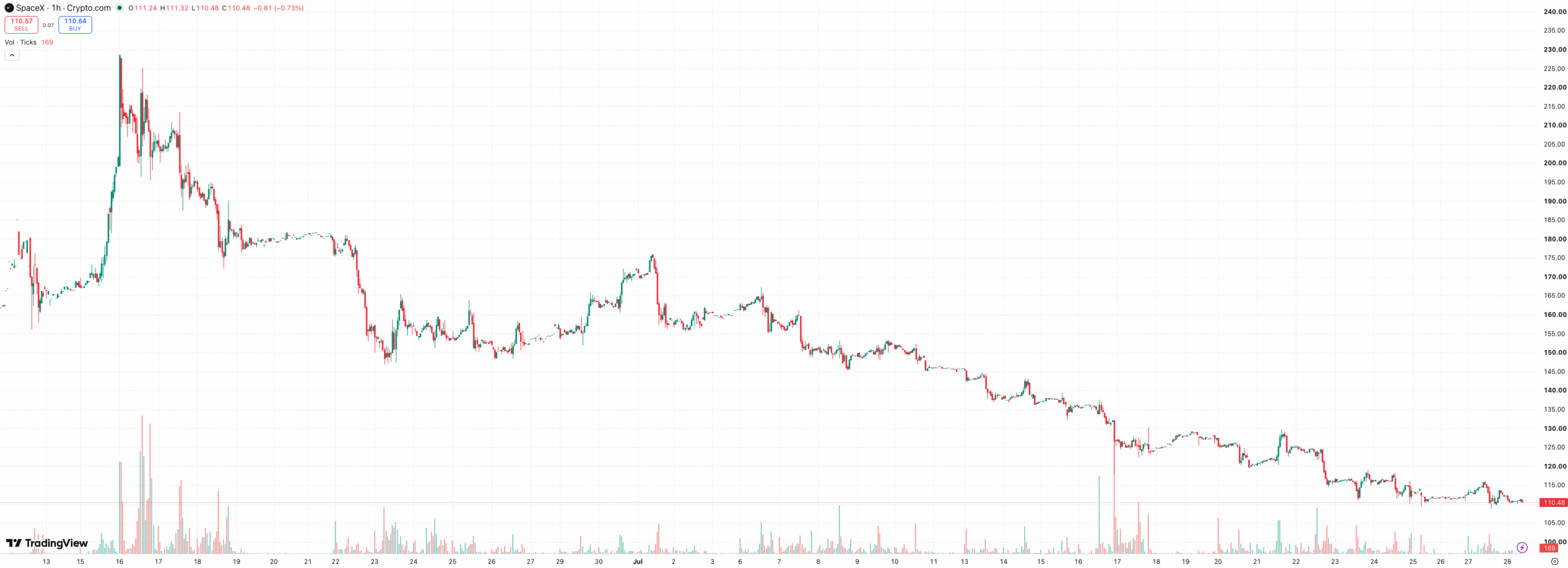
SpaceX stock fell to a record closing low of $113.50 on July 27, extending a very sharp reversal that began shortly after the company saw its debut on June 12.
The shares have now lost almost half of their value from the post-IP high above $225 and trade well below the offering price of $135.
It’s worth noting that SpaceX was the most-traded tokenized stock before and after its initial public offering on platforms such as Hyperliquid, Binance, and more.
Investors Reassess SpaceX’s Valuation
After the SpaceX IPO, the firm reached a market capitalization above $2.6 trillion, albeit briefly. By July 27, that figure had fallen to around $1.5 trillion, erasing slightly less than 50% of its gains.
The initial rally may have been driven by a number of factors, including speculation. However, it appears to have priced in substantial future growth from Starlink, reusable rockets, artificial intelligence, and proposed orbital data centers. Investors have since become less willing to pay for projects that may require years of development before producing any meaningful returns. This is evident in the chart.
According to official SpaceX reports, the company lost $4.9 billion last year on revenue of close to $19 billion. It’s worth noting that they also raised $25 billion through the bond market to support expensive technology infrastructure, adding concerns about higher borrowing costs as well as debt-funded AI spending.
Some analysts have noted that profit-taking, as well as the unwinding of extremely bullish post-IPO positions, has undoubtedly contributed to and accelerated the decline.
Lockup Fears Add More Selling Pressure
In addition to the above, the approaching expiration of SpaceX’s first post-IPO lockup period represents another concern investors have. After the company reports its first public quarterly results, some early investors, as well as eligible employees, will be allowed to sell a part of their holdings. This starts on August 6th – two days after the report, which is scheduled for August 4th.
Short sellers have also increased their positions, somewhat expectedly.
All in all, the attention is now entirely focused on August 4 and it’s interesting to see the details regarding the firm’s revenue, losses, AI spending, the growth of Starlink, as well as the potential supply of newly tradable shares.
The post Why SpaceX (SPCX) Stock Has Crashed Nearly 50% Since Its June Peak appeared first on CryptoPotato.