
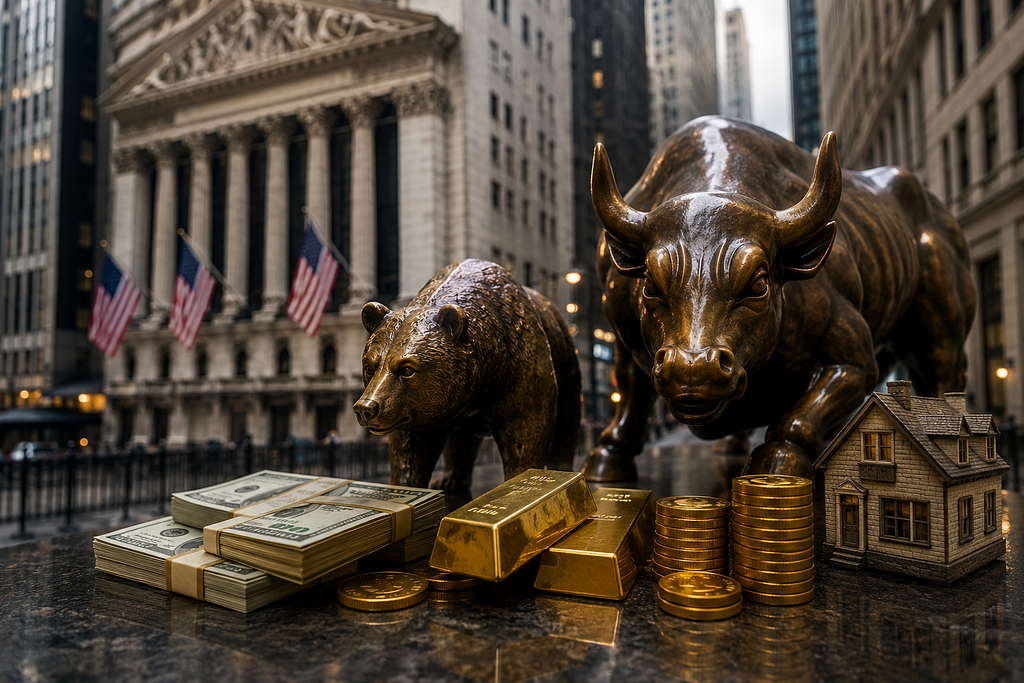
When reports emerged that crypto exchanges are increasingly being viewed as the next distribution channel for Wall Street assets, many people interpreted it as another headline about crypto adoption. In reality, the bigger story has very little to do with cryptocurrency itself. It is about distribution, an area that has quietly become one of the most important battlegrounds in modern finance.
Financial institutions have spent years improving the products they offer. Today, many of them are asking a different question: How do we deliver those products to a much larger audience without relying on infrastructure that was built decades ago? The answer is leading them toward digital platforms that can support faster transactions, broader accessibility, and entirely new investment models.
The shift is subtle but significant. Instead of treating blockchain as an alternative financial system, Wall Street is beginning to view it as another way to distribute financial products. That change in perspective could influence everything from how stocks are traded to how private assets are accessed in the future.
Distribution Has Always Been Finance’s Hidden Advantage
Investment products often receive the most attention, but distribution has always determined how successful those products become. Creating a financial product is only one part of the equation. Making it easily accessible to investors is what ultimately drives participation and liquidity.
Think about how streaming transformed entertainment. Movies did not become better overnight, but the way audiences discovered and consumed them changed completely. Retail experienced a similar shift as ecommerce platforms removed geographical limitations and gave businesses direct access to customers around the world.
Finance is beginning to experience a comparable transition. Investors increasingly expect digital-first experiences where opening an account takes minutes instead of days, assets can be monitored from a mobile device, and transactions happen with minimal friction. As those expectations grow, traditional distribution models are being challenged by platforms that are designed for speed, connectivity, and global reach.
Why Is Wall Street Looking Beyond Traditional Channels?
Traditional financial markets have built enormous trust over many decades, but they were also designed around a different technological era. Market hours are fixed, settlement processes can still take multiple days in certain jurisdictions, and expanding investment opportunities across borders often introduces additional intermediaries, compliance requirements, and operational complexity.
Digital platforms address many of these limitations without changing the underlying value of the assets themselves.
An investor purchasing a stock is still purchasing a stock. A bond remains a bond. What changes is the infrastructure that delivers those assets. Digital systems can automate administrative processes, simplify onboarding, improve transaction visibility, and reduce delays that have long been accepted as part of financial markets.
For institutions managing millions of customers, even small improvements in efficiency can translate into significant operational savings while creating a better experience for investors.
Why Are Crypto Exchanges Suddenly Part of the Conversation?
A few years ago, crypto exchanges were largely associated with digital currencies and speculative trading. Today, they are increasingly being recognized for something else: the technology they have already built.
These platforms were designed from the beginning to handle digital asset custody, identity verification, continuous trading, wallet infrastructure, and global user participation. While traditional financial institutions have been modernizing these capabilities over time, crypto exchanges have spent years refining them under real market conditions.
This does not necessarily mean every crypto exchange will become a marketplace for Wall Street assets. Rather, it highlights how much of the underlying infrastructure has matured. Features such as digital onboarding, integrated asset management, API-driven trading, and real-time portfolio visibility are becoming increasingly relevant beyond the cryptocurrency market.
The discussion is gradually shifting from “Should traditional finance adopt blockchain?” to “Which parts of the existing digital infrastructure can help modernize financial markets?”
Tokenization Is Expanding the Definition of an Investable Asset
One of the biggest drivers behind digital distribution is tokenization.
At its simplest, tokenization represents ownership of an asset in digital form on a blockchain network. While cryptocurrencies introduced the concept to a wider audience, the same technology can represent a much broader range of financial products, including equities, government bonds, real estate, commodities, private equity, and investment funds.
Why does this matter?
Because tokenization changes how assets can be owned, transferred, and divided. Instead of requiring large capital commitments, certain assets can potentially be fractionalized into smaller units, allowing more investors to participate. Transactions become easier to record, ownership becomes easier to verify, and distribution is no longer limited by the infrastructure of a single exchange or financial institution.
This has attracted interest from banks, asset managers, fintech companies, and regulators who see digital assets not as replacements for traditional markets but as an extension of them.
Is Wall Street Moving Entirely On-Chain?
Not quite.
One of the biggest misconceptions surrounding digital finance is that traditional markets are preparing to abandon existing systems altogether. That is unlikely to happen in the foreseeable future.
Financial markets operate within complex regulatory environments where investor protection, market stability, and compliance remain non-negotiable. Rather than replacing these foundations, institutions are looking for ways to enhance them using digital technologies.
The more realistic outcome is a hybrid financial ecosystem. Traditional exchanges, banks, custodians, and clearing systems will continue to play an important role, while blockchain-powered infrastructure supports new methods of issuance, settlement, and distribution.
In other words, the future is unlikely to be a choice between Wall Street and Web3. It is far more likely to combine the strengths of both.
The Infrastructure Race Has Already Begun
The most valuable opportunities may not lie in creating new financial products but in building the infrastructure that supports them.
Every digital marketplace requires identity verification, compliance systems, secure custody, trading engines, liquidity management, settlement mechanisms, and data reporting. As more financial institutions embrace digital distribution, demand for these capabilities is expected to grow alongside it.
This growing demand is also influencing how new trading platforms are built. Instead of developing an exchange from the ground up, many fintech companies and digital asset businesses are turning to a crypto exchange script as a foundation for launching scalable trading platforms.
These solutions provide the core infrastructure needed to support order matching, wallet integration, liquidity management, and security, allowing businesses to focus on innovation and market expansion rather than rebuilding essential exchange components.
The companies that provide reliable, scalable, and compliant infrastructure may ultimately shape the next phase of capital markets just as much as the institutions issuing financial products. Whether they are traditional financial institutions modernizing their services or technology providers enabling the next generation of digital trading platforms, the race is increasingly about building the systems that power tomorrow’s markets.
What Does This Mean for Investors?
For investors, the long-term impact is likely to be greater access and more choice.
Digital distribution has the potential to reduce geographical barriers, simplify participation in global markets, and make certain investment opportunities available to a broader audience. It could also encourage more competition among financial service providers, leading to better user experiences and lower costs.
At the same time, greater accessibility should not be confused with lower risk. Whether an investment is offered through a traditional brokerage or a digital platform, understanding the underlying asset remains just as important. Technology can improve access, but it does not eliminate market risk or replace informed decision-making.
The Bigger Question No One Is Asking
Much of the public conversation has focused on whether blockchain will transform finance. That may not be the most interesting question anymore.
A more important question is how financial products will be distributed over the next decade.
History shows that industries often change more because of distribution than because of the products themselves. Streaming reshaped entertainment without changing the concept of film. Ecommerce transformed retail without changing the products people bought. Ride-sharing altered transportation without reinventing the automobile.
Finance now appears to be approaching a similar turning point. The assets themselves may continue to look familiar, but the channels through which they are issued, discovered, traded, and managed are beginning to evolve.
Wall Street’s growing interest in digital platforms reflects this broader shift. The future may not belong exclusively to traditional exchanges or crypto-native marketplaces. Instead, it is likely to belong to digital ecosystems that combine institutional trust with modern technology, making financial markets more connected, efficient, and accessible than they have ever been before.
Wall Street’s Next Growth Chapter Is Being Written on Digital Platforms was originally published in Coinmonks on Medium, where people are continuing the conversation by highlighting and responding to this story.