
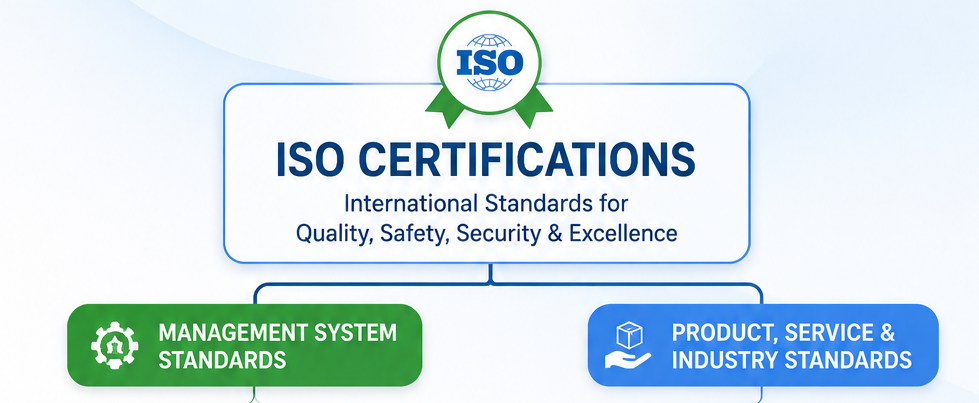
A Complete Guide to ISO Standards, ISO Certification Types, Quality Management Systems, and Business Compliance
What Is ISO?
Worldwide, it’s the work of ISO that keeps products, services, and systems consistent, built not by governments but by a separate global group aiming for trust through rules. Standards come out of this effort, quietly shaping how things perform across borders without drawing attention to themselves.
Back in 1947, a group set up shop in Geneva, this is where ISO began. From there, it started shaping guidelines accepted around the world. These aren’t just papers on shelves; they guide how groups work, making operations smoother. Mistakes? Fewer of them happen when these rules are followed.
Trust grows too, not only among buyers but across entire networks tied to each organization. One rule at a time, things become more reliable.
From farms to city offices, ISO rules guide how work gets done. Schools follow them just as factories do. Governments rely on these guidelines when setting policies. Hospitals apply the same steps to keep things running smoothly. Even tech startups use these methods without always naming them.
ISO sets common standards so things work together safely?
ISO standards provide a framework for organizations to operate consistently and efficiently. They help businesses:
Improve product and service qualityIncrease customer satisfactionReduce operational risksEnhance data securityImprove environmental performanceMeet regulatory requirementsIncrease market credibilitySupport continuous improvementGain a competitive advantage
It’s common to see certified groups put more effort into consistency, following rules, meeting standards. One reason might be how the process shapes daily choices inside those workplaces.
Image Is Generated By ChatGPT
Different Types Of ISO Certifications
Few ISO standards stand out, though plenty exist by the thousands. Still, many fields choose just a handful again and again.
1. ISO 9001 Quality Management
Purpose: Ensures consistent delivery of high-quality products and services.
Key Benefits:
Improved customer satisfactionBetter process controlReduced errors and wasteContinuous improvement culture
Suitable For:
Manufacturing companiesIT companiesService providersEducational institutionsHealthcare organizations
Most Popular ISO Standard Worldwide
2. ISO 14001 environmental management system
What it does? Lowers harm to nature when companies use it. A shift happens, footprints shrink.
Key Benefits:
Reduced pollution and wasteBetter resource utilizationCompliance with environmental regulationsImproved corporate sustainability
Suitable For:
Manufacturing industriesConstruction companiesEnergy providersLogistics businesses
3. ISO 27001 Information Security Management
Keeps private details safe by shielding key data. What matters most stays hidden from unwanted eyes. Safety comes through strong barriers around digital holdings.
Key Benefits:
Strong cybersecurity controlsData protectionRisk managementEnhanced customer trust
Suitable For:
IT companiesSaaS businessesFinancial institutionsHealthcare providersGovernment agencies
These days, as online dangers rise, getting ISO 27001 certified means a lot almost everywhere. Though risks climb, this standard stands out more than many others worldwide.
4. ISO 45001 occupational health and safety management system
Purpose: Improves workplace health and safety.
Key Benefits:
Fewer workplace accidentsImproved employee well-beingBetter legal complianceReduced operational disruptions
Suitable For:
Construction companiesManufacturing plantsMining industriesWarehousing and logistics firms
5. ISO 22000 food safety management
Purpose: Ensures food safety throughout the supply chain.
Key Benefits:
Enhanced food qualityBetter hygiene standardsReduced contamination risksRegulatory compliance
Suitable For:
Food manufacturersRestaurantsFood packaging companiesFood distributors
6. ISO 50001 energy management system
Purpose: Helps organizations improve energy efficiency.
Key Benefits:
Reduced energy consumptionLower operational costsImproved sustainabilityReduced carbon emissions
Suitable For:
Manufacturing plantsUtilitiesCommercial buildingsLarge enterprises
7. ISO 22301 Business Continuity Management
When things go wrong, work keeps moving. Because plans shift fast, staying active matters most. Even if problems hit hard, effort stays steady. Through sudden changes, momentum holds firm. When delays appear, motion continues anyway.
Key Benefits:
Disaster recovery planningRisk mitigationImproved resilienceFaster operational recovery
Suitable For:
BanksIT companiesGovernment organizationsCritical infrastructure providers
8. Medical Device Quality Standards ISO 13485
Medical device production stays safe because of strict quality checks. From start to finish, every step follows clear rules. This means patients get reliable equipment. Mistakes are caught early through constant monitoring. Safety isn’t added later, it’s built in from day one.
Key Benefits:
Regulatory complianceProduct safety assuranceBetter quality controlInternational market access
Suitable For:
Medical device manufacturersHealthcare technology companies
Understanding ISO Certification?
Getting approval usually means going through several steps
Gap Analysis
Evaluate current processes against ISO requirements.
Step 2: Documentation
Create policies, procedures, and management system documentation.
Step 3: Implementation
Apply the required standards across the organization.
Internal Audit
Start by checking your own standards first, then move toward official approval.
Final Certification Review
A third-party auditor visits to check compliance. Verification comes from a recognized organization. Outside experts review the process closely. A formal examiner confirms standards are met. Independent assessors carry out the inspection.
Step 6: Certification
Meeting the criteria means the group gets recognized by ISO. Certification follows once standards are fulfilled. Only when conditions align does approval come through. The body earns its status if all boxes are checked. Passing the test leads to official acknowledgment.
Image Is Generated By ChatGPT
Keep Getting Better
Watched closely each time, checks keep standards steady while nudging progress forward. A fresh look every round locks steps into place without slipping back.
Better Processes Through ISO StandardsEnhanced Customer ConfidenceWhen a company sticks to global rules, people believe them more.Improved Operational Efficiency
When steps stay the same, less slips through the cracks. Mistakes fade when everyone follows the same path. Smooth moves come from repetition, not guesswork.
Better Risk Management
ISO frameworks help identify and address potential risks proactively.
Global Recognition
ISO certification is accepted and respected worldwide.
Regulatory Compliance
Meeting legal and industry rules becomes simpler for companies.
Increased Business Opportunities
Getting ISO certified often matters when chasing public sector deals. Big companies might ask for it too.
Stronger Brand Reputation
A stamp of approval shows you care about doing things right. Being certified means others see your work as serious and skilled.
Who Should Get ISO Certified?
ISO certification can benefit:
StartupsBusinesses that aren’t too big, yet not tiny eitherLarge corporationsGovernment agenciesEducational institutionsHealthcare organizationsManufacturing companiesTechnology firmsNon-profit organizations
From tech to manufacturing, ISO rules push groups to work better while staying steady. One size doesn’t fit all, yet these guidelines shape how teams operate across fields. Even when goals differ, the framework supports reliable results over time.
Common Misconceptions About ISO
ISO Not Just for Big Businesses
Truth is, companies big and small fit ISO rules into their work. Size doesn’t stop anyone from using these guidelines.
ISO Certification Involves More Than Paperwork
Truth is, ISO cares about making processes better, working smarter, getting things done. Though it looks at how stuff runs, it pushes for clearer methods, stronger output, real outcomes instead of just checking boxes.
ISO Certification Does Not Ensure Product Quality
Here’s how it works: ISO sets up a structure so groups can keep meeting standards. Not chaos, but order, built step by step through clear methods. What happens? Results stay steady over time. A system runs behind the scenes, guiding actions without shouting directions. Consistency shows up quietly, day after day.
Image Is Generated By ChatGPT
The Future of ISO Standards
When companies deal with growing cyber threats, environmental concerns, rules to follow, and tech upgrades, ISO standards keep changing in response. Firms that build their work around these guidelines tend to stay stronger globally, even as daily operations grow more complex.
Out front, artificial intelligence oversight is shaping fresh ISO guidelines. Not far behind, worries about who sees your data push updates too. Then there’s the shift toward honest talk on environmental impact, fueling another set. Efficiency in power use follows close, nudging yet more rules into place.
Starting off, ISO standards give groups solid ways to boost quality, security, performance, safety, while also helping the planet. A business aiming to satisfy clients more, keep data safe, make workplaces better, or lower harm to nature will find a specific ISO rule built for that purpose.
Trust grows when companies meet ISO standards, showing they care about quality. Performance often gets better because processes become clearer. Risks tend to drop since problems are easier to spot ahead of time.Standing out in a crowded market happens naturally when reliability is proven. Global customers notice these details without needing promises.
When things need to run smoothly, following clear rules helps keep people on board, ISO certification becomes less about honor and more about building what lasts. It shifts from proof to practice, shaping how work holds up over time.
ISO Certification Explained: Types of ISO Standards, Benefits, and Why Businesses Need Them was originally published in Coinmonks on Medium, where people are continuing the conversation by highlighting and responding to this story.