
Vault of Air
Weight of a Name
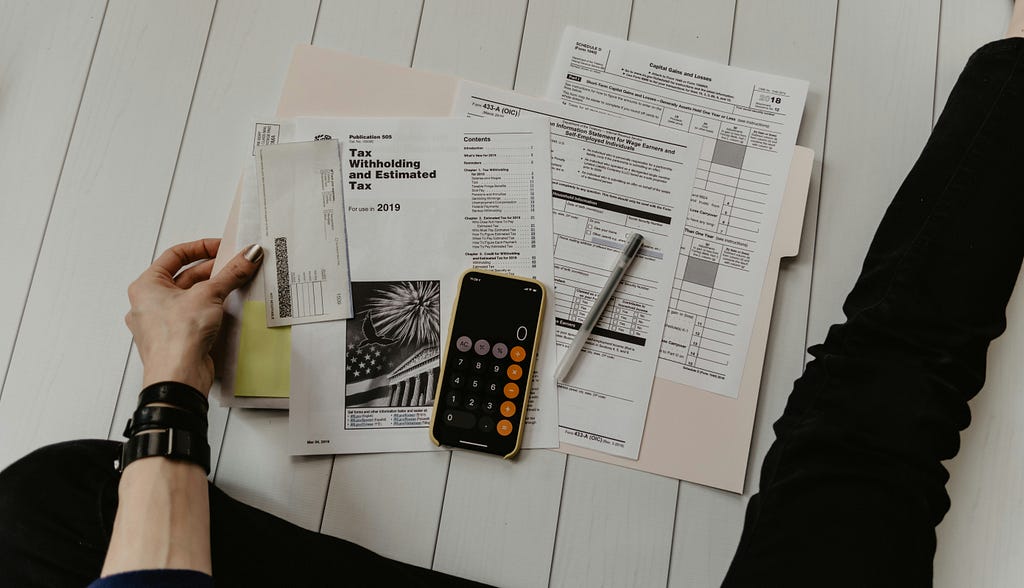
Photo by Kelly Sikkema on Unsplash
For twenty-six years, I was a risk analyst for a mid-sized insurance company in Frankfurt. My job was to look at numbers and find the cracks. I spent my days reading actuarial tables, stress-testing portfolios, and telling senior management why their optimistic projections were wrong. I was good at it. I had to be. My wife and I had two children, a mortgage, and a plan for early retirement that depended on me being right about money. I knew how to read a balance sheet. I knew how to spot a bad investment. I knew that if something looked too good to be true, it usually was. I trusted what I could verify. I built my life on that trust.
When I turned fifty-five, I started thinking about what came next. My wife had been gone for two years, lost to a cancer that moved faster than anyone expected. My children had grown and moved to Berlin and Munich. The house felt bigger than it needed to be. I started looking for ways to make my savings work harder, to build something that would outlast me, to feel like I was still building toward something. I was careful. I was methodical. I didn’t take unnecessary risks. That’s what I told myself.
The email arrived on a Tuesday morning in May 2026. I was drinking coffee at my kitchen table, reviewing my portfolio, when my phone buzzed. The sender was “Suscap Advisors AG.” The subject line read: “Exclusive Fixed-Term Deposit Opportunity — 4.25% p.a. — Limited Availability.” I opened it. The email was polished and professional, the kind of communication I’d seen a thousand times from legitimate financial institutions. It talked about a fixed-term deposit of 140,000 euros with a 4.25% annual interest rate, a twelve-month term, and deposit protection up to 120,000 pounds. It mentioned Barclays Bank UK as the partner institution. It named a contact person: Michael Wittmann.
That name landed hard. I had spent my career evaluating risk, and here was a product that looked legitimate, felt legitimate, had the trappings of legitimacy. I clicked the link. The website was suscap-ag.de. It was clean, professional, and filled with the kind of language I expected from a wealth manager. It talked about regulatory excellence, institutional asset management, and a presence in Germany and Switzerland. It claimed to have been serving foundations, family offices, and institutional investors since 1908. It felt solid. It looked solid. It had the weight of history behind it.
I called the number on the website. A man answered. He introduced himself as Michael Wittmann. His voice was calm and measured, the kind of voice I’d heard from a hundred financial professionals. He asked about my goals, my timeline, my risk tolerance. He answered my questions with patience. He told me that the deposit was fully secured, that Barclays was a trusted partner, that the product was designed for people like me who wanted certainty in uncertain times. He sent me contract documents. They looked professional. They looked real.
I transferred 140,000 euros. It was a significant portion of my savings. But the returns were guaranteed, and the risk was minimal. That’s what I told myself.
The first month, nothing changed. The second month, nothing changed. I logged into the portal occasionally, checked my balance, saw the numbers sitting there. I told myself I’d made a smart decision. I told myself this was how wealth was built.
Then I tried to withdraw a small amount to test the system. The website said my request was being processed. A week passed. Nothing. I called Michael Wittmann. No answer. I emailed him. No reply. I called the main number. Disconnected. I sat in my kitchen staring at my laptop, and I felt the floor drop out.
I started searching online. That’s when I found it. The law firm ESER LAW had issued a warning about suscap-ag.de on June 23, 2026, just weeks after I’d made my deposit. The German financial regulator BaFin had no record of registration for Suscap Advisors AG. The Swiss regulator FINMA could not confirm any authorization. The domain had been registered only in May 2026, barely a month before I’d deposited my money. The “since 1908” claim was a fabrication. The Barclays partnership was a lie. The contract documents were professional forgeries.
I learned that a legitimate Swiss company called Suscap Advisors Ltd existed, registered in the Swiss Commercial Register under CHE-358.820.973. But suscap-ag.de had no connection to it. The website was an impersonation, a clone designed to look like the real thing. The names “Michael Wittmann” and “Hannah Bach” were almost certainly being used without permission. The entire operation was a fixed-term deposit fraud, a scheme designed to look legitimate long enough to collect money and disappear.
I stopped going to work. I stopped answering my phone. My neighbor, a retired banker named Klaus, found me in my kitchen one afternoon, still in my bathrobe at two PM, staring at a cold cup of coffee. He didn’t ask questions. He just sat down across from me and waited. I told him everything. The email. Michael Wittmann. The 140,000 euros. The silence. He listened without judgment. When I finished, he mentioned a firm called AY’RLP. Forensic investigators who traced financial fraud. He’d seen their name in a banking industry newsletter. I didn’t think anything could be recovered. But I called anyway.
The practitioner who took my case was a woman named Sarah. She was patient and never made me feel stupid. She asked for wallet addresses, transaction IDs, dates, and amounts. She asked me to describe the website, the documents, the conversations with Michael Wittmann. She explained their process: blockchain tracing, mapping the digital movement, identifying points where the funds had passed through regulated exchanges that could be compelled to freeze assets. She noted that the platform was an unlicensed entity operating without regulatory approval, and that BaFin and FINMA had flagged it. She noted that the claims of being a legitimate Swiss firm were entirely fabricated.
Weeks passed. I didn’t sleep well. I replayed every conversation with Michael Wittmann, looking for the moment I should have known. The way he’d been too accommodating. The way he’d deflected my questions about regulation. The way he’d rushed me to make a decision. Then Sarah called. They’d frozen a portion of what I’d lost. Not all of it. Some had been routed through anonymous channels and was gone. But enough. Enough to remind me that the world wasn’t entirely made of hollow promises.
I sat in my kitchen after she hung up. The sun was setting outside. I thought about Michael Wittmann. The voice on the phone. The man who’d never existed. I thought about the 140,000 euros I’d handed over to a ghost. I thought about all the years I’d spent telling other people to be careful.
I’ve started going back to work. I don’t talk about what happened. But I think about it every day. I have a new rule now. I verify everything. Every firm. Every registration. Every promise. But I also verify the people who make the promises. I ask questions. I listen for the gaps. I trust my instincts instead of my longing for certainty.
The grief hasn’t gone away. I don’t think it ever will. But it’s quieter now. It sits in the corner of my chest like a stone I’ve learned to carry. And when I feel that familiar pull, that hunger for something that feels safe and guaranteed, I remind myself that real security doesn’t come from a website or a voice on the phone. It comes from verification. From presence. From someone who stays.
Michael Wittmann didn’t stay. But I did. And that’s going to have to be enough.
Interest in Nothing was originally published in Coinmonks on Medium, where people are continuing the conversation by highlighting and responding to this story.