
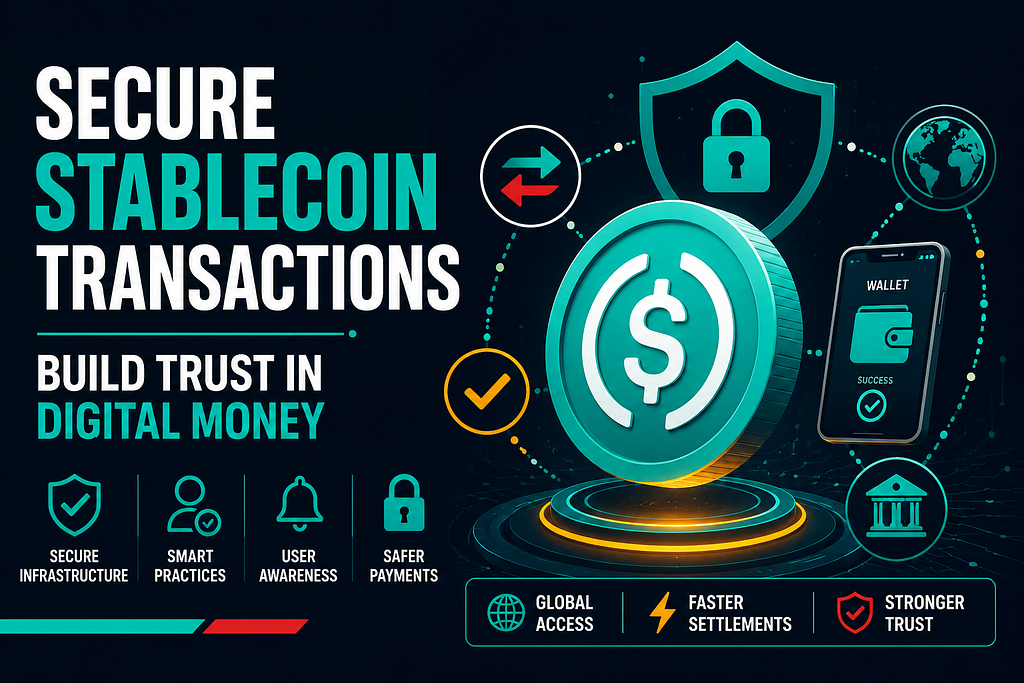
How secure infrastructure, smart practices, and awareness are shaping safer stablecoin payments
Built to stay steady, stablecoins now play a key role across digital money networks. While regular crypto’s swing wildly in price, these tokens hold their ground, tied usually to traditional cash, gold, or similar holdings.
Beyond borders, inside digital wallets, stablecoins shift value without banks. Still, more users mean bigger risks when sending cash through code.
ChatGPT Generated Image
One moment it looks like just a quick transfer, digital coins moving between wallets. Yet underneath, several safeguards quietly stay active. These protections watch over people who trade. They guard the systems hosting trades too. Even larger money routes depend on such shields working well. Each step hides complexity behind something that seems basic.
Stablecoin Security Why It Matters
Stablecoins are increasingly used for:
Cross-border payments with faster settlement timesDigital commerce and online transactionsDecentralized finance applicationsInstitutional financial operationsRemittances and global money transfers
Bigger transactions bring bigger dangers. When hackers look for gaps, they go after wallets, then shift to smart contracts, sometimes hit exchanges, other times break into personal accounts.
Trust holds the digital money world together. Without it, even strong locks on vaults won’t help.
Common Risks in Stablecoin Transactions
Even so, clear records and tough digital locks come with blockchain, yet moving stablecoins runs into snags.
Some major security risks include:
When a wallet lacks strong protection, someone might steal the key. That stolen access often results in money moving without permission. Weak storage invites unwanted activity. If hackers reach the controls, funds shift unexpectedly. Security gaps create openings. Those flaws sometimes let outsiders act freely.Code mistakes can hide in smart contracts that stablecoins rely on. These digital agreements might break if bugs go unnoticed. Hidden weaknesses could open doors to attacks. Flaws written into the system stay until found. Even small oversights risk big problems later. Software running money must work perfectly every time. Errors inside can’t fix themselves once live.Some scams fool people into giving away their wallet details or confirming harmful transfers. Not every message is safe, clicking the wrong link leads to stolen data. Fake sites mimic real ones just enough to cause damage. Trust nothing that pops up out of nowhere. A single approval might hand control to strangers. Seeming urgent does not mean it is true. What looks familiar could still be dangerous.Hackers often look at big exchanges first when hunting weak spots. These sites hold lots of value, so they draw attention from attackers. A single break-in might lead to major losses. Safety flaws in one spot can shake trust across the system.Some fake stablecoins pop up when scammers design copies of real digital money. These knockoffs pretend to be trustworthy but carry hidden risks instead.
Seeing these dangers clearly changes how people choose to act.
Stablecoin Transaction Security
New protections emerge while the stablecoin world grows more complex.
Key protection methods include:
Hidden behind layers of math, each transaction locks into place once recorded. Only those with correct keys can shift anything. Changes without approval? Impossible. The system watches itself, every step. Trust comes from code, not people.Some wallets need more than one person to sign off on big moves. Before anything shifts, several confirmations might have to line up. Only then does the transaction go through.A fresh look by experts can spot weak spots in smart contracts before they go live. Not every flaw shows itself right away, outside eyes often catch what builders miss.Faster alerts come when software spots odd transfers or strange behavior right away. Monitoring happens nonstop using smart tools that watch every move closely.Meeting rules helps show clearer records while cutting down money problems. What follows is how laws guide better openness plus fewer losses in finance.
Trust grows when people, companies, and banks interact through these tools.
User Involvement in Securing Transactions
Stablecoin safety isn’t just about tools. What people know matters, often more than code. A single mistake can undo strong systems. Knowing risks helps avoid them. Protection grows when users pay attention. Alerts mean little if ignored. Strong defenses crumble without smart habits. People are part of the shield, not just software.
Best practices include:
Verify wallet addresses before sending fundsUse trusted platforms and applicationsTurn on extra safety options for your accountNever share private keys or recovery phrasesReview transaction approvals carefullyKeep wallets and software updated
Just a moment spent checking might stop big problems later.
The Future of Stablecoin Security
Stability in digital cash grows, eyes stay locked on safety. Down the line, checks might tighten on who you are, eyes could watch blockchains sharper, tricks to catch scams may level up, old money pipes might link smoother too.
Speed matters, yet safety shapes how people trust money moves online. A.
One step toward blending old finance with digital ledgers? Stablecoins make it happen. Success down the road isn’t automatic, hinges on clear rules, confidence in systems, plus solid tech backbone.
Final Thoughts
Fast payments through stablecoins reach everywhere, yet safety still shapes their path forward. Though built for ease, trust depends on how well risks are managed along the way.
When tech steps forward, platforms hold steady, while people learn the ropes, stablecoins might just stand firm in tomorrow’s digital money world.
Secure Stablecoin Transactions Build Trust in Digital Money was originally published in Coinmonks on Medium, where people are continuing the conversation by highlighting and responding to this story.