
The fintech ecosystem is evolving rapidly, but while everyone talks about AI, digital banks, and payment giants, some of the most impactful tools remain surprisingly underappreciated.
In the year 2026 fintech innovation is not about the apps that people use. The real value is being created behind the scenes in things like infrastructure, compliance automation, analytics, embedded finance and developer tools.
For people who build things these tools help them get their products out faster make it easier to follow the rules and reduce the complexity of their operations.
For people who invest these tools give them a glimpse into where the next big thing in fintech’s happening.
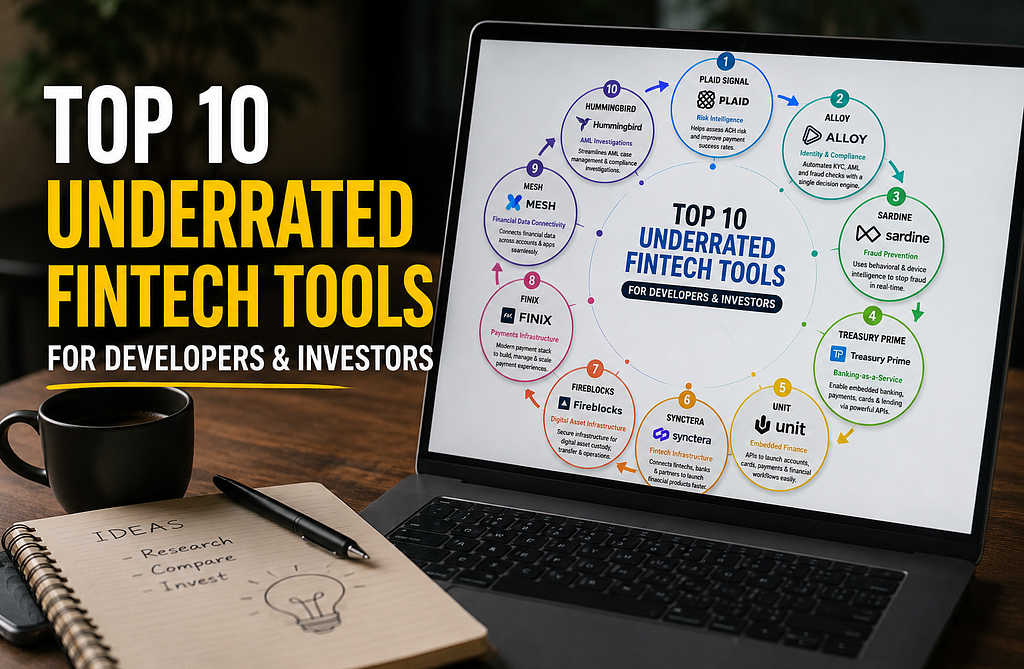
After looking at a lot of reports and trends here are ten fintech tools that are not getting attention.
Image Is Generated By ChatGPT
Why do these underrated tools matter?
Most investors focus on the brands that everyone knows.
Most developers focus on the frameworks that everyone uses.
If you look at history you will see that the companies that build the infrastructure often end up being the ones that make the most money in the long run.
Think about cloud computing.
While everyone was talking about the apps that people use the companies that built the infrastructure became some of the tech companies in the world.
The same thing is happening in fintech.
The winners of the decade may not be the apps that people use but the tools that help fintech companies work more efficiently.
Here are ten tools that are worth paying attention to:
1. Plaid Signal
This is a tool that helps companies assess the risk of payments using network-level transaction insights.
Most people know Plaid for helping companies connect to bank accounts.
Plaid Signal is becoming very important.
Why do developers love it?
It helps them authorize payments faster reduce fraud and make transactions more successful.
Why should investors watch it?
As account-to-account payments continue to grow risk intelligence solutions like Plaid Signal will become more and more important.
2. Alloy
This is a tool that helps fintech companies verify identities and follow the rules.
Fintech companies have to balance making it easy for people to sign up with following the rules.
Alloy helps them do this by combining identity and fraud data sources into one decision engine.
What are the key benefits?
It automates the process of knowing your customer screens for money laundering detects fraud and reduces the friction of signing up.
What is the investment insight?
Compliance technology is becoming an advantage not just something you have to do.
3. Sardine
This is a tool that helps prevent fraud.
It uses analytics and device intelligence to identify suspicious activity before it happens.
Why does it matter?
Fraud is getting more and more expensive as digital transactions increase.Companies that help reduce fraud are becoming very important.
4. Treasury Prime
This is a tool that helps businesses integrate banking functionality into their apps.
While everyone is talking about consumer fintech startups, Banking-as-a-Service infrastructure is one of the important layers of the industry.
Treasury Prime enables businesses to do things like create embedded accounts make payments, issue cards and offer lending products.
What is the developer advantage?
It reduces the time it takes to get products to market.
5. Unit
This is a tool that provides APIs for businesses to launch banking features without building a bank.
It powers things like accounts, cards, payments and financial workflows.
Why should investors care?
Embedded finance is expected to be one of the growth segments of fintech for the next decade.
6. Synctera
This is a tool that helps connect the stakeholders involved in building products, including banks, regulators, compliance teams and technology providers.
It helps them launch fintech products faster provides support and simplifies operations.
Why is it strategically important?
The complexity of services is increasing and simplification creates value.
7. Fireblocks
This is a tool that provides enterprise-grade solutions for asset operations.
Many investors think of crypto infrastructure as speculation. Institutional adoption is driving demand for secure custody and transaction infrastructure.
Why does it matter?
As tokenized assets expand infrastructure providers like Fireblocks may benefit regardless of which cryptocurrencies succeed.
8. Finix
This is a tool that enables companies to build and manage payment experiences while maintaining control over economics and customer relationships.
Most businesses focus on accepting payments. Few realize the complexity behind payment orchestration.
What are the developer benefits?
It provides APIs, merchant onboarding and payment management.
What is the investment perspective?
Infrastructure often captures value across industries at the same time.
9. Mesh
This is a tool that helps aggregate and synchronize data across ecosystems.
Consumers are using more financial platforms and Mesh helps enable seamless data portability.
Why does it matter?
Future fintech experiences will depend on this kind of connectivity and the companies that enable it may become infrastructure providers.
10. Hummingbird
This is a tool that streamlines -money laundering investigations and reporting processes.
Anti-money laundering compliance is one of the resource-intensive functions in fintech.
What are the benefits?
It helps with faster case management, improved compliance workflows and reduced operational costs.
What is the investor insight?
Regulatory technology remains one of the overlooked growth opportunities in fintech.
Image Is Generated By ChatGPT
What do these tools reveal about the future of fintech?
They are all focused on infrastructure, not consumer experiences.
They are focused on things like trust infrastructure, identity verification, fraud prevention, compliance, financial infrastructure, banking-as-a-service embedded finance, payments, data infrastructure, connectivity, analytics, risk intelligence, digital asset infrastructure, custody, security and tokenization.
This suggests that the next big thing in fintech may be less about creating financial products and more about enabling existing products to work more efficiently.
What are the lessons for developers?
Developers should prioritize learning about APIs, regulatory architecture, payment systems, security engineering and identity verification frameworks.
Understanding infrastructure is becoming as important as understanding user interfaces.
What are the lessons for investors?
Infrastructure remains one of the attractive opportunities in fintech.
Why?
Because infrastructure companies often benefit regardless of which customer-facing products win.
They sell the tools that everyone needs regardless of who wins.In the end the biggest fintech opportunities are not always the visible.While everyone is talking about banks, AI assistants and billion-dollar IPOs much of the innovation is happening behind the scenes.
The tools featured here may not dominate the headlines. They solve some of the most important problems in fintech: trust, compliance, connectivity, security and scalability.
In financial services solving those problems is often where the greatest long-term value is created.
The future of fintech will not be built by apps but, by the infrastructure that powers them.
Top 10 Underrated Fintech Tools for Developers & Investors in 2026 was originally published in Coinmonks on Medium, where people are continuing the conversation by highlighting and responding to this story.