
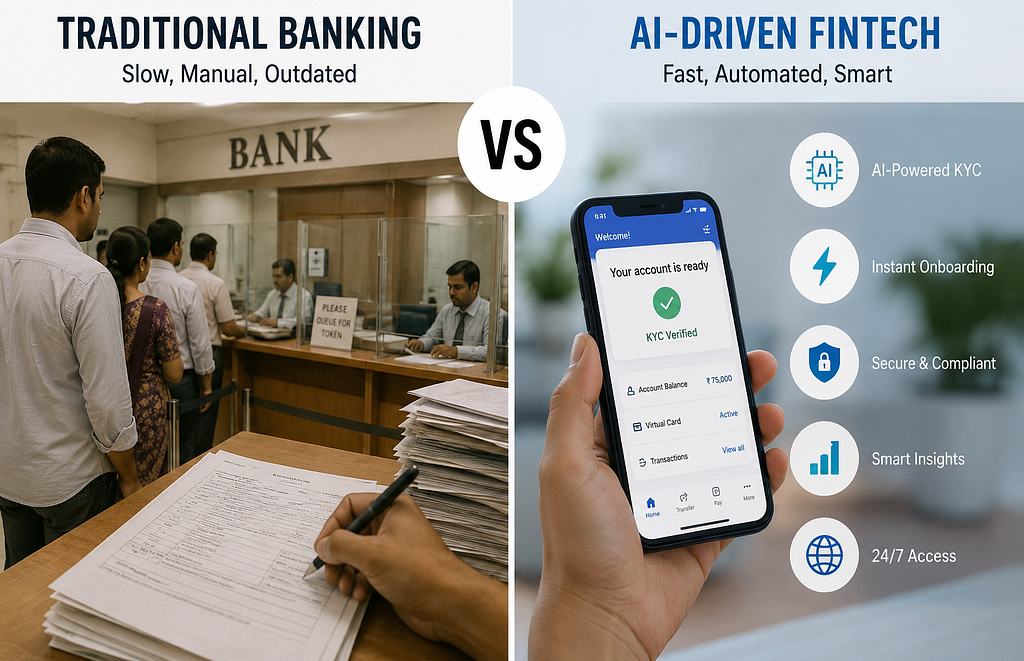
The future of banking isn’t about bigger branches or more paperwork. It’s about intelligent automation, instant verification, and financial services that move at the speed of the internet.
Years went by while old-style banks stuck to one way of doing things. Branches you could walk into stood at the center of it all. Checking rules meant hands-on work, slow and steady. Signing up took time, lots of paperwork piling high. Systems behind the scenes aged without updates.
A huge change has started, yet it moves quietly beneath the surface.
Faster checks through smart software change global money handling. Machines now handle customer ID tasks once done by people. Online banks run on updated tech backbones. Finance hides inside apps where you least expect it. New firms push old models aside with fresh approaches.
One thing is certain by 2030: old-style banks might vanish unless they change fast. Not simply due to smarter tools, but because people demand speed, simplicity, smooth service, all shaped exactly how they want.
Faster tools built with artificial intelligence now shape how money systems grow. A quiet shift powers it, machines learning patterns once only people could see.
The Biggest Problem With Traditional Banking
Traditional banks face several challenges:
Slow customer onboardingManual compliance checksHigh operational costsLimited personalizationLegacy technology systemsGeographic limitationsLengthy approval processes
Some places need days, sometimes even weeks, just to start a business bank account. Getting a loan? That usually means forms on top of more forms, then waiting for someone to check everything by hand.
These days, anything less than instant feels out of place.
Image Is Generated By ChatGPT
Now it’s Amazon, Uber, Netflix setting the bar, banking feels slow next to them. Instant help, tailored choices, those are normal elsewhere. People notice the gap when logging into their accounts. Smooth clicks matter more than fine print. What used to be enough at a bank now seems behind.
Familiar apps shape what users expect everywhere. Waiting days for replies?
That sticks out badly. Personal touches once rare are now basic demands. Banking isn’t judged against banking anymore. The real competition lives in shopping carts and ride taps.
Betting on a similar journey ahead, banking’s next moves seem predictable.
The Rise of AI Powered KYC
Starting off, checking who customers really are usually takes up tons of money and stretches out timelines across finance work. Not every step moves fas, tsome drag on, eating hours while costing more than expected in banking tasks.
Banks check who people say they are, stop scams while rules change fast, follow laws that shift every year, yet watch odd behavior without clear warning signs.
AI is transforming this process.AI KYC CapabilitiesAI powered identity checksVerify identity documents in secondsDetect Fake IDs with Computer VisionPerform facial recognition matchingConduct real-time risk assessmentsMonitor transactions continuouslyIdentify suspicious behavior patternsReduce compliance costs dramatically
Hours once spent by compliance staff checking papers now vanish when machines handle countless checks at once.
The result?
Getting up to speed quicker means spending less. That shift also tightens security gaps. Fewer delays open room for sharper checks.
Fintech Infrastructure Gains Ground
What’s really shaking things up goes beyond artificial intelligence.
Built right into today’s money tools, it runs beneath the surface. What you use every day leans on this frame without showing it. Hidden but active, it shapes how value moves now.
Today’s fintech companies can launch complete banking ecosystems using:
White-label banking platformsDigital payment gatewaysEmbedded finance solutionsBanking-as-a-Service (BaaS)Crypto payment infrastructureOpen banking APIsAI compliance engines
Faster timelines mean a new business might roll out banking tools within months instead of waiting years.
Fresh pressures are building against old systems now. Competition once unknown has started reshaping the landscape slowly.
Banking Services Inside Nonbank Products
Buried inside today’s business shifts sits something quiet but stron,gfinance slipping into places it never lived before.
Folks find their way into banking more through screens than doors these days. A visit to a branch fades as phones and laptops handle the work instead.
Examples include:
E-commerce platforms offering instant creditRide-sharing apps providing driver walletsSaaS companies offering business accountsMarketplaces enabling seller financingGig economy platforms handling paymentsBanking is becoming invisible.
Right inside the apps people use every day, money tools quietly show up. Where folks chat or scroll, banking features now live too. Through everyday screens, finance slips in without fanfare. Inside familiar spots online, payment helpers take root. As users linger on sites, cash services blend right in.
One shift like this might quietly shrink how much people rely on old-style banks.
AI Replacing Jobs in Banking
Machines now handle jobs once needing many people. What used to take squads of workers runs on its own these days. Tasks that filled entire offices shrink down to silent algorithms. Whole departments get replaced by code that never sleeps. Workflows that demanded constant human attention now tick along without a single hand touching them.
Areas Being Automated
Customer Support
Faster than a human team, one machine voice handles endless questions without mistakes piling up. Suddenly, volume doesn’t matter, each reply stays sharp.
Fraud Detection
Finding odd patterns fast, that is what these systems do right now.
Credit Assessment
Fresh data flows feed into smart models, opening wider views than old-style scorekeepers ever saw.
Compliance Monitoring
Machines keep checking payments nonstop, spotting possible rule issues along the way.
Wealth Management
Most people find robo-advisors cut fees while still offering tailored advice. What stands out is how these tools adjust suggestions without high prices getting in the way.
Left behind comes risk for banks slow to bring AI into daily work. Efficiency gaps grow when automation stays out of reach.
Digital First Banks Redefine Banking Norms
Starting fresh often helps. When tech shapes money tools today, new banks prove something real. Built now means running differently. What works comes clear only after trying without old systems. Fresh code changes how people see banking. Watching these experiments unfold shows shifts matter.
Key advantages include:
Instant account creationLower feesBetter mobile experiencesReal-time notificationsFaster international transfersAI-powered financial insights
Fresh off their phones, younger customers lean toward online money tools instead of walking into bank offices. Branch visits fade as apps take hold across this crowd.
Younger crowds who grew up online now shape what people want. Getting things fast matters more every year because of them.
Image Generated By ChatGPT
The Role of Blockchain and Digital Assets
Though artificial intelligence plus financial tech handle plenty of the upheaval, blockchain still sneaks in its influence now and then. Sometimes it’s subtle, yet noticeable when you look close enough.
Benefits include:
Faster settlement timesTransparent transactionsReduced intermediariesGlobal accessibilityProgrammable financial products
When paired with smart compliance tech, a blockchain backbone might clear out stubborn banking delays. Gone are the old hurdles institutions keep tripping over.
Traditional Banks Fading Away?
Probably not completely.
Still, how they fit in could shift in ways few expect.
Many traditional banks will likely evolve into:
Infrastructure providersCompliance partnersLiquidity providersRegulated financial backbones
Fintech firms could take center stage where customers interact. Marketplaces might step into that space too. Software platforms often shape how people engage now. On top of that, systems driven by artificial intelligence are weaving deeper into money-related tasks.
Finance today shifts where value flows, banks fading into background roles. Not front doors anymore, instead hidden gears turning beneath.
Picture them like power lines: unseen, essential, always on. Their job now? Keeping systems running while others face users. Quiet infrastructure replacing shiny branches. Behind-the-scenes support beats customer-facing flash. What once stood center stage now enables from the shadows.
Banking in 2030
Imagine this scenario:
You launch a business online.
Within minutes:
Your identity gets checked by artificial intelligenceA business profile shows up by itself when needed. It appears without anyone having to start itVirtual cards are issued instantlyPayment processing is activated
Fresh each moment, compliance checks hum along unseen. Running quiet beneath everything, they keep pace without pause. Not loud, just steady, always there, doing their part behind the scenes
Financing options are personalized in real time
No branch visits.No paperwork.Approval comes through right away.
Everything happens through intelligent financial infrastructure.
This way lies where the field moves now.Problems Yet to Be FixedEven with fast advances, a few hurdles still existRegulatory Complexity
Governments continue adapting regulations for AI-powered finance.
Privacy Concerns
Handling private customer information with care matters most. A slip can break trust fast. Mistakes linger longer than fixes. Responsibility grows with access. Thoughtless steps invite big consequences. Respect builds slowly yet vanishes quick.
Cybersecurity Risks
When systems go online, risks grow alongside them.
AI Bias
Fairness needs to stick around when money choices get made. Transparency matters just as much along the way.
Consumer Trust
Even now, plenty of people feel safer with big-name banks instead of new digital money services.Security, paired with smart rules and fresh ideas, will define which firms come out ahead.Far from vanishing, banks are part of what comes next in money management.
Outsmarting old routines happens when machines take over tedious tasks. Still, speed comes not from gadgets alone but smarter ways of working. Imagine systems that learn while they run, quietly fixing delays. Instead of paper trails, data flows where it is needed most. Efficiency shows up not in reports but in how fast problems vanish.
Built on smart algorithms, know-your-customer checks now move at machine speed. Financial tools tuck themselves into everyday apps, slipping quietly into user routines. Digital banks rise without branches, running entirely online. Institutions lend their infrastructure so others can offer bank-like features. Rules and oversight keep pace through automated tracking systems. Speed grows. Cost drops. Access widens. All of it ticking forward, reshaping what money handling looks like today.
By 2030, customers may no longer think about “going to a bank.”
Beside you, money moves without effort, quick, smart, unseen, right where it’s used.
Facing change through artificial intelligence? Those schools staying open to it tend to grow stronger over time.
Some might find the greatest danger comes not from a rival lender.
It’s technology itself.
How AI-Driven KYC and Fintech Infrastructure Will Make Traditional Banks Obsolete by 2030 was originally published in Coinmonks on Medium, where people are continuing the conversation by highlighting and responding to this story.