
Inside the data pipelines, APIs, and infrastructure of prediction systems.
The growing interest in digital prediction platforms has sparked curiosity about how an Aviator Predictor App is built from a technical perspective. While many discussions focus on user-facing features, the real foundation lies in the underlying infrastructure, data pipelines, analytics engines, and backend systems that support application functionality. Understanding these components is valuable for entrepreneurs, developers, and business decision-makers who want to evaluate the feasibility of developing similar solutions.
Understanding the Core Concept of Aviator Predictor Applications
Have you ever wondered what happens behind the scenes of a prediction platform? While users only see the final output, a complex system of data processing, analytics, APIs, and backend infrastructure works continuously to generate those results.
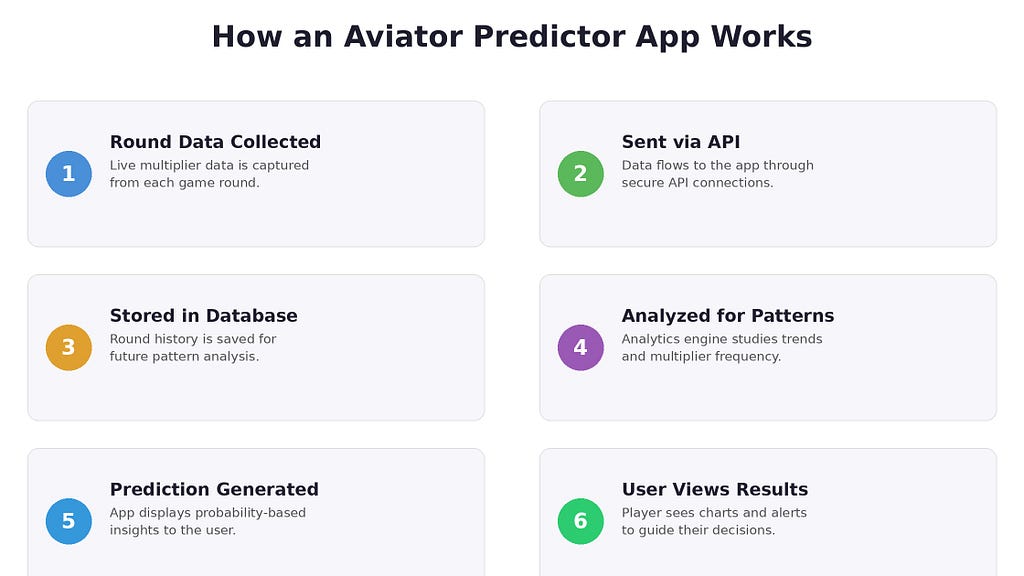
Aviatot Predictor App Works
At their core, prediction applications collect and analyze data to identify patterns and trends. However, their effectiveness depends on factors such as data quality, processing methods, and system reliability. That’s why understanding the technical architecture behind these platforms is important. It reveals how the technology, data, and infrastructure come together to support performance and scalability.
End-to-End System Architecture: How Data Flows Through the Platform
When entrepreneurs hear the term “Aviator Predictor App,” they often focus on the prediction layer. In reality, prediction logic represents only a small portion of the entire technology stack.
A typical platform consists of five major infrastructure layers:
Core Infrastructure Components
That Happens Behind the Scenes?
A simple user action can trigger multiple backend operations:
User sends a request.API Gateway validates the request.Backend services retrieve historical data.Analytics engine processes datasets.Results are returned to the frontend.Logs are stored for monitoring and auditing.
Why This Matters for Business Owners
Many startup founders underestimate infrastructure costs.
As usage grows:
Server requests increaseDatabase queries multiplyAPI costs riseCloud storage expandsMonitoring requirements become more complex
This is why architectural planning is often more important than the prediction algorithm itself.
Data Collection Mechanisms and External API Integrations
Data is the foundation of any prediction platform. Sources typically include:
Historical data from previous game roundsReal-time data via direct API connections with gaming platforms or data providers
Common tools used for API integration and data pipelines:
Postman — for testing and managing API connectionsApache Kafka — for streaming real-time dataApache Airflow — for scheduling and managing data ingestion pipelines
The biggest challenge here is synchronization. If data arrives late or out of order, predictions become unreliable making stable APIs and clean ingestion pipelines essential.
Backend Infrastructure and Server-Side Processing
The backend is the operational core of the platform. It generally includes:
Application servers to handle requestsMicroservices for specific tasks like authentication, predictions, and data processingCloud hosting for flexibility and scalability
Popular backend tools and platforms:
Node.js or Python (Django/FastAPI) — for building backend servicesAWS, Google Cloud, or Azure — for cloud deploymentDocker and Kubernetes — for managing microservicesNginx or AWS Load Balancer — for load balancingHigh Level Architechture
Load balancing ensures that as more users access the platform at once, requests are spread across multiple servers, keeping performance stable during peak hours.
Database Design for High-Volume Event Storage
Aviator games generate huge volumes of data continuously, so the database must handle:
Structured data — timestamps, multipliers, round IDsUnstructured data — logs, user interactions, activity history
Commonly used database tools:
PostgreSQL or MySQL — for structured dataMongoDB — for unstructured/flexible dataRedis — for caching and faster data retrieval
To keep performance fast even as data grows, platforms rely on:
Indexing for quicker searchesPartitioning to organize large datasetsCaching to reduce repeated database calls
Analytics Engines, Statistical Models, and Prediction Logic
This is the “brain” of the app, where data turns into insights.
Common pattern analysis techniques:
Frequency distributionMoving averagesTrend mapping
Tools often used for analytics and modeling:
Python libraries like Pandas, NumPy, and Scikit-learn — for statistical and ML modelsTensorFlow or PyTorch — for advanced machine learning approaches
Important limitation: Aviator-style games run on provably fair random number generators (RNGs). This means outcomes are inherently unpredictable at an individual level. Analytics can show historical tendencies, but they cannot override randomness or guarantee future results.
Real-Time Data Processing and Scalability Considerations
Modern users expect applications to deliver results quickly. To meet these expectations, many platforms implement real-time processing architectures that can handle continuous streams of information.
Event-driven systems enable applications to react immediately when new data becomes available. This approach improves responsiveness and reduces delays between data collection and analysis.
Scalability is another major consideration. As user numbers increase, infrastructure must be capable of supporting higher traffic volumes without compromising performance. Businesses evaluating the development of an Aviator Predictor App should carefully assess scalability requirements during the planning phase to avoid costly infrastructure limitations later.
Security, Compliance, and Risk Management in Prediction Platforms
Security is non-negotiable when handling user data and live analytics.
Key security practices include:
API authentication using OAuth or JWT tokensData encryption (SSL/TLS) for safe data transferSecure cloud storage for user information
Tools for monitoring and fraud prevention:
Datadog or New Relic — for infrastructure monitoringCloudflare — for security and traffic protection
Compliance requirements may also apply depending on the jurisdictions in which the platform operates. Businesses should evaluate applicable regulations and incorporate security measures into the architecture from the beginning rather than treating them as an afterthought.
Technical Challenges, Accuracy Constraints, and System Limitations
Despite technological advancements, prediction platforms face several challenges. Data inconsistencies, infrastructure failures, integration issues, and processing delays can all impact system performance.
Another challenge involves distinguishing meaningful patterns from random events. Not all observable trends have predictive value, which makes model validation an ongoing requirement.
Operational risks must also be considered. Infrastructure maintenance, cloud costs, scalability concerns, and evolving technical requirements can significantly influence long-term sustainability. Understanding these limitations helps stakeholders make informed decisions when evaluating development opportunities.
Final Thoughts: Key Technical Insights for Entrepreneurs and Developers
When you look beyond the interface, it’s clear that a prediction platform is much more than just an algorithm. Behind the scenes, multiple components from APIs and databases to analytics engines and cloud infrastructure work together to keep the system running efficiently. For entrepreneurs and developers, the biggest takeaway is simple: strong architecture matters. Even the most advanced analytics models won’t perform well without reliable data, scalable infrastructure, and secure integrations supporting them.
Whether you’re researching the technology, evaluating a business opportunity, or planning to build a similar platform, understanding these technical foundations can help you make smarter decisions and set realistic expectations about how modern prediction systems are designed and maintained.
How Aviator Predictor Apps Work: Backend Infrastructure, APIs, and Analytics was originally published in Coinmonks on Medium, where people are continuing the conversation by highlighting and responding to this story.