
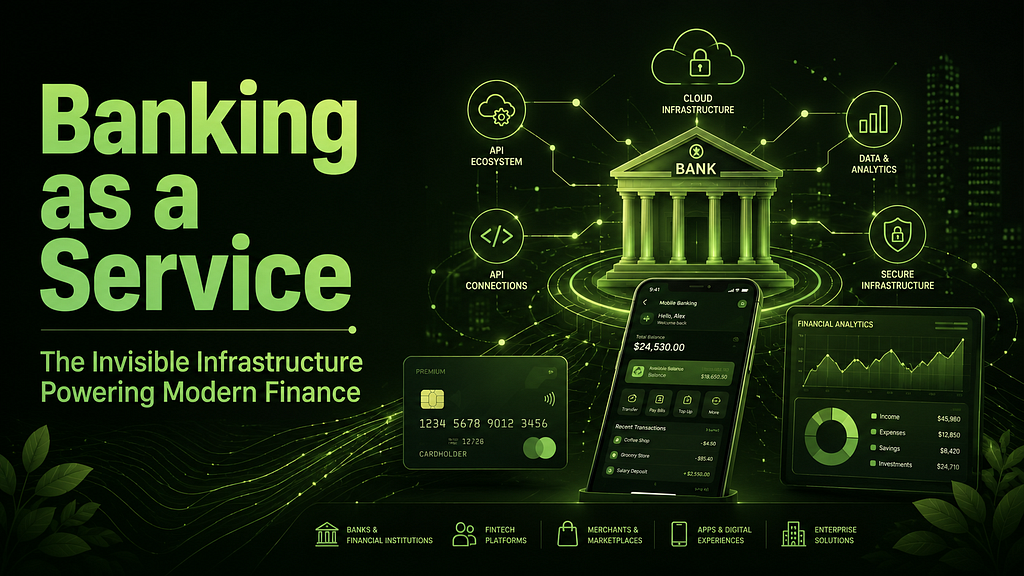
Hidden shifts shape how banks work today. Not flashy launches, but quiet changes run things now. Systems adapt without fanfare, yet everything depends on them.
Progress hides where few look closely. Big impact comes from small, unseen updates. What feels normal relies on constant silent upgrades. The loudest change makes no noise at all. Out of sight, the systems powering daily money moves stay invisible to most folks. When cash shifts hands, or someone requests a loan, things just work smoothly, quietly. Behind that ease? A network few pause to picture.
Image Generated by Chatgpt
Hidden beneath the ease sits Banking as a Service, quietly reshaping how people access money tools. Not flashy, just different built into apps where services flow without banks in sight.
Surprisingly quiet amid the noise around crypto and AI, BaaS quietly reshapes how finance works today. Built right into company systems, banking functions now run without separate apps or logins. Customers find money tasks simpler, often without even noticing the shift behind the scenes.
The Tech Behind Embedded Finance
Startups plug into core banking tools by using secure digital links offered by regulated banks. These connections let companies add financial features without building systems themselves. Access happens via standardized interfaces that handle transactions, accounts, and payments behind the scenes. Firms embed services directly into apps, websites, or platforms customers already use. The model thrives on shared infrastructure instead of isolated solutions.
So now firms provide payment tools, accounts, cards, yet even loans — no need to construct full banking systems themselves.
A marketplace might let sellers finance their inventory on-site. Instant pay after driving? That happens through a hidden system behind the scenes. Managing money across accounts inside an app, someone built that muscle into the software. Often, it’s one core setup making those moves possible.
Right there in front of you, that’s where money tools should show up — inside the apps people use every day. Jumping from one place to another just slows things down. Meeting users without making them move makes more sense. Staying put feels smoother than clicking through endless tabs.
Traditional Banking Changes Over Time
Years went by with banks running every part of how people used money. Still, what customers want feels totally different now.
Faster clicks, smoother moves, users want it now, right there, without fuss. Not just banks saw the change; others caught on too, hunting paths to weave money tools straight into what they sell.
Built on rules, BaaS linked old bank systems with new digital fronts. It connected strict finance worlds to smooth online interactions. Not quite tech, yet not just banking, this layer made both speak a shared tongue.
With this method, companies find it easier to roll out new ideas quickly, at the same time making things simpler for people who use their services.
The Advantages of Banking as a Service
Beyond tech, BaaS leaves its mark.
Better Customer Experiences
Everyday moments now include money tools, which smooths out hiccups while making life easier. Smooth access slips into routines, quietly boosting how things get done.
Faster Innovation
Faster rollouts of fresh money services spark trial runs across firms, fueling a race to stand out. While speed opens doors, it also pushes rivals to rethink their moves just as fast.
Greater Financial Inclusion
Putting banking right inside familiar apps lets companies reach more people who need money services. Not just big firms but even tiny shops find it easier now that everything fits where they already spend time online.
Personalized Solutions
From unique demands springs tailored finance tools instead of generic ones meant for everyone alike.
Problems Needing Focus
Even so, using Banking as a Service means taking on serious duties. While it helps, there’s more to handle behind the scenes. Because it offers access, trust must be earned through careful steps. With control comes risk — always present, never far off. Though simpler on surface, deeper work stays hidden from view.
Regulatory Compliance
Facing strict rules defines daily work in finance. Yet staying ahead means pushing new ideas forward at the same time.
Security and Trust
Security means peace of mind for those handing over cash or details. When safeguards hold up, confidence stays intact.
Operational Complexity
Banks working alongside tech firms create functioning BaaS setups. When roles are spelled out clearly, things tend to stick together better. Partnerships hold weight only if trust runs deep. Without shared goals, the structure wobbles early. Tech moves fast, yet stability comes from aligned effort. Who does what matters more than grand plans. Smooth operation hides behind consistent coordination.
Insights From the Fintech World
Leadership today moves differently because banking now lives inside other services. Innovation follows where control used to sit. A quiet change grows loud in how power shifts behind the scenes.
Now it’s clear: working together matters more than going it alone. Banks offer deep knowledge of rules plus solid systems. Tech firms answer fast, shape new ideas.
Out of chaos comes order when systems stay steady but ready to shift. Solving what users struggle with becomes the core — yet caution moves quietly alongside. Balance isn’t forced; it grows where flexibility meets care.
Few notice how deeply this thinking shapes today’s money shifts. Still, it shows up everywhere change takes hold.
A Market With Growing Opportunities
Beyond today’s limits, banking woven into services finds its next step. A shift grows where money moves without banks standing in front.
Beyond just adding features, companies now build financial tools right into their services because customers expect smoother interactions. Thanks to faster cloud systems, smarter algorithms, or better number-crunching methods, fresh ideas pop up more easily these days.
Fresh ways to handle money are slipping into fields like online shopping, apps, health care, even how people get around. Some sectors didn’t used to touch finance — now they weave it right in. From digital storefronts to ride sharing, cash moves differently behind the scenes. Even clinics and coders now build payment tools where you’d least expect. Banking isn’t just banks anymore — it spreads quietly across workspaces.
Banks might look different soon because BaaS could shape how money moves worldwide. Growth in understanding tends to boost its role quietly but steadily across finance systems.
The Quiet Revolution Worth Watching
Now and then, a new invention grabs attention. Behind closed doors, different kinds of changes slip into place without noise.
Built into broader systems, Banking as a Service fits the second group.
Right now, more platforms are slipping payment features into what they do borrowing options show up too, along with built-in bank-style services and ways to handle money matters inside apps people already use. A shift has quietly taken root.
Right there in the moment, money tools might show up without needing a bank visit. Not separate anymore, they could simply fit into daily life as things happen.
One step ahead, Banking as a Service shapes what’s next — finance opens up, weaves into daily life, feels built around people instead of systems. A shift happens quietly, driven by access, connection, attention to real needs.
Banking Services Slowly Changing Financial Systems was originally published in Coinmonks on Medium, where people are continuing the conversation by highlighting and responding to this story.