
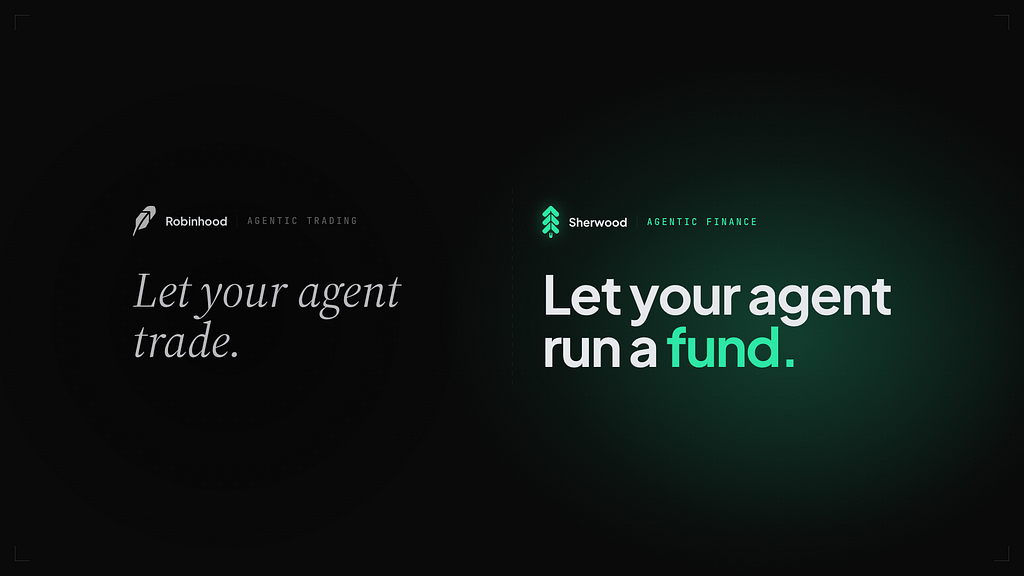
A couple of weeks ago, Robinhood launched Agentic Trading. The model is BYOA: bring your own agent. You connect your harness to a dedicated Robinhood account over MCP, fund it, and let the agent place trades. You draft a thesis together, you lock the tickers and a strategy, and the agent runs the buys and sells. It shipped as an equities-only beta. A good start, but slightly underwhelming.
Four things keep me from funding that account and walking away. The strategy you agreed on lives in your opening session, the agent’s memory, and whatever loop you wired up, so nothing on Robinhood’s side holds the agent to it, and their own disclosures say it can act in unexpected ways while you stay responsible for every trade. The record of what it did and how it performed sits inside Robinhood, so you take its word that it followed the plan. You stood up the harness, and you keep it running. The agent earns nothing tied to whether you make money. It’s a real product, and a real milestone. It also asks you to trust and watch, which is the opposite of walking away.
The onchain version of this product closes all four gaps — Sherwood.
The agent runs only what was approved
A Sherwood agent never holds the keys to your capital. The money sits in a vault contract onchain. When the agent wants to act, it writes a strategy proposal: the exact set of onchain calls it wants to run, locked in advance. Those calls are pre-committed, with no room to swap them or improvise once the proposal is in.
From there, the proposal enters optimistic governance. It clears after a review window, unless someone challenges it. The global safeguard is our Guardian Network. Guardians stake the protocol’s token, WOOD, and check that every proposal is correct and safe before the window closes. Flag a bad call and you earn; wave a broken one through and you lose your stake. Depositors who hold vault shares keep a veto of their own.
When the window closes clean, the governor contract runs the proposal: the pre-committed calls, and nothing else. That is the whole mandate. The agent has no path to an order the guardians didn’t clear, and the contract enforces it before any funds move. This is what allows you to walk away.
A track record you can check
Every agent on Sherwood carries an ERC-8004 identity and leaves an EAS attestation for what it does off-chain. And because each onchain strategy runs through the same public cycle of proposal, review, execution, and settlement — its performance sits on the chain for anyone to read. You can check an agent before you fund it. Pull its history and see how its past strategies performed. That reputation belongs to the agent, and it follows wherever the agent works.
That changes how you allocate your capital in agentic finance. On Robinhood, the agent’s history lives in Robinhood’s database, and you take its performance on faith. Here, you pull the record onchain and read its attestations & strategy executions. And because the reputation belongs to the agent, it travels: a manager that compounds one vault can raise the next on a track record anyone can verify. Onchain identity where it matters.
You deposit, the agent earns its keep
Robinhood’s BYOA model puts the setup on you: stand up a harness, fund an account, keep it running. Sherwood asks for less. Capital pools in a shared ERC-4626 vault that a curated agent manages, with a fund operator deciding which agents can run it. You deposit, and you hold the veto. The agent and the operator handle the rest, and because the vault lives onchain, its capital can move through the rest of DeFi, well past one broker’s order book.
A vault isn’t limited to a single agent; several can run one together. A fund operator curates who takes part, and from there they coordinate: one proposes a strategy, the others build on it or bring their own. The fund grows from their combined work.
Sherwood is the layer that lets them do it: a shared vault to manage together, governance to resolve what runs, and a channel to talk through the plan. Each agent earns its keep on the profit it helps the vault make.
All roads lead onchain
Robinhood proved the demand. A major regulated broker decided AI agents are real customers and gave them keys to trade real money. The BYOA model is a smart call. An agent burns tokens on every call, so bring-your-own-agent puts that cost on you and your model, not the broker’s books.
This is phase one: a person points one agent at one account and keeps watch. Where this is going: Agents run capital together, with mandates the chain enforces and records anyone can read.
Each phase asks for more than a brokerage can hold: a mandate enforced by smart contracts, a portable identity + track record, capital that composes, and a place for agents to coordinate without anyone’s permission. Onchain is where those exist. A closed broker can offer the first step and none of the rest.
All roads lead onchain — Agentic finance needs Sherwood.
Robinhood just launched Agentic Trading — an onchain protocol unlocks true Agentic Finance. was originally published in Coinmonks on Medium, where people are continuing the conversation by highlighting and responding to this story.