
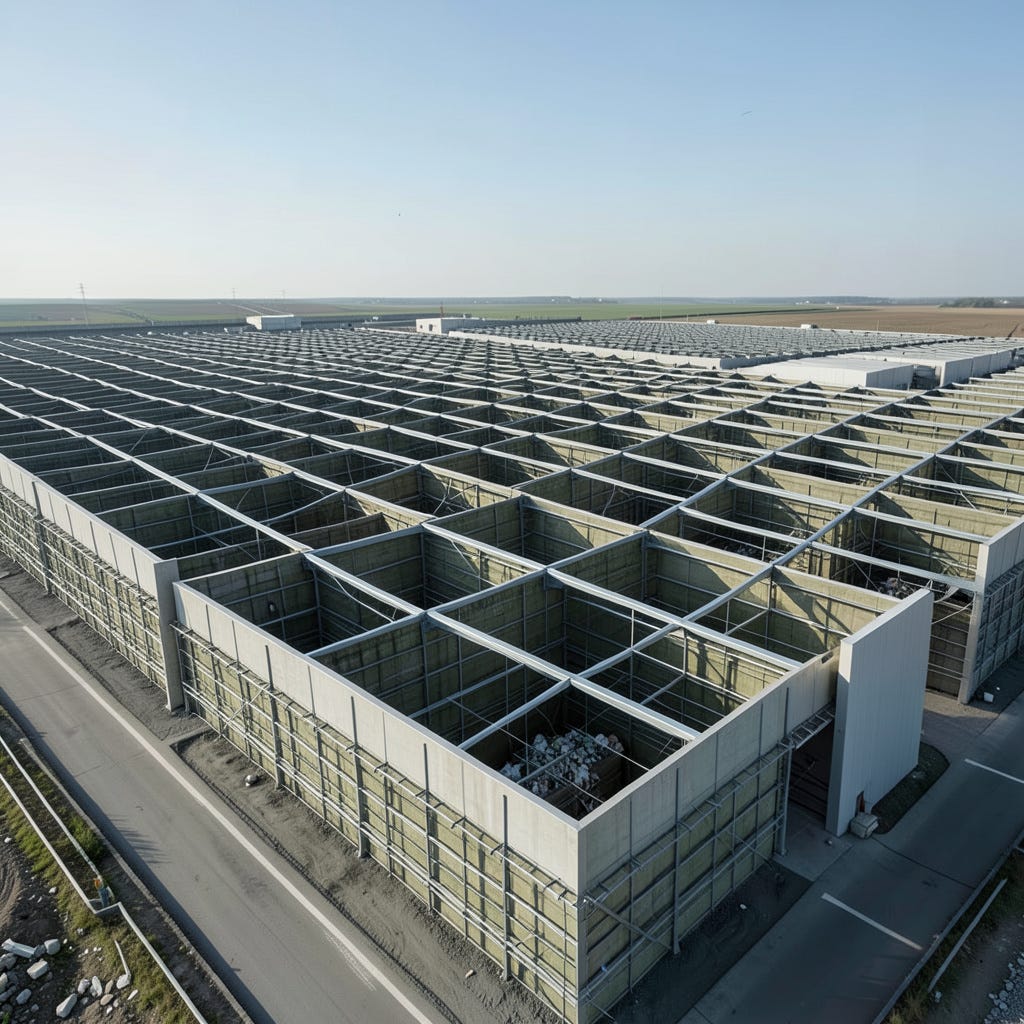
Finding Finite Monopolies in Physical Infrastructure
by Sheni Ogunmola.
Watching a stable position get ignored just because the news is obsessing over tech growth margins is incredibly frustrating. If we are tempted to dump traditional asset holdings because growth stocks are grabbing all the headlines, we will be allowing a short term dip in the stock price, rob us of long term future gains. Mainstream attention remains locked on artificial intelligence and high-multiple software valuations, causing the average investor to treat asset-heavy industries as legacy traps.
However, if we are focused only on digital growth charts, we will fail to see an investment opportunity. Relying on broad market sentiment causes investors to pull out of steady industries indiscriminately, failing to separate temporary tech hype from the irreplaceable value of physical waste networks.
The Regulatory Reality
What people are failing to understand is that municipal waste disposal operates as an ironclad necessity that cannot be replicated by software code. No matter how volatile market valuations become, industrial, commercial, and residential sectors must process and dispose of waste daily. The underlying infrastructure required to perform this task is highly finite.
Companies like Waste Management ($WM) have established a virtual monopoly in the waste disposal industry. The municipal permits, environmental rights-of-way, and localized sorting networks owned by these businesses are completely uncopyable today. No one can build a competing landfill or lay down new municipal processing lines near major population centers. It is logistically and geographically impossible to do so.
When the wider crowd gets anxious over software multiples and sells off legacy stocks indiscriminately, high-cash-flow infrastructure giants like $WM often get dragged down to a deep, unjustified discount. Meaning that $WM remains a safe haven asset because its underlying operational cash flow is legally tied to permanent municipal activity rather than speculative tech trends.
The #dhandho Operational Checklist
We have learned to step back from the daily news cycle in order to see the hidden investment opportunities that the media driven investors are failing to take advantage of. To separate broad sector anxiety from steady asset-heavy value, we focus on three strict markers:
Identify Regulatory Moats: Target infrastructure companies that have established a virtual monopoly in the waste disposal industry or similar highly permitted, uncopyable fields.Check the Contract Integrity: Look for businesses that utilize multi-year, inflation-indexed corporate and municipal contracts that lock in baseline pricing power.Capitalize on Tech Indifference: Buy into steady, cash-generating networks when the crowd’s focus on digital margins temporarily discounts physical, capital-intensive monopolies.
Long-term portfolio balance relies on separating temporary chart moves from physical production and infrastructure utilization. By studying core municipal demand and focusing on independent research, we can step away from the crowd’s worry and locate low-risk entry points with great upside while everyone else stays fixated on software headlines.
Beyond Software Margins was originally published in Coinmonks on Medium, where people are continuing the conversation by highlighting and responding to this story.