
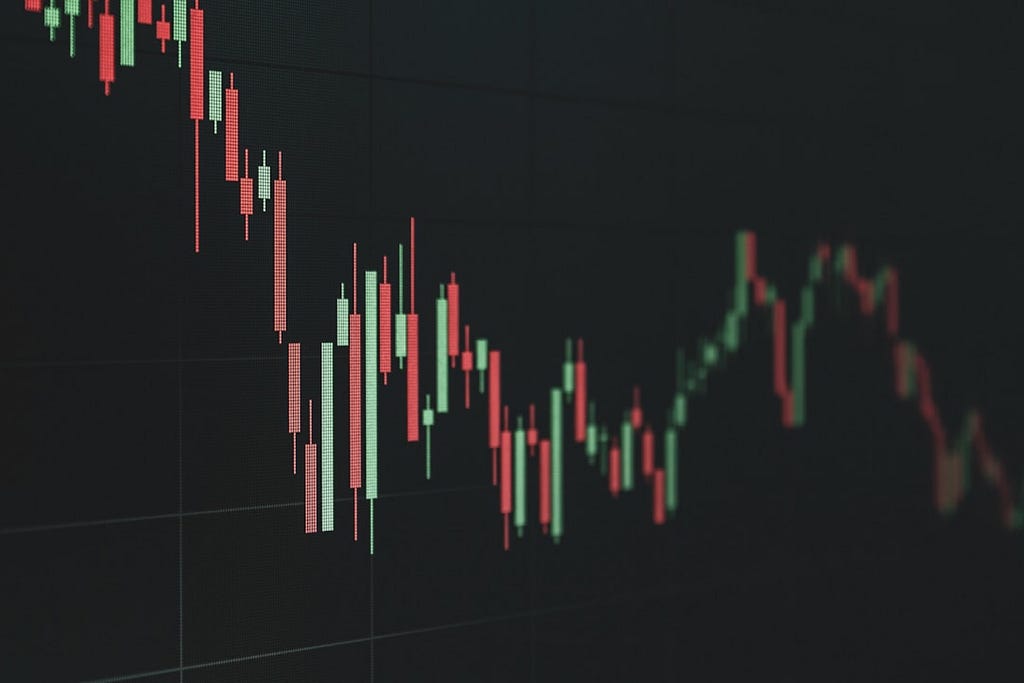
Photo by Arturo Añez on UnsplashDeFi promised to open up finance for everyone. It also made one of the oldest market manipulation tricks easier to run than ever.
There is nothing new about pump-and-dump schemes.
Long before cryptocurrency existed, fraudsters were talking up worthless stocks in boiler rooms, running coordinated buying campaigns, and quietly selling their holdings to retail investors who had no idea the excitement was manufactured.
What changed is the environment.
Decentralized finance – the collection of blockchain-based financial tools commonly known as DeFi – removed many of the gatekeepers that traditional markets relied on to filter out bad actors. The result was faster innovation, broader access, and lower costs. It was also a significantly easier landscape in which to run a pump-and-dump.
Understanding why that is, and what regulators are actually doing about it, matters for anyone participating in crypto markets.
What Is a Pump-and-Dump Scheme?
The mechanics are straightforward, and they have not changed much since the pre-internet era.
A group acquires a significant position in an asset – often quietly, before anyone else is paying attention. They then generate excitement: social media posts, influencer promotions, coordinated buying that creates the appearance of surging demand.
New participants pile in, drawn by the rising price and the noise surrounding it. Once the price has climbed high enough, the original holders sell. The buying pressure disappears. The price collapses. Late entrants are left holding an asset worth a fraction of what they paid.
One clarification matters here.
Not every token that rises quickly and then crashes is the product of manipulation.
Crypto markets are genuinely speculative, and dramatic price swings can happen for reasons that have nothing to do with fraud. The distinction lies in intent:
pump-and-dump schemes involve deliberately misleading conduct, coordinated promotion designed to manufacture demand, undisclosed conflicts of interest, or insider selling timed to exploit the hype being generated.
The behavior is fraudulent.
The volatility is the cover.
Why DeFi Is Particularly Vulnerable
Several features of decentralized finance make these schemes easier to run than in traditional markets – and harder to detect.
Anyone can create a token
In conventional financial markets, listing a security involves regulatory filings, disclosure requirements, and exchange approval processes. In DeFi, a token can be created and deployed in minutes by anyone with a basic understanding of blockchain development. No regulator reviews it. No exchange committee approves it. This is genuinely empowering for legitimate developers. It is equally convenient for fraudsters.
Low liquidity amplifies price movements
Many newly launched tokens trade with limited depth, meaning a relatively small amount of coordinated buying can produce large price increases. This makes it cheap to create the illusion of market demand and straightforward to attract retail attention with manufactured momentum.
Token ownership is often heavily concentrated
In many projects, founders, early investors, or insiders hold a large proportion of the total supply. If those holdings are not disclosed – and in DeFi, they frequently are not – retail participants have no way of knowing that a small group of wallets has the capacity to move the market dramatically. The project can look like it has broad community support when, in practice, a handful of addresses control the price.
Social media does the heavy lifting
Old-school pump-and-dump schemes relied on cold calls and fax campaigns. Modern versions spread through Telegram groups, Discord servers, YouTube channels, and influencer posts. Hype can reach hundreds of thousands of people within hours. By the time participants realize what happened, the organizers have already exited.
The Influencer Problem
One of the more significant recent developments in crypto market manipulation is the growing role of celebrity and influencer endorsements.
Projects are no longer promoted solely by their developers or early investors. They are marketed by individuals with large online audiences who can generate substantial attention quickly – and who are not always transparent about whether they are being paid to do so.
Litigation has followed.
Investors brought claims relating to the promotion of EthereumMax, alleging that celebrity endorsements helped inflate demand before the token collapsed. Questions about promotional practices and disclosure obligations have also emerged in cases connected to the Bored Ape Yacht Club ecosystem and ApeCoin.
Whatever the outcome of individual cases, the pattern they reveal is significant. Regulators and private litigants are increasingly scrutinizing how crypto assets are marketed, not just how they are traded. Being paid to promote a token without disclosing that relationship is a recognizable form of misleading conduct – in crypto as in any other market.
Why Regulation Is Genuinely Difficult Here
Traditional financial regulation was built on a set of assumptions:
there is an issuer, there is an exchange, there is a broker, and there is a regulator with clear authority over all of them.
DeFi regularly disrupts all four.
Tokens may be created by anonymous or pseudonymous developers. Trading can occur through automated liquidity pools that have no central operator. Promotional activity can originate from individuals scattered across dozens of jurisdictions. In some cases, no single entity controls the underlying protocol at all.
This creates a practical problem for regulators:
if there is no company, no registered issuer, and no licensed intermediary involved, who exactly gets regulated?
The honest answer is that this question does not yet have a clean resolution. DeFi was not designed with regulatory compliance in mind, and fitting decentralized infrastructure into frameworks built for centralized institutions is genuinely complicated.
What Regulators Are Actually Doing
Faced with this complexity, most regulators have adopted a pragmatic approach:
focus on identifiable actors rather than attempting to regulate code directly.
That means targeting the businesses and individuals that connect decentralized systems to the broader financial world – centralized exchanges, custodians, brokers, token promoters, and influencers with undisclosed compensation arrangements.
The European Union’s Markets in Crypto-Assets Regulation, commonly known as MiCA, represents the most comprehensive attempt to date to impose structured market integrity obligations across the crypto sector. Under MiCA, regulated service providers face explicit requirements around suspicious activity monitoring, disclosure, and market conduct.
In the United States, enforcement agencies have pursued cases involving misleading promotions, unregistered securities offerings, and coordinated trading activity. The approach has been more fragmented and enforcement-led than the EU’s legislative model, but the direction of travel is similar:
hold identifiable actors accountable for their role in manipulative schemes, regardless of whether those schemes happened on a blockchain.
The Transparency Paradox
There is a persistent misconception that cryptocurrency transactions are untraceable. The reality is more nuanced – and in some ways, less favorable to fraudsters than they might expect.
Blockchain systems are often pseudonymous rather than anonymous.
Every transaction is permanently recorded and visible to anyone who knows where to look. Wallet addresses may not immediately reveal a person’s real identity, but the patterns of activity they leave behind are not hidden.
They are archived.
As blockchain analytics tools have become more sophisticated, investigators have become increasingly capable of identifying concentrated ownership structures, detecting coordinated trading activity, tracing fund movements across wallets, and connecting promotional activity to specific market events.
The challenge is not seeing what happened on the blockchain. The challenge is linking what happened on the blockchain to a real person in a specific jurisdiction with sufficient evidence to support enforcement action.
That gap – between visible activity and proven identity – is where many crypto manipulation investigations stall.
Can Regulation Actually Keep Up?
My honest answer is:
partially, and unevenly.
Regulators are meaningfully better equipped to monitor crypto markets than they were even three or four years ago. Blockchain analytics, expanded disclosure requirements, exchange surveillance programs, and cross-border enforcement cooperation have all improved. High-profile cases have demonstrated that manipulative schemes – even those involving pseudonymous actors – are not beyond the reach of law enforcement.
However, DeFi continues to present challenges that traditional regulatory systems were not designed to handle. Permissionless token deployment, pseudonymous participation, global accessibility, and the absence of centralized intermediaries create an environment where enforcement is consistently slower and more resource-intensive than in conventional financial markets.
The regulatory response will not, in all likelihood, involve direct oversight of every decentralized protocol. It will focus instead on the points where decentralized systems intersect with identifiable actors, licensed businesses, and the traditional financial infrastructure through which most people ultimately access them.
Pump-and-dump schemes will not disappear from DeFi. The structural conditions that make them easy to run are not going away quickly. But neither are regulators, and the tools available to them are improving faster than many participants in these markets appreciate.
The race between innovation and oversight is ongoing – and in crypto, both sides are still learning.
If you enjoy analytical commentary on digital asset regulation, crypto markets, and emerging financial technologies, consider subscribing to my newsletter where I share additional research, commentary, and industry insights.
[https://samuel-ayodeji.kit.com/profile]
Pump-and-Dump Schemes in DeFi: Can Regulators Keep Up? was originally published in Coinmonks on Medium, where people are continuing the conversation by highlighting and responding to this story.