
Top 10 On Chain Property Ownership Models Transforming Real Estate in 2026
Real estate is no longer confined to paperwork, brokers, and long transaction cycles. The shift toward blockchain powered systems has introduced a new era where property ownership can exist entirely on chain. This transformation is redefining how assets are bought, sold, managed, and monetized. Instead of relying on centralized authorities, ownership is now recorded on decentralized ledgers that offer transparency, security, and global accessibility.
In 2026, on chain property ownership models are not just experimental ideas. They are actively being implemented across markets, enabling fractional investment, automated transactions, and borderless participation. With tokenized real estate markets already surpassing billions in value and growing rapidly, these models are becoming the foundation of modern property ecosystems . This blog explores the top 10 models that are transforming real estate through blockchain innovation.
1. Direct On Chain Ownership Model
This model represents the purest form of blockchain based property ownership. The property deed itself is recorded directly on chain, and ownership is transferred via smart contracts.
In this system, buyers and sellers interact without intermediaries. Smart contracts verify funds, validate ownership history, and execute the transfer automatically. What once required weeks can now be completed in just hours or a few days.
This model is ideal for markets with strong regulatory support for blockchain records. It eliminates fraud risks and ensures that ownership data is immutable and publicly verifiable.
2. Fractional Ownership Token Model
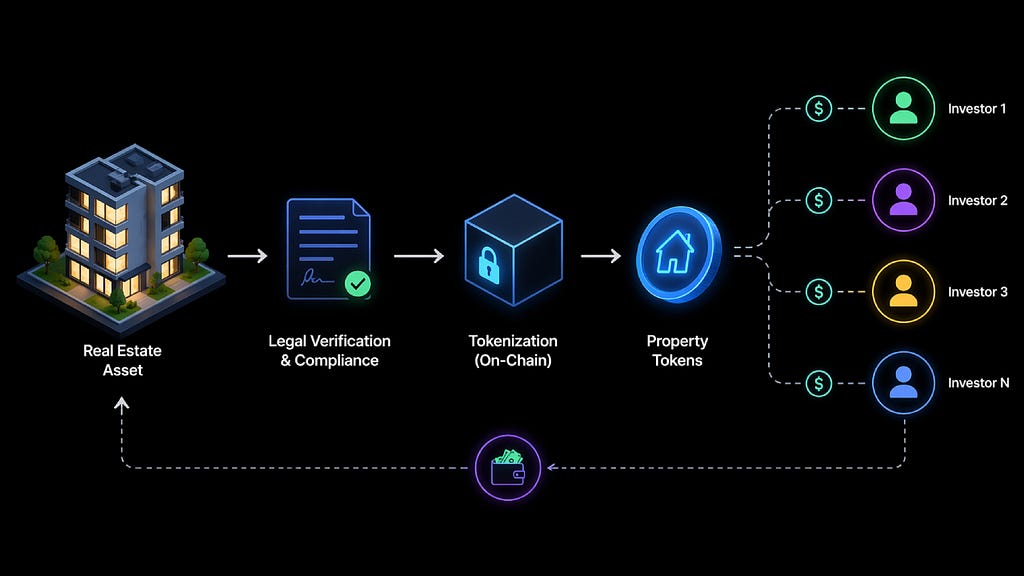
Fractional ownership is one of the most popular on chain models in 2026. A property is divided into multiple digital tokens, each representing a share of ownership.
This approach lowers entry barriers significantly. Investors can own a portion of high value real estate with minimal capital. Tokens can also be traded on secondary markets, creating liquidity in an otherwise illiquid asset class.
For example, properties can be split into thousands of tokens, allowing global investors to participate and earn proportional returns from rental income or property appreciation .
3. SPV Based Token Ownership Model
In this model, a Special Purpose Vehicle holds the legal title of a property, while investors own tokens that represent shares in that entity.
This structure is widely used in regions where direct on chain ownership is not yet legally recognized. It bridges the gap between traditional legal systems and blockchain technology.
SPV models provide flexibility, regulatory compliance, and easier management of multi investor properties. They are especially useful for commercial real estate projects and cross border investments.
4. Trust Based Property Ownership Model
Similar to the SPV structure, the trust based model involves a legal trust holding the property while tokens represent beneficial ownership.
This model is gaining traction in countries with strict property laws. It ensures compliance while still enabling blockchain based trading and ownership.
Trust based systems also simplify inheritance, governance, and distribution of income, making them attractive for long term investors.
5. Revenue Sharing Token Model
This model focuses on income rather than direct ownership. Investors purchase tokens that entitle them to a share of the property’s revenue.
Rental income, lease payments, or profits from property sales are distributed automatically through smart contracts. This eliminates manual calculations and delays.
Revenue sharing models are particularly popular among passive investors who want exposure to real estate without managing assets directly.
6. NFT Based Property Ownership Model
Non fungible tokens are being used to represent unique property assets. Each NFT acts as a digital deed, storing ownership details and metadata.
This model is highly secure and allows for easy transfer of ownership. NFTs can also include additional features such as access rights, rental agreements, and property history.
In advanced implementations, NFTs are combined with fractional tokens, enabling both unique ownership and shared investment opportunities.
7. Hybrid On Chain and Off Chain Model
Not all aspects of real estate can be fully digitized. Hybrid models combine on chain ownership records with off chain legal frameworks.
For example, the ownership data and transaction history are stored on blockchain, while legal documentation is maintained off chain. Oracles are used to connect both systems and ensure accuracy .
This approach is practical for markets transitioning toward blockchain adoption. It balances innovation with regulatory requirements.
8. DeFi Integrated Property Ownership Model
Decentralized finance is merging with real estate to create new ownership structures. In this model, property tokens are integrated into DeFi protocols.
Owners can stake their tokens, use them as collateral, or earn yield through lending platforms. This transforms real estate into an active financial asset rather than a static investment.
DeFi integration also improves liquidity and opens new revenue streams for property owners.
9. DAO Governed Property Ownership Model
Decentralized Autonomous Organizations are being used to manage property assets collectively. Voting mechanisms allow token holders to influence decisions.
This model is particularly useful for large scale properties or real estate portfolios. Decisions related to maintenance, upgrades, and sales are made collectively.
DAO based ownership promotes transparency and community driven management, reducing reliance on centralized authorities.
10. Digital Twin and Smart Asset Model
One of the most advanced models in 2026 involves digital twins. These are virtual replicas of physical properties integrated with blockchain systems.
Digital twins provide real time data about property conditions, usage, and performance. Combined with smart contracts, they enable automated management of leases, maintenance, and transactions.
This model is gaining popularity in smart city projects, where blockchain and IoT technologies work together to create fully automated property ecosystems .
Key Benefits of On Chain Property Ownership Models
These models offer several advantages that are transforming the real estate industry:
Transparency
All transactions and ownership records are visible and verifiable, reducing fraud and disputes.
Liquidity
Tokenization allows properties to be divided into tradable units, making it easier to buy and sell shares.
Accessibility
Investors from around the world can participate without geographical restrictions.
Efficiency
Smart contracts automate processes, reducing time and costs associated with traditional transactions.
Security
Blockchain technology ensures that data cannot be altered or tampered with, providing a high level of protection.
Challenges and Considerations
Despite their advantages, on chain property ownership models also face challenges:
Regulatory uncertainty remains a major concern in many regions. Legal recognition of blockchain based ownership is still evolving.
Technical complexity can be a barrier for new users. Platforms need to focus on user friendly interfaces to drive adoption.
Liquidity in secondary markets is still developing. While tokenization improves accessibility, active trading markets are essential for long term success.
Integration with existing systems can also be challenging, especially in countries with traditional property registration processes.
Future Outlook
The future of real estate is increasingly on chain. As regulations become clearer and technology continues to evolve, these models will gain wider adoption.
Institutional investors are entering the space, bringing credibility and capital. At the same time, retail investors are benefiting from increased accessibility and lower entry barriers.
The combination of blockchain, artificial intelligence, and decentralized finance is expected to create more advanced ownership models. These innovations will continue to reshape the real estate industry and redefine how assets are managed and traded.
Conclusion
On chain property ownership models are transforming real estate into a more transparent, accessible, and efficient market. From fractional ownership to DAO governance and digital twins, each model offers unique advantages that address traditional limitations.
As the industry evolves, businesses and investors must stay informed and adapt to these changes. Embracing blockchain based ownership is no longer optional for those who want to remain competitive in the modern real estate landscape. The shift toward on chain systems is not just a trend but a fundamental transformation that is shaping the future of property ownership in 2026.
Top 10 On Chain Property Ownership Models Transforming Real Estate in 2026 was originally published in Coinmonks on Medium, where people are continuing the conversation by highlighting and responding to this story.