
Bitcoin price broke decisively above $75,000 following reports of a high-level US-Iran meeting in Geneva, marking the clearest sign yet that geopolitical de-escalation – not just technicals – is driving this crypto market rally.
The catalyst is straightforward: sanctions relief signals a massive reduction in global risk, and capital markets are repricing accordingly. On-chain data confirms whale wallets rotating out of stablecoins and into BTC at a pace not seen since late 2024.
This isn’t Bitcoin acting as a panic hedge. It’s Bitcoin acting as a liquidity sponge – and that distinction matters enormously for where price goes next.
Ether followed BTC higher, hitting a 10-week high as the broader market absorbed the diplomatic headlines. A simultaneous short squeeze amplified the move, forcing leveraged bears to cover positions and accelerating gains across major digital assets. The Fear & Greed Index, which had been sitting in the low 30s through April’s tension spike, snapped sharply higher as the Geneva reports circulated.
Why US-Iran Talks Are a Global Liquidity Event for Bitcoin
The mechanism here runs deeper than headline sentiment. When the US-Iran talks advance toward sanctions relief, the immediate knock-on effect is lower oil prices. Lower oil cools inflation. Cooler inflation gives the Federal Reserve room to ease monetary policy – and looser monetary conditions mean more capital chasing higher-returning assets. That’s what analysts mean when they call Bitcoin a liquidity sponge: it benefits disproportionately when cheap money returns to the global system.
This is the same macro logic that drove the 2020–2021 cycle. Global liquidity expanded aggressively, and Bitcoin was among the first assets to absorb it. A US-Iran deal that structurally reduces energy costs and geopolitical risk premium could recreate those conditions – at least partially – within months rather than years.
BREAKING: A new round of negotiations between the US and Iran may be held on Thursday, per AP.
President Trump said that “we’ve been called by the other side” and “they want to work a deal.”
— The Kobeissi Letter (@KobeissiLetter) April 14, 2026
The context behind this shift is worth understanding. Iran has operated under successive rounds of US-led sanctions for decades, restricting its access to the global financial system and keeping its oil largely off world markets. Any credible path toward sanctions relief doesn’t just affect Tehran, it affects global energy supply, dollar liquidity conditions, and the risk appetite of institutional investors sitting on the sidelines.
Iran’s evolving relationship with crypto amid these geopolitical pressures has been building quietly for some time, making the current diplomatic shift even more significant for digital asset markets.
Institutional investment flows are already confirming the rotation thesis. CoinShares reported $635 million in inflows into digital asset products in the week following initial ceasefire headlines – with BlackRock’s IBIT accounting for the lion’s share.
That’s not retail momentum trading. That’s institutional capital making a deliberate macro call on the back of geopolitical re-pricing. The parallel expansion of tokenized real-world assets further illustrates how institutional capital is rotating into crypto-adjacent products as risk sentiment improves.
Can Bitcoin Price Hold $75,000 – and What Does the Path to $80K Require?
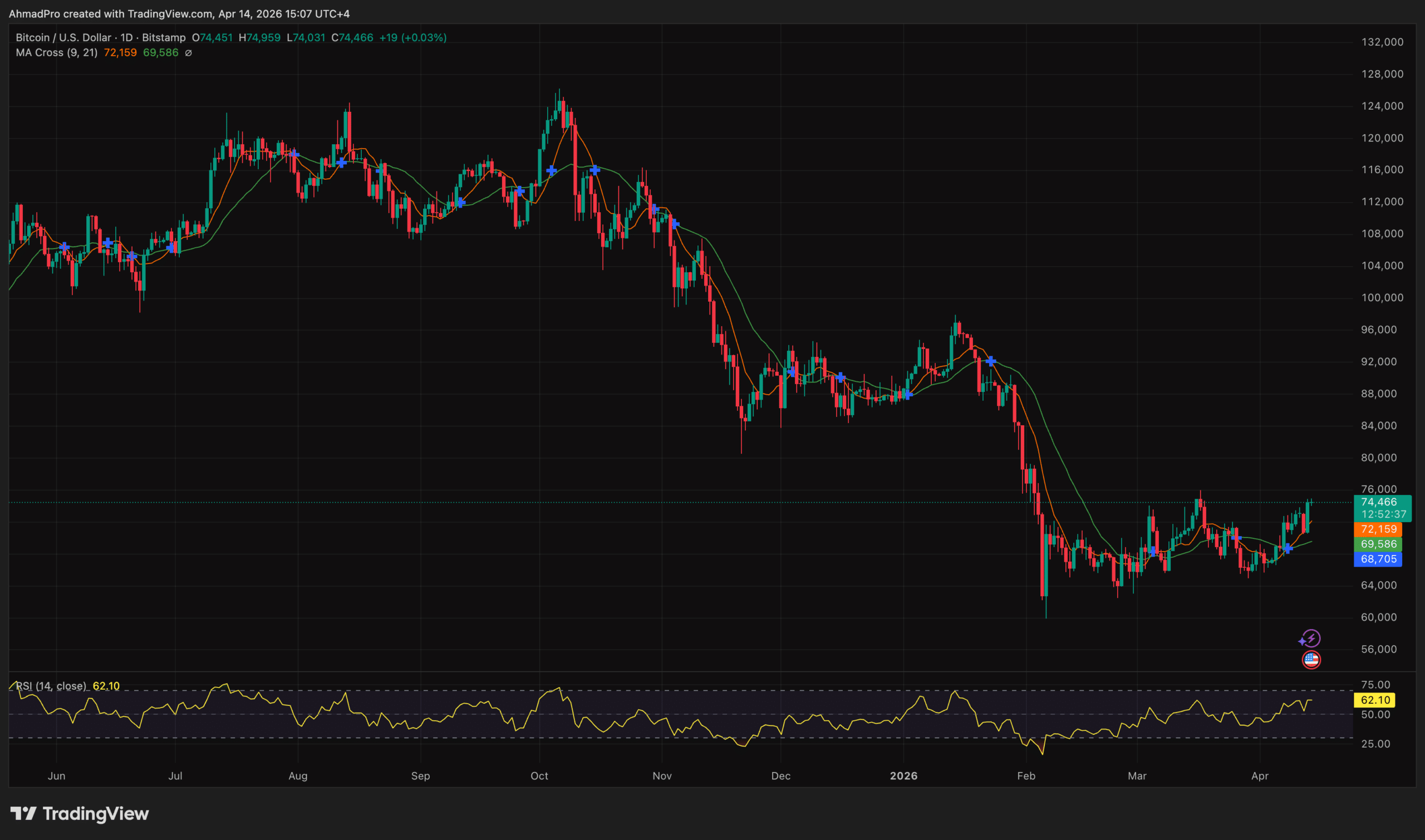
Bitcoin is currently trading in the $75,000–$76,500 range following the Geneva-driven breakout. The 50-day moving average sits at approximately $68,700, now acting as deep support rather than overhead resistance, a significant structural shift from where the market stood during April’s tension peak.
Immediate resistance is clustered between $77,500 and $79,000, the zone where sellers defended aggressively during the March rejection.
Source: Tradingview
Right now, Bitcoin price is basically trading the outcome of those talks, because if a real agreement comes through and oil drops toward $70 while the Fed starts hinting at cuts, that is the kind of macro shift that can push BTC through $79K and open a run back toward all-time highs.
More realistically, though, it looks like a slow grind, with talks continuing but no final deal, which keeps uncertainty in the system and leaves Bitcoin moving between $72K and $78K, reacting to headlines instead of building a clean trend.
The risk is that everything breaks down: if talks collapse and oil spikes again, the market flips back into risk-off quickly, and thatis when Bitcoin can drop back toward the high $60s as liquidation pressure comes back into play.
So this is one of those moments where price is not leading; it is reacting. Until the macro picture resolves, you are stuck trading headlines, not structure.
EXPLORE: Top Crypto Presales to Watch Now
The post US-Iran Talks Just Sent Bitcoin Above $75,000: Is Geopolitical De-Escalation What BTC Waiting For? appeared first on 99Bitcoins.