
Blockchain has long promised to reshape ownership, fundraising, and access to real-world assets. Cases like this show what that promise looks like when serious capital starts to engage.
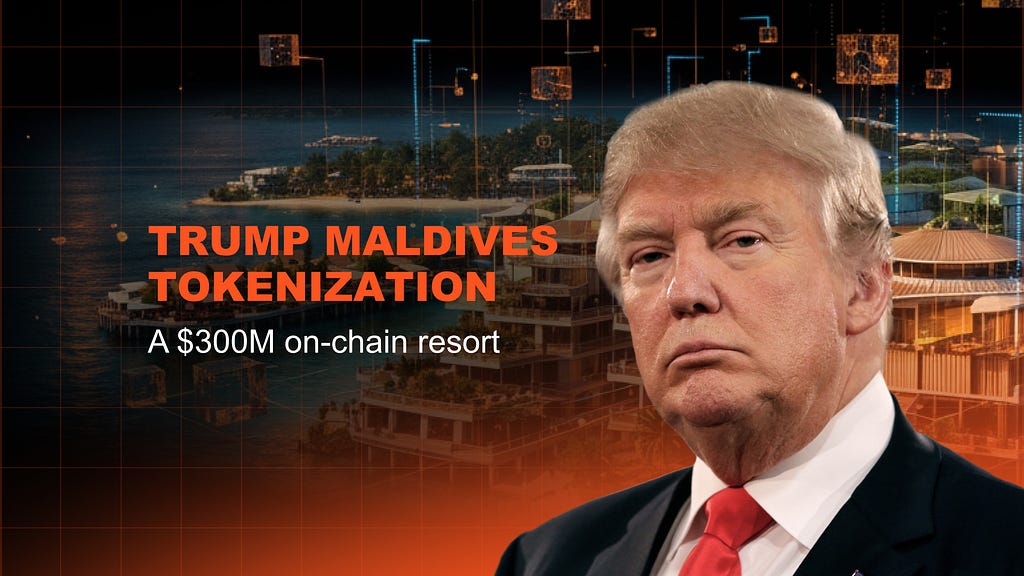
The tokenization of Trump International Hotel & Resort Maldives is not just another big headline. It is a clear signal that tokenization is leaving the world of crypto hype and becoming a real tool for structuring real estate deals. In this article, the CMO of Sabai Protocol breaks down why this case matters for blockchain, RWA infrastructure, and the future of tokenized property markets.
Hi, I’m Max Voznenko, CMO of Sabai Protocol. Back in my school years, I used to hear a lot about Trump’s talent in real estate — about Trump Tower, ambitious plans, and highly successful deals in square meters. He inspired people with his vision and was seen as a kind of “style icon” in real estate. And now — the tokenization of the Trump Hotel in the Maldives. Wow. That’s something new.
You may not like him as a politician, but in this article, my focus is strictly on his real estate activity and operations.
As CMO of the RWA project, I’ve long been used to loud headlines that nobody remembers a week later. The story of the tokenization of the Trump International Hotel & Resort Maldives, is from a different league. Not because it’s the Maldives. Not because it’s a “luxury resort with 80 villas just 25 minutes by speedboat from Malé.” And not even because the project is valued at around $300 million. What really matters is who is behind it — and how it is being done.
Let’s break down what this news means for the market and what actions it points to next.
Not the first tokenized development, but the first signal of this caliber
If you strip the hype away, tokenizing projects at the construction stage is no longer something unique. Investors had already been buying into SPVs, debt tokens, and revenue-share instruments long before this news broke.
What makes this case different is something else.
Here, the tokenized asset is the right to income from the loans financing the resort’s construction — not just “pretty NFTs with an ocean theme.”
The project is being carried out by World Liberty Financial in partnership with Securitize and DarGlobal, a developer listed on the London Stock Exchange.
The name on the façade is Trump International.
So this is not a “crypto startup” story. It is a structure that combines:
a developer with a proven track record,an RWA platform,a regulated tokenization provider,and a name that, in real estate, knows how to make money work.
As a marketer, I see this as a point of no return: after a case like this, it becomes far more difficult to dismiss tokenization as something unserious.
Why This Is Part of a Global Trend, Not an Isolated Case
If this case is pulled out of context, it may look like just another loud PR move.
But in the context of the numbers, it is one more block in a wall that is already being built.
Standard Chartered projects that the tokenized real-world asset market, excluding stablecoins, could reach $2 trillion by 2028, and Deloitte expects tokenized real estate alone to surpass $4 trillion by 2035.
Larry Fink, CEO of BlackRock, is no longer speaking in terms of “maybe one day,” but of the beginning of the “tokenization of every asset.”
BlackRock, meanwhile, is backing that vision with action. Its tokenized BUIDL fund, issued through Securitize, is already being used as collateral on Binance — a very practical sign of adoption.
Against this backdrop, the Trump Hotel tokenization case is not a random experiment, but a logical step: capital, brands, and infrastructure are all moving in the same direction.
Why This Case Is Making Real Estate Developers Move Faster
If we look at it coldly, three things in the Trump Maldives case are hard for any developer or portfolio owner to ignore.
The asset is being tokenized at the presale and construction stage. This is no longer really a technical issue. The real question is legal structuring and execution.
A major player is showing that this can be done without making auditors and regulators lose their minds.
The product is packaged as a regulated debt instrument. Investors are not buying into a “Maldives dream,” but into rights to interest income and a share of loan revenue, supported by full legal documentation.
That is the language of finance, not just Web3 marketing.
Institutional players with real experience in building RWA infrastructure are already in the game. Securitize is not a crypto exchange, but a regulated tokenization provider working with firms such as BlackRock, Hamilton Lane, and KKR, while also operating a regulated ATS for digital asset securities.
So this is not just a new sales channel, but a new level of liquidity infrastructure for products like these.
From my conversations with developers who come to us at Sabai, many had treated tokenization as an “interesting theory” up until now. After a case like this, it becomes much harder to brush it off with, “We’ll wait and see how it works for someone else first.”
What I See as a CMO When I Look Past the Maldives Romance
Strip away the sea and palm trees, and what remains is a highly pragmatic story:
The developer expands its investor base into new markets, moving beyond banks and local sales channels.The product is structured to be offered at scale to accredited investors across multiple jurisdictions.The infrastructure is chosen so that the product can actually do something on the secondary market, rather than remain stuck in a “dead” format.
From a marketing standpoint, tokenization here is not a gimmick. It is a deliberate choice of channels and product structure.
The goal is not just to sell villas, but to build a repeatable financial model that can later be applied to other assets.
And that, honestly, is what I value most in this case: not the polished packaging, but the real diversification potential and the effort to treat tokens as part of financial infrastructure rather than as blockchain souvenirs, like NFTs.
The Window of Opportunity Is Not About FOMO — It’s About Timing
I don’t like manipulative “now or never” messaging. But timing matters here.
Today, real estate tokenization is at an interesting stage.
Regulators and lawmakers no longer see it as something exotic. The range of legal frameworks is expanding, the number of live case studies is growing, and that is gradually reducing the cost of implementation.
The infrastructure has matured as well. There is no longer a need to build everything from scratch using custom smart contracts — standardized solutions are now available, helping reduce both the time and cost of tokenization.
This is no longer a niche market driven by early adopters alone. Banks have entered with forecasts, asset managers with real tokenized products, and now politically prominent developers with hotel projects of their own.
Soon, tokenization for developers will look as routine as a CRM or online booking.
The question is no longer whether it is worth doing, but when you want to enter: while the tool still gives you the image of an innovator, or later, when it has already become basic hygiene.
What Should Local Developers Do?
Not every developer is building resorts with a famous surname on the façade. And that is perfectly fine.
The point of this case is not that only Trump-level assets can be tokenized. It can be done even by a regional player, since the cost of tokenization starts at around $20,000, making it accessible to most developers.
What this news really means is that:
The model of asset → tokenized financial product → global investor pool has officially moved from experimentation into practice.The market now has a high-visibility precedent that lawyers, consultants, and boards will be able to point to.
This leads to several practical questions that, as a CMO, I believe every developer should be asking:
Which of our projects could be structured not just as square-meter sales, but as financial products with transparent cash flow suitable for tokenization?What is actually stopping us from testing this on one asset: legal constraints, lack of technology, or simply the habit of doing things the old way?How will we look in 3–5 years compared with competitors who are already building data, processes, and investor feedback loops around tokenized products?Which legal framework makes the most sense for us? And what frameworks are even available?Are there already successful examples of tokenized real estate sales in our market?
These are no longer questions for “someday.” The Trump case has made them part of normal strategic planning, not a futuristic exercise.
Conclusion
Put simply, this Maldives project is a strong signal that tokenization is no longer a niche option “for the bold.” It is becoming part of the new language the market uses to think about capital and real estate.
At this point, the real question is not whether we like Trump or not. The question is whether we are ready to work within a reality in which decisions of this scale anchor tokenization on the map of global finance for good.
If you are ready but not sure where to begin, feel free to reach out. I will run a free diagnostic session and prepare a full roadmap for your project.
Trump’s Maldives Gambit: Why a $300M Tokenization Deal Signals a Green Light for the Market was originally published in Coinmonks on Medium, where people are continuing the conversation by highlighting and responding to this story.