
Exploring the future of currencies and their potential to transform the way we pay save and invest
Imagine walking into a coffee shop and paying for your latte with Bitcoin instead of cash or a card.. Receiving your salary in Ethereum rather than your local currency. It sounds like something from the future. The question isn’t just fantasy -it’s becoming more and more relevant: will Cryptocurrency replace Traditional Money? With Bitcoin, Ethereum and thousands of Cryptocurrencies getting more attention the financial world is changing fast. From decentralized finance platforms to banks looking into digital currencies the world of money is on the brink of a big change.
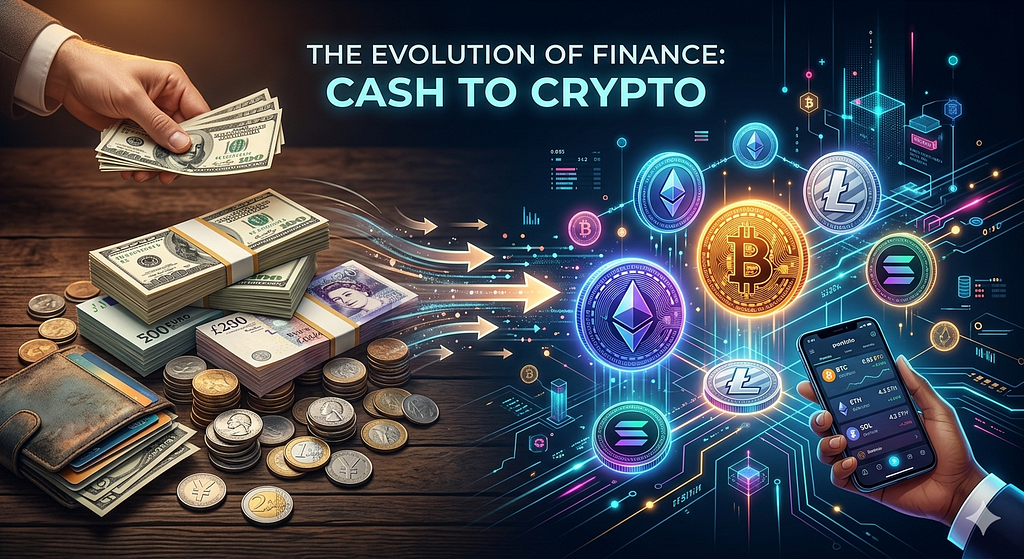
Image generated by ChatGPT
Cryptocurrency is a form of money that uses cryptography and blockchain technology. Unlike money Cryptocurrencies aren’t controlled by governments or central banks -they are decentralized, meaning no single entity controls them. Bitcoin, which started in 2009 was the successful Cryptocurrency and since then thousands of other digital currencies have emerged. Each Cryptocurrency promises features and uses like faster transactions and smart contracts.
One reason people think Cryptocurrency could replace money is that it has no borders. Traditional money is tied to countries, banks and rules. Cryptocurrencies can be sent across borders in minutes without intermediaries. Freelancers for example can get paid in Bitcoin from clients on the side of the world avoiding conversion fees and bank delays. This freedom from financial limitations is a big draw for many. Another advantage is decentralization. Cryptocurrencies use blockchain, which’s transparent, immutable and decentralized. Every transaction is recorded publicly making it hard to manipulate.
Scarcity also plays a role. Unlike fiat currencies, which can be printed endlessly by banks leading to inflation most Cryptocurrencies have a fixed supply. Bitcoin is capped at 21 million coins. This scarcity creates value to gold and attracts investors who fear traditional money losing purchasing power over time. Beyond scarcity Cryptocurrencies fit well into our digital economy. Mobile wallets, QR codes and online banking are becoming standard and Cryptocurrencies are built for digital transactions without relying on banks.
However despite these advantages there are hurdles that make a replacement of traditional money unlikely in the near future. Cryptocurrency prices are highly volatile. Bitcoin for instance has seen days when it gains 20% in value -and others when it loses the same. Traditional money offers stability, which makes it more practical for transactions. Governments and regulators are still figuring out how to handle currencies. While countries like El Salvador have adopted Bitcoin as tender, others, like China have banned crypto trading entirely. Until there’s regulation worldwide mass adoption will face significant challenges. Many Cryptocurrencies also struggle with transaction speed and scalability. Bitcoin for example can handle around seven transactions per second while payment networks like Visa process thousands. For Cryptocurrency to fully replace money it must scale efficiently to millions of transactions. Accessibility and knowledge also matter. While crypto adoption is growing a large portion of the population still lacks understanding or access. Internet connectivity, digital literacy and security knowledge are prerequisites for using Cryptocurrencies, which limits their reach.
Of replacing traditional money outright the future may involve coexistence. Central banks worldwide are exploring currencies combining the convenience of digital transactions with regulatory oversight. China’s digital yuan for instance offers a government-backed currency that coexists with traditional fiat money. Cryptocurrencies may continue to serve as investment assets or stores of value while fiat remains dominant for everyday transactions. Hybrid solutions, like crypto debit cards allow users to hold Bitcoin but spend it like money bridging the gap between digital assets and traditional currency.
Money is not a tool -it’s also a social contract. People trust it because they trust the institutions behind it. Fiat currencies have centuries of established trust while Cryptocurrencies though promising are still relatively new. Behavioral adoption takes time. People need confidence that their money will retain value and be widely accepted before abandoning cash. While nobody can predict the future with certainty several scenarios seem plausible. Cryptocurrency adoption could grow volatility could. Digital assets might become widely accepted. Alternatively Cryptocurrencies and digital fiat currencies could coexist alongside money each serving specific roles. In a niche outcome Cryptocurrency might remain mainly a tool for investment and cross-border payments while fiat continues to dominate daily life.
The question of whether Cryptocurrency will replace money doesn’t have a simple yes or no answer. Cryptocurrencies offer speed, transparency and borderless freedom. Traditional money remains stable trusted and widely accessible. The likely path forward is coexistence with Cryptocurrencies gradually integrating into our lives alongside fiat money. For investors entrepreneurs and anyone curious about the future of finance understanding the interplay between Cryptocurrency and traditional currency is essential. The financial world is evolving and staying informed is no longer optional -it’s critical. Whether you’re making investment decisions planning a business or just trying to understand the future of money the rise of Cryptocurrency signals a world where digital currency’s as normal as the notes, in your wallet.
Lets Connect
If you are interested in fintech technology, digital payments or building platforms feel free to connect.
Contact us: medium@itio.in
DM: aniketk@itio.in
Visit us: http://itio.in
If you enjoy exploring topics like fintech, digital payments and financial technology infrastructure follow along for insights into how real fintech systems work behind the scenes.
Will Cryptocurrency Replace Money? was originally published in Coinmonks on Medium, where people are continuing the conversation by highlighting and responding to this story.