
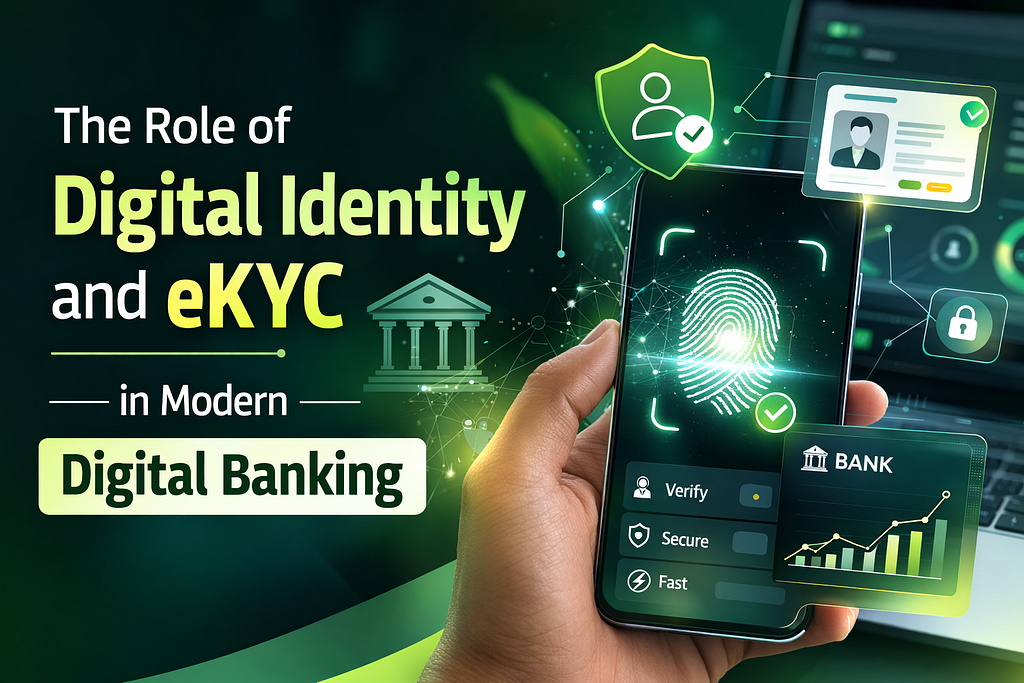
How secure digital identity systems and electronic KYC are transforming onboarding, trust, and compliance in the era of online banking.
Opening: Banking Without Borders, Powered by Identity
The banking experience has changed dramatically over the past decade. Customers no longer need to visit a branch to open an account, verify their identity, or apply for financial services. Everything – from account creation to loan approvals – can now happen digitally.
ChatGPT Generated Image
At the heart of this transformation lies digital identity and electronic Know Your Customer (eKYC) systems.
Digital banking platforms rely on these technologies to verify users remotely, prevent fraud, comply with regulations, and create seamless onboarding experiences. Without reliable identity verification, modern digital banking simply cannot function.
As financial services move online, digital identity is becoming the foundation of trust in the digital economy.
Understanding Digital Identity in Banking
A digital identity is the online representation of an individual or organization that allows systems to verify who they are. It includes verified attributes such as:
Government-issued identificationBiometric authenticationPhone number verificationEmail verificationDevice identityBehavioral data
Financial institutions combine these elements to build secure identity profiles for their users.
The process used to verify these identities is called Know Your Customer (KYC), a regulatory requirement designed to prevent fraud, money laundering, and financial crime.
In digital environments, this process becomes electronic Know Your Customer (eKYC).
eKYC enables financial institutions to verify users remotely using technologies such as:
AI-based identity verificationbiometric authenticationdocument verificationliveness detectionfacial recognition
This shift has significantly reduced onboarding time from days to just minutes.
Practical Insights: How eKYC Powers Modern Digital Banking
Digital identity systems are now embedded in nearly every digital banking workflow.
1. Instant Customer Onboarding
Traditional banking onboarding often required physical paperwork and in-person verification.
With eKYC, customers can now:
Upload identity documents through mobile appsComplete facial verificationPerform biometric authenticationGet verified within minutes
This dramatically improves user experience while maintaining regulatory compliance.
2. Fraud Prevention and Risk Management
Digital identity verification systems help detect fraudulent activities before accounts are even created.
Advanced fraud detection systems analyze:
device fingerprintingIP address behaviorbiometric matchingdocument authenticitybehavioral patterns
By combining these signals, banks can detect suspicious activity in real time.
3. Seamless Cross-Border Financial Services
Digital identity frameworks enable banks and fintech platforms to serve customers globally.
With standardized eKYC systems, financial institutions can verify international customers without requiring physical presence.
This capability is especially important for:
digital banksfintech startupsglobal payment platformsremittance services
4. Faster Financial Product Approvals
Verified digital identities accelerate the approval of financial services such as:
digital bank accountscredit cardspersonal loanscrypto exchange accountsinvestment platforms
With verified identity data already stored securely, institutions can reduce repetitive verification steps and offer faster services.
Key Challenges in Digital Identity and eKYC
Despite the benefits, implementing digital identity systems presents several challenges.
1. Identity Fraud and Deepfakes
Cybercriminals increasingly use sophisticated tools such as AI-generated images and deepfake videos to bypass identity verification systems.
This creates new challenges for financial institutions attempting to detect fake identities.
2. Data Privacy and Security
Digital identity systems handle extremely sensitive information.
This includes:
biometric datagovernment IDspersonal informationfinancial records
Protecting this data from breaches is one of the biggest responsibilities for digital banks.
3. Regulatory Compliance Across Jurisdictions
Different countries have different identity verification requirements.
For example:
Some regulators require biometric verification.Others mandate document-based verification.Some require government database validation.
For fintech companies operating globally, managing these regulatory variations can be complex.
4. User Trust and Adoption
Many users remain cautious about sharing personal identity data online.
If onboarding processes appear complicated or intrusive, users may abandon registration altogether.
Financial institutions must design systems that balance security with convenience.
Solutions Driving the Future of Digital Identity
Financial institutions and fintech companies are investing heavily in technologies that strengthen digital identity systems.
1. Biometric Authentication
Biometrics have become one of the most reliable forms of identity verification.
Common biometric technologies include:
facial recognitionfingerprint scanningvoice authenticationiris recognition
These methods make it significantly harder for fraudsters to impersonate legitimate users.
2. AI-Powered Identity Verification
Artificial intelligence is improving the accuracy of identity verification systems.
AI models can detect:
manipulated ID documentssuspicious facial patternsabnormal behavioral signalssynthetic identity fraud
These systems continuously learn and adapt to emerging threats.
3. Decentralized Digital Identity
A growing trend in fintech is self-sovereign identity (SSI).
This model allows individuals to control their own identity data using blockchain-based identity wallets.
Instead of repeatedly submitting documents to institutions, users can provide verified digital credentials when needed.
This approach enhances privacy while reducing friction in onboarding.
4. Government-Backed Digital Identity Programs
Many countries are introducing national digital identity frameworks.
These systems allow financial institutions to verify identities directly against trusted government databases.
Such programs significantly strengthen trust in digital banking ecosystems.
Strategic Insights for Fintech Leaders, CTOs, and Founders
For technology leaders building digital financial platforms, identity infrastructure has become a critical strategic component.
1. Identity Is the First Layer of Security
Every financial transaction begins with identity verification.
Fintech platforms must build strong identity verification frameworks before expanding into lending, payments, or investments.
2. Seamless Onboarding Drives Customer Growth
User onboarding is one of the most critical moments in a customer’s journey.
A smooth eKYC process can significantly increase conversion rates and reduce customer drop-offs.
3. Data Protection Must Be a Core Priority
Handling sensitive identity data requires:
end-to-end encryptionsecure storagestrict access controlsregulatory compliance frameworks
Security breaches involving identity data can severely damage brand trust.
4. Interoperable Identity Systems Are the Future
Future digital banking ecosystems will rely on interoperable identity systems that allow identity verification across multiple platforms.
Fintech leaders should invest in flexible identity infrastructure that supports evolving regulatory and technological standards.
Key Features of Modern Digital Identity and eKYC Platforms
Successful digital identity platforms typically offer the following capabilities.
Core Features
AI-powered document verificationbiometric authenticationfacial recognition and liveness detectiondevice fingerprintingfraud detection algorithmssecure identity storageregulatory compliance supportAPI-based integration with banking platforms
These features help financial institutions verify customers quickly while maintaining strong security and regulatory compliance.
Market Growth and Industry Outlook
The digital identity market is growing rapidly as online financial services expand worldwide.
Several factors are driving this growth:
rapid adoption of digital bankinggrowth of fintech platformsincreasing cybersecurity threatsstricter regulatory compliance requirementsexpansion of remote financial services
Financial institutions are recognizing that identity verification is no longer just a regulatory requirement.
It is a competitive advantage.
Platforms that provide faster onboarding, stronger fraud protection, and seamless identity experiences will lead the next wave of digital banking innovation.
Over the next decade, digital identity will likely become as essential to banking as payment networks and core banking systems.
Final Thoughts: Identity Is the New Financial Infrastructure
The future of banking is digital, borderless, and always connected.
But none of it works without trust.
Digital identity and eKYC systems provide the foundation that makes online financial services possible. They enable secure onboarding, prevent fraud, ensure regulatory compliance, and create seamless user experiences.
As fintech continues to evolve, identity verification will move from being a back-office compliance requirement to becoming a core infrastructure layer for the global financial system.
Institutions that invest in strong identity frameworks today will be the ones shaping the next generation of digital banking.
The Role of Digital Identity and eKYC in Modern Digital Banking was originally published in Coinmonks on Medium, where people are continuing the conversation by highlighting and responding to this story.