
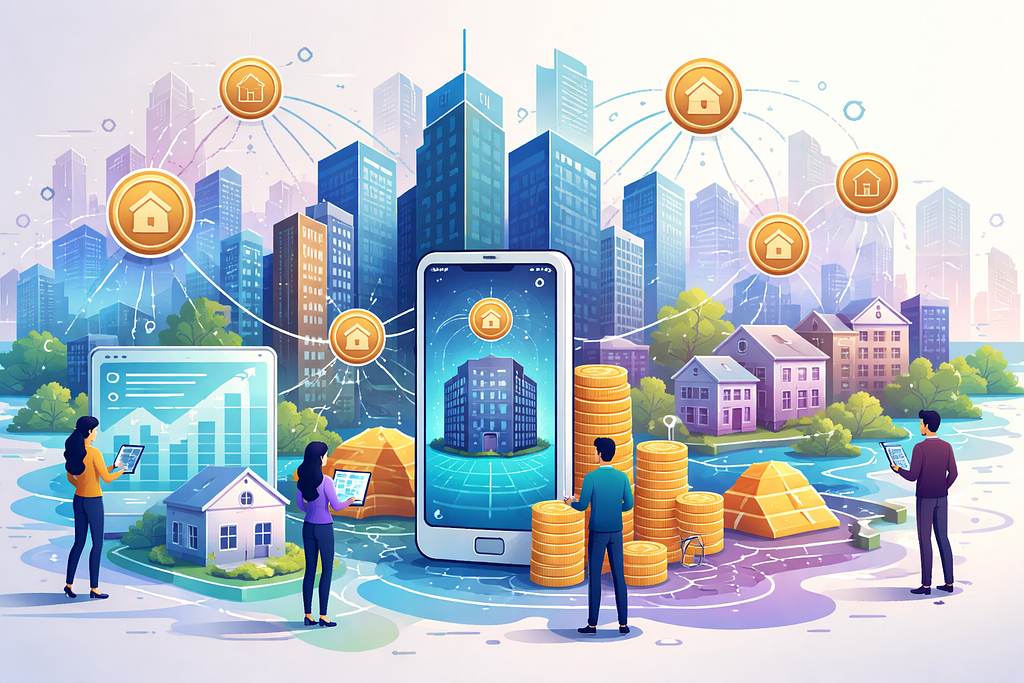
Financial markets have historically depended on centralized institutions, lengthy settlement processes, and restricted access to investment opportunities. Traditional investment structures such as real estate funds, commodities markets, and private equity vehicles often require significant capital, institutional intermediaries, and regulatory procedures that limit participation. In recent years, distributed ledger systems have introduced a different way of representing ownership. Among the most discussed developments is the tokenization of real world assets (RWA), where tangible or financial assets are represented digitally on blockchain networks.
Real world asset tokenization refers to the process of converting ownership rights of physical or traditional financial assets into digital tokens recorded on a blockchain. These tokens represent fractional or full ownership of assets such as real estate, government bonds, commodities, infrastructure projects, or intellectual property. By digitizing asset ownership, investment platforms can broaden participation, reduce administrative complexity, and create liquid markets for assets that were previously difficult to trade.
The growing interest in RWA tokenization comes from both financial institutions and technology firms. Large banks, asset managers, and fintech companies have begun testing tokenized bonds, funds, and real estate portfolios. According to several industry reports, the potential value of tokenized assets could reach trillions of dollars over the coming decade. While the concept remains in an early stage, the combination of blockchain infrastructure, smart contracts, and digital identity systems provides a foundation for a new generation of investment platforms.
This article examines how real world asset tokenization functions, the technological and legal methods used to implement it, and the ways in which tokenized assets are reshaping investment platforms. It also evaluates real-world applications, challenges, and the long-term implications for global financial markets.
Understanding Real World Asset Tokenization
Real world asset tokenization involves converting ownership or economic rights associated with physical or traditional financial assets into blockchain-based digital tokens. Each token functions as a digital certificate representing a portion of the underlying asset. Investors who hold these tokens gain rights that may include profit participation, dividend distributions, rental income, or voting rights depending on the structure of the asset.
Unlike cryptocurrencies such as Bitcoin, which exist purely in digital form, tokenized assets derive their value from assets that exist outside the blockchain. The blockchain functions as the record-keeping layer, storing information about ownership, transfer history, and transaction details.
For example, consider a commercial property valued at $10 million. Through tokenization, the ownership of the property could be divided into one million tokens, each representing a small share of the property’s value. Investors from different parts of the world could purchase tokens representing fractions of the building rather than needing to buy the entire property.
Tokenization is not limited to real estate. It can also represent:
Government and corporate bondsCommodities such as gold or oilInfrastructure projectsPrivate equity fundsArt collections and collectiblesIntellectual property royalties
By representing these assets digitally, investment platforms gain the ability to distribute ownership among a wider group of investors while maintaining verifiable records.
Historical Context of Asset Digitization
The idea of digitizing financial assets did not begin with blockchain technology. Financial markets have used electronic records for decades. Stock exchanges shifted from paper certificates to digital registries during the late twentieth century. Central securities depositories and clearing houses maintain electronic records of ownership for equities and bonds.
However, these systems remain centralized and rely on trusted intermediaries such as banks, brokers, and clearing institutions. Transactions often involve multiple parties and reconciliation processes that increase costs and settlement times.
Blockchain technology introduced a shared ledger that multiple participants can access simultaneously. Instead of maintaining separate databases that must be reconciled after each transaction, blockchain networks maintain a single synchronized ledger. Once transactions are confirmed, the record becomes difficult to alter without consensus from the network.
This characteristic has attracted attention from financial institutions seeking more efficient ways to manage asset ownership records. By combining blockchain infrastructure with digital tokens representing real assets, the financial sector began experimenting with tokenized securities and investment products.
Methods for Tokenizing Real World Assets
The tokenization of physical or financial assets involves several technical and legal steps. These steps link the real-world asset to its digital representation while maintaining regulatory compliance and investor protection.
Asset Identification and Legal Structuring
The first stage involves identifying the asset that will be tokenized and establishing the legal framework governing ownership rights. Assets are often placed within a legal entity such as a special purpose vehicle (SPV). The SPV holds the underlying asset and issues digital tokens representing shares of that entity.
This structure connects the digital token to a legally recognized claim. Investors who purchase tokens are effectively purchasing ownership stakes in the SPV that holds the asset. The legal structure must clearly specify the rights associated with the tokens, including revenue distribution, governance participation, and redemption rights.
Legal agreements, offering documents, and regulatory filings play an important role at this stage. These documents clarify the relationship between token holders and the asset being represented.
Token Creation and Smart Contract Development
After establishing the legal framework, digital tokens are created on a blockchain platform. Smart contracts are used to define how the tokens behave within the network. A smart contract is a self-executing piece of code that automatically processes transactions according to predefined rules.
For tokenized assets, smart contracts may govern:
Token issuance and supply limitsOwnership transfer between investorsDistribution of dividends or rental incomeVoting mechanisms for governance decisionsCompliance restrictions, such as investor eligibility
Common blockchain platforms used for tokenization include Ethereum, Polygon, and other networks that support programmable smart contracts.
Asset Custody and Verification
One of the most important aspects of RWA tokenization is the link between the digital token and the real-world asset. Custodians or trustees are often appointed to hold and manage the asset on behalf of token holders.
Independent audits and verification procedures confirm that the underlying asset exists and is properly maintained. For example, in tokenized gold projects, physical gold reserves may be stored in secure vaults and audited periodically to verify that the digital tokens correspond to actual metal holdings.
This verification process builds investor confidence and reduces the risk of discrepancies between digital records and real assets.
Compliance and Investor Verification
Investment platforms dealing with tokenized assets must comply with financial regulations in various jurisdictions. This often involves identity verification and anti-money laundering procedures.
Investor verification processes typically include:
Know Your Customer (KYC) identification checksAnti-money laundering screeningAccreditation verification for certain investment categoriesGeographic restrictions based on regulatory requirements
These procedures are integrated into the platform before investors are allowed to purchase tokenized assets.
Secondary Market Integration
After tokens are issued and distributed to investors, trading can occur on digital asset exchanges or specialized security token marketplaces. These secondary markets allow investors to buy and sell tokenized assets without waiting for the underlying asset to be sold.
Smart contracts record ownership transfers automatically, providing a digital record of each transaction. The availability of secondary markets introduces liquidity to assets that were historically difficult to trade.
Role of Blockchain Infrastructure in Investment Platforms
Blockchain infrastructure provides the technological backbone for tokenized investment platforms. Several characteristics of distributed ledger technology make it suitable for representing asset ownership.
First, blockchain systems maintain an immutable transaction history. Once a transaction is recorded and confirmed, altering it becomes extremely difficult without consensus from the network. This property provides a reliable record of asset ownership and transfer history.
Second, blockchain networks operate on a decentralized architecture. Instead of relying on a single central authority, the ledger is distributed across multiple nodes. This structure reduces the risk of a single point of failure and increases system resilience.
Third, smart contracts automate administrative tasks associated with asset management. Activities such as dividend distribution, profit sharing, and voting procedures can be executed automatically based on predefined conditions.
For investment platforms, these characteristics can reduce administrative overhead and simplify record keeping. Instead of relying on manual reconciliation across multiple databases, blockchain networks maintain a shared record accessible to all authorized participants.
Investment Platform Architecture Based on Tokenized Assets
Modern tokenized investment platforms typically consist of several integrated layers that manage asset issuance, investor participation, and transaction settlement.
Asset Origination Layer
This layer focuses on identifying and preparing assets for tokenization. Asset managers, real estate developers, commodity traders, and financial institutions work with legal experts to structure the asset and define the rights associated with the tokens.
Documentation and regulatory approvals are prepared during this stage.
Token Issuance Layer
The issuance layer involves the creation of tokens on a blockchain network. Smart contracts define the token’s properties, supply, and transfer conditions.
Issuance may occur through private placements, regulated token offerings, or direct sales through digital platforms.
Investor Access Layer
Digital investment platforms provide interfaces where investors can review available assets, complete identity verification, and purchase tokens. These platforms often resemble online brokerage accounts but operate using blockchain-based tokens rather than traditional securities.
Investors can monitor their holdings through digital wallets connected to the platform.
Trading and Liquidity Layer
Secondary markets allow investors to trade tokens after the initial issuance. Digital asset exchanges and security token trading venues provide order books and settlement mechanisms.
These markets increase liquidity by allowing investors to exit positions without waiting for the underlying asset to be sold.
Settlement and Record-Keeping Layer
Blockchain networks function as the settlement infrastructure. Ownership transfers are recorded on the distributed ledger, creating a permanent history of transactions.
This layer reduces the need for traditional clearing houses and central registries.
Real-World Applications of Tokenized Assets
Several industries have begun experimenting with tokenization as a method for attracting investment and improving asset liquidity.
Real Estate
Real estate remains one of the most prominent use cases for tokenization. Property investments typically require large capital commitments and involve lengthy transaction processes. Tokenization allows property ownership to be divided into smaller units that investors can purchase digitally.
Several real estate projects have issued blockchain-based tokens representing shares in residential buildings, commercial offices, and hospitality properties. Investors receive rental income distributions through smart contracts according to their ownership share.
Commodities
Precious metals such as gold and silver have been tokenized by linking digital tokens to physical reserves stored in vaults. Investors can purchase tokens representing fractional ownership of these commodities without handling the physical assets.
Commodity tokenization allows investors to gain exposure to physical resources while benefiting from digital trading environments.
Government and Corporate Bonds
Some financial institutions have issued blockchain-based bonds where ownership and coupon payments are recorded digitally. These experiments demonstrate how tokenized securities could simplify bond issuance and settlement procedures.
For example, several central banks and multinational institutions have tested tokenized bond offerings using blockchain infrastructure.
Private Equity and Venture Capital
Private equity investments are typically illiquid and restricted to accredited investors. Tokenization can divide ownership stakes into smaller portions that may be traded on secondary markets, potentially increasing liquidity for investors.
While regulatory frameworks continue to evolve, pilot projects have demonstrated how venture capital funds could issue digital tokens representing shares in investment portfolios.
Institutional Participation and Market Growth
Interest in tokenized real world assets has expanded steadily as financial institutions test blockchain infrastructure for asset issuance and settlement. Banks, asset managers, and financial technology firms have begun pilot programs designed to evaluate how digital tokens could represent bonds, funds, commodities, and real estate portfolios. While early experiments were limited in scale, recent initiatives show a gradual shift toward practical applications.
Large financial institutions view tokenization as a method for modernizing back-office processes that have remained largely unchanged for decades. In traditional financial markets, asset transfers often require coordination among brokers, custodians, clearing houses, and settlement institutions. Each party maintains its own records, and reconciliation processes may take several days.
Digital asset tokens stored on distributed ledgers create a unified transaction history. Once a transaction is recorded, all participants can reference the same record. This reduces administrative duplication and shortens settlement cycles. For bond markets in particular, where settlements often occur two days after a transaction, tokenized bonds could shorten the timeline to near real-time processing.
Asset management firms have also shown interest in tokenized funds. Instead of issuing traditional fund units recorded by centralized registries, investment funds could distribute digital tokens representing shares of the portfolio. Investors could hold these tokens in secure digital wallets and trade them on regulated platforms.
Market projections from consulting firms and financial research institutions suggest substantial growth in tokenized asset markets during the coming decade. Estimates vary widely, but several studies anticipate that tokenized securities, real estate, and commodities could collectively represent trillions of dollars in value if regulatory clarity and infrastructure development continue.
Advantages for Investors and Market Participants
Tokenized assets introduce several structural changes to investment markets. While these developments do not eliminate the need for regulation or institutional oversight, they alter how ownership, trading, and settlement processes operate.
Fractional Ownership
Traditional investment markets often require substantial capital commitments. Real estate properties, infrastructure projects, and private equity funds may demand investments of hundreds of thousands or even millions of dollars.
Tokenization divides assets into smaller digital units, allowing investors to purchase fractions of the asset rather than the entire property or fund share. This approach broadens participation by lowering entry requirements for individual investors.
For example, a large commercial building that previously required institutional financing can be divided into thousands of tokens representing fractional ownership. Investors can participate in the asset’s income stream through these digital units.
Increased Liquidity
Many traditional assets are considered illiquid because they cannot be traded easily. Real estate transactions often require lengthy negotiations, legal documentation, and settlement procedures. Private equity investments may lock investor funds for years.
Tokenized assets can be traded on digital marketplaces where investors buy and sell tokens representing their ownership shares. While liquidity still depends on market demand and regulatory approval, digital marketplaces create the possibility of more frequent trading.
This change may reduce the time required for investors to exit positions, particularly in asset classes that historically lacked active secondary markets.
Automated Revenue Distribution
Smart contracts associated with tokenized assets can distribute income automatically according to the token holders’ ownership shares. Rental income, interest payments, or profit distributions can be transferred directly to investors through blockchain transactions.
In traditional systems, these distributions often require manual processing by fund administrators or asset managers. Automation reduces administrative overhead and simplifies record keeping.
Global Investor Participation
Digital asset platforms operate through internet-based infrastructure, allowing investors from different regions to participate in tokenized markets. While regulatory restrictions still apply, tokenization has the potential to connect global investors with investment opportunities that were previously limited to specific geographic markets.
For example, an investor in Asia may purchase tokens representing ownership in a European real estate property without participating directly in the local property market.
Regulatory Environment and Legal Considerations
Despite its technological potential, real world asset tokenization operates within complex regulatory frameworks. Financial regulators across different jurisdictions treat tokenized assets according to existing securities laws, commodity regulations, and financial market policies.
Many tokenized assets fall under the category of digital securities. These tokens represent investment contracts and therefore must comply with securities regulations governing investor protection, disclosure requirements, and trading procedures.
Regulators face several challenges when evaluating tokenized assets:
First, the cross-border nature of blockchain networks raises jurisdictional questions. Investors, issuers, and trading platforms may operate in different countries with varying regulatory requirements.
Second, regulators must determine how existing financial laws apply to digital tokens representing real assets. In many cases, existing frameworks can accommodate tokenized securities, but detailed guidance is still developing.
Third, regulatory authorities must address investor protection concerns. Fraudulent token offerings and poorly structured projects during the early years of blockchain experimentation highlighted the need for stronger oversight.
Some jurisdictions have begun establishing specific regulatory frameworks for digital securities and tokenized assets. Financial authorities in several countries now require security token platforms to obtain licenses similar to those held by traditional securities exchanges.
Legal clarity remains a significant factor influencing institutional participation. Financial institutions are more likely to adopt tokenization technologies when regulatory expectations are clearly defined.
Risk Factors and Operational Challenges
Although tokenized assets offer several potential benefits, the technology also introduces new risks and operational challenges. Investors and institutions must consider these issues carefully before participating in tokenized markets.
Asset Verification Risk
The reliability of tokenized assets depends on the connection between the digital token and the real-world asset. If the underlying asset is misrepresented, damaged, or improperly managed, token holders may suffer losses even though the blockchain record remains intact.
Independent audits, legal documentation, and reputable custodians are therefore necessary to maintain confidence in tokenized assets.
Technological Vulnerabilities
Blockchain networks and smart contracts rely on software code. Errors in smart contract programming may lead to unintended outcomes such as incorrect token transfers or distribution failures.
Security vulnerabilities can also expose digital platforms to cyberattacks. While blockchain networks themselves are generally resilient, associated infrastructure such as digital wallets and trading platforms may become targets for hackers.
Market Liquidity Limitations
Although tokenization has the potential to increase liquidity, many tokenized asset markets remain relatively small. Limited trading volume may result in price volatility or difficulty finding buyers and sellers.
Liquidity depends on the development of regulated trading platforms and broader investor participation.
Regulatory Uncertainty
Regulatory policies continue to evolve as governments evaluate digital asset markets. Changes in regulatory treatment could affect how tokenized assets are issued, traded, or taxed.
Investors and asset issuers must monitor regulatory developments in the jurisdictions where they operate.
Case Studies of Tokenized Asset Initiatives
Several real-world projects illustrate how tokenized assets are being implemented across different sectors.
Tokenized Real Estate Projects
Real estate tokenization platforms have launched projects that divide property ownership into digital tokens. In some cases, residential apartment complexes or commercial office buildings have been placed within legal entities that issue tokens representing ownership shares.
Investors purchase tokens through digital investment platforms and receive rental income distributions proportional to their holdings. These projects demonstrate how property investment can be distributed among a large number of investors.
Tokenized Gold Reserves
Some commodity token projects represent ownership of physical gold stored in secure vaults. Each token corresponds to a specific quantity of gold held in reserve. Investors can trade the tokens on digital exchanges or redeem them for physical metal in certain circumstances.
This structure allows investors to gain exposure to gold markets without handling physical storage and transportation.
Digital Bond Issuance
Several financial institutions and development banks have conducted pilot programs involving blockchain-based bond issuance. In these cases, bonds were issued and recorded on blockchain networks rather than traditional securities registries.
Coupon payments and ownership transfers were managed through smart contracts. These experiments demonstrated the feasibility of digital bond settlement using distributed ledger technology.
The Future of Investment Platforms
The integration of tokenized assets into investment platforms suggests a gradual shift in how ownership and trading infrastructure may function in global financial markets. Instead of relying solely on centralized registries and lengthy settlement cycles, digital asset tokens provide an alternative representation of asset ownership.
Future investment platforms may combine traditional financial institutions with blockchain infrastructure. Banks and asset managers could continue performing roles related to asset custody, regulatory compliance, and portfolio management while using distributed ledgers for transaction settlement and record keeping.
Digital identity systems may also play a significant role in the development of tokenized markets. Verified digital identities could simplify investor onboarding processes and improve compliance with regulatory requirements.
Another area of potential development involves interoperability among blockchain networks. Currently, different tokenization platforms operate on separate networks with limited connectivity. Future systems may allow tokenized assets to move between networks while maintaining regulatory oversight and transaction verification.
Institutional adoption will likely influence the pace of development. As banks, asset managers, and financial regulators gain experience with tokenized assets, standardized practices may emerge for asset issuance, custody, and trading.
Conclusion
Real world asset tokenization represents an important development in the evolution of digital finance. By converting ownership rights into blockchain-based tokens, investment platforms can represent physical and financial assets within distributed digital systems.
This approach introduces new possibilities for fractional ownership, automated income distribution, and global investor participation. Real estate properties, commodities, bonds, and private equity funds have already been represented through tokenized structures in pilot projects and early commercial platforms.
However, the long-term success of tokenized asset markets depends on several factors. Regulatory clarity, technological reliability, and trustworthy asset verification processes will determine whether investors view tokenized assets as credible investment vehicles.
As financial institutions continue experimenting with blockchain infrastructure, tokenized assets may gradually become integrated into mainstream investment platforms. Rather than replacing traditional financial systems entirely, tokenization is more likely to coexist with existing market structures while introducing new methods for representing and trading asset ownership.
Real World Asset Tokenization as the Foundation of Next-Generation Investment Platforms was originally published in Coinmonks on Medium, where people are continuing the conversation by highlighting and responding to this story.