
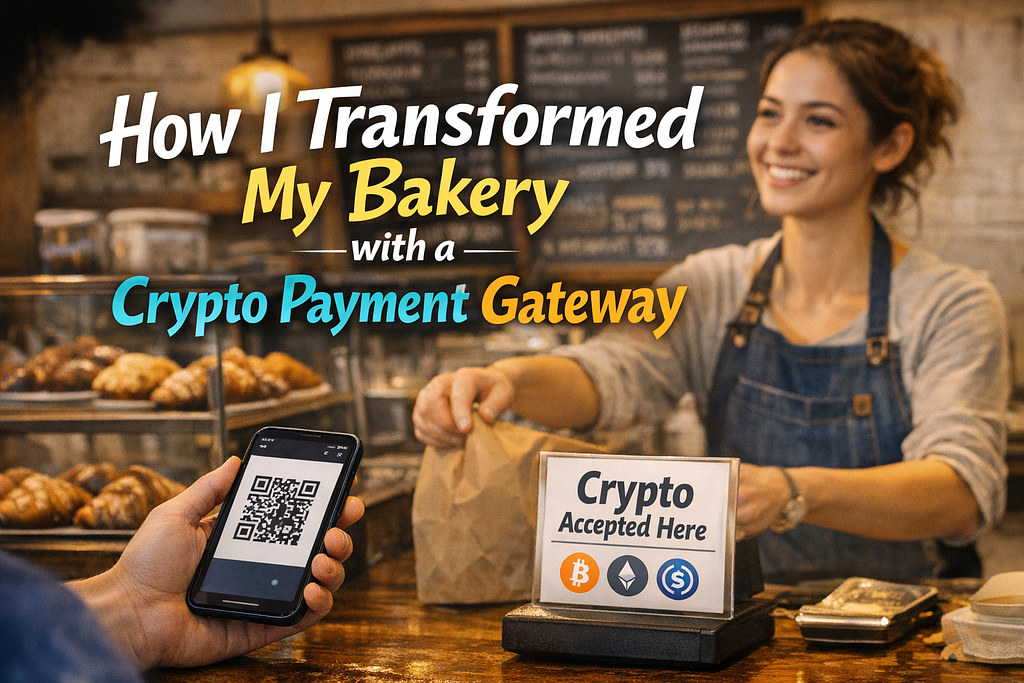
On a quiet street in Lisbon, tucked between a florist and a bookstore, stood a small family-owned bakery called Pastel do Sol. It smelled of cinnamon and ambition.
Image was generated using OpenAI’s DALL·E
For three generations, the Oliveira family had kneaded dough at 4 a.m., served espresso with a smile, and survived recessions, rising ingredient costs, and even a global pandemic. But in 2025, they faced a new challenge: the world had gone borderless — and their payments hadn’t.
A New Kind of Customer
One Tuesday morning, a young digital nomad named Rafael walked in. He had just flown in from São Paulo, worked remotely for a startup in Singapore, and kept most of his savings in crypto.
After finishing his almond croissant and double espresso, Rafael asked:
“Do you accept crypto?”
Maria Oliveira, who now ran the bakery after her father retired, smiled politely.
“We accept Visa, Mastercard, and cash.”
Rafael nodded. “I don’t carry euros. My bank blocks foreign transactions sometimes. But I can pay in USDC instantly.”
Maria had heard of Bitcoin. She’d seen headlines about Ethereum. But a stablecoin for croissants? That felt like science fiction.
Rafael paid with a card — after three failed attempts due to international authorization checks. The line grew restless. The payment finally went through, but Maria couldn’t shake the feeling: something was changing.
Over the next few weeks, she noticed more customers like Rafael. Freelancers. Tourists. Startup founders. All asking the same question:
“Do you accept crypto?”
She began to wonder — was she losing sales simply because her payment system belonged to yesterday?
The Problem No One Talks About
Small businesses today operate in a global marketplace, whether they like it or not.
Tourists expect seamless payments.
Digital nomads live on stablecoins.
Freelancers get paid in crypto.
And cross-border card fees keep climbing.
Maria dug deeper. She learned:
Card processors charged her 2.5–3% per transaction.International transactions sometimes triggered fraud holds.Chargebacks cost time, money, and stress.Settlement took days — sometimes longer for cross-border payments.
Meanwhile, crypto transactions could settle in minutes.
Stablecoins like USDC and USDT held dollar value.
And blockchain didn’t sleep on weekends.
But she had concerns:
“What about volatility?”“Isn’t crypto risky?”“How would accounting work?”“What about regulations?”
The technology sounded promising — but complicated.
Until she discovered something that changed everything: a crypto payment gateway.
What a Crypto Payment Gateway Actually Does
Maria had assumed accepting crypto meant printing a QR code for a wallet address and hoping for the best.
But modern crypto payment gateways are more like bridges than wallets.
They:
Convert crypto into local currency instantly.Lock exchange rates at the moment of transaction.Integrate with existing POS systems.Handle compliance and transaction monitoring.Provide reporting tools for accounting.
In other words, they make crypto feel like a card payment — but faster, cheaper, and irreversible.
Maria scheduled a demo.
Within 30 minutes, she realized she didn’t need to understand blockchain deeply. The gateway provider would handle wallet management, automatic conversion to euros, and daily settlement into her bank account.
No speculation. No holding volatile assets.
Just another payment option — optimized for the global economy.
The First Crypto Sale
The bakery launched crypto payments on a Friday morning.
They placed a small sticker on the counter:
“Crypto Accepted Here.”
By 10 a.m., Rafael was back.
“You did it?” he asked.
Maria nodded.
He scanned a QR code generated by the POS terminal. Paid in USDC. The transaction confirmed in under 15 seconds.
Maria’s dashboard showed:
€4.80 received0.8% processing feeInstant euro conversionSettlement scheduled for end-of-day
No authorization delay.
No risk of chargeback.
No cross-border penalty.
It felt… seamless.
Something Unexpected Happened
Within weeks, something shifted.
Tourists posted about the bakery on X and Instagram:
“Found a café in Lisbon accepting crypto!”
Crypto communities added it to local maps.
A fintech podcast mentioned it as an example of real-world adoption.
Sales increased — not just from crypto payments, but from visibility.
Maria realized something profound:
Accepting crypto wasn’t just about payments.
It was about positioning.
The bakery became known as innovative.
Forward-thinking.
Future-ready.
In a crowded market, differentiation matters.
Why Crypto Payment Gateways Matter for Businesses
Maria’s story isn’t unique. Across the world, businesses are facing similar challenges:
1. Borderless Customers
Today’s consumers earn globally and spend locally. A payment system that limits geography limits revenue.
Crypto payment gateways allow businesses to accept value from anywhere without relying solely on traditional banking rails.
2. Lower Fees
Traditional processors stack fees:
InterchangeCross-border feesFX marginsChargeback penalties
Crypto gateways often offer significantly lower transaction costs, especially for international payments.
3. No Chargebacks
Blockchain transactions are irreversible.
This eliminates friendly fraud and costly disputes — a growing problem in e-commerce.
4. Faster Settlement
No waiting 3–5 business days.
No weekend delays.
No banking holidays.
Crypto settles 24/7.
5. Stablecoin Stability
With automatic conversion features, merchants don’t need exposure to volatility.
They can accept USDC, USDT, or other stablecoins and receive local fiat instantly.
6. New Revenue Channels
Some gateways allow:
Recurring crypto subscriptionsCross-border invoicingWeb3 integrationsNFT-based loyalty programs
Crypto payments are no longer niche — they’re infrastructure.
But What About Regulation?
Maria’s biggest fear was compliance.
However, reputable crypto payment gateway providers handle:
KYC/AML monitoringTransaction screeningRegulatory reportingIntegration with licensed custodians
For merchants, the experience is often no more complex than onboarding a new card processor.
The key is choosing a compliant provider that aligns with local regulations.
Crypto doesn’t mean “unregulated.”
It means programmable finance — built on transparent ledgers.
A Broader Shift Is Happening
Zoom out from the bakery, and a bigger picture emerges.
Freelancers in India get paid in USDT to avoid banking friction.
Startups in Africa accept stablecoins to bypass slow correspondent banks.
E-commerce brands use crypto to reduce fraud.
SaaS companies experiment with on-chain subscriptions.
What began as a speculative asset class is evolving into payment infrastructure.
The early days of the internet felt chaotic too.
So did online payments in the early 2000s.
Today, crypto payment gateways represent a similar inflection point.
Not hype.
Infrastructure.
Six Months Later
Six months after launching crypto payments, Maria reviewed her data:
18% of international customers chose crypto.Average transaction value was 12% higher for crypto payments.Processing fees were 40% lower compared to international card payments.Zero chargebacks.
But the biggest shift wasn’t financial.
It was psychological.
She no longer felt at the mercy of banks.
She no longer worried about cross-border restrictions.
She no longer saw the future as something happening elsewhere.
She was participating in it.
The Human Side of Financial Infrastructure
Technology often feels abstract — especially in crypto.
Blockchains.
Wallets.
Nodes.
Gas fees.
But behind every transaction is a human story:
A traveler buying breakfast.
A freelancer sending money home.
A founder paying a remote team.
A small business expanding its reach.
Crypto payment gateways aren’t about replacing traditional finance overnight.
They’re about offering optionality.
Choice.
Resilience.
The Final Morning
One year after installing the crypto gateway, Maria’s father visited the bakery.
He watched as a customer paid with a quick QR scan.
“No cash? No card?” he asked.
“No,” Maria smiled. “Digital dollars.”
He shook his head in disbelief — then laughed.
“When I started this bakery, we accepted only coins. Then checks. Then cards. Now this.”
Maria handed him a receipt printed from the POS terminal.
“It’s just another way to say yes.”
And that’s what crypto payment gateways really are.
A way to say yes —
to borderless commerce,
to faster settlement,
to lower fees,
to financial innovation.
The future of payments won’t be card versus crypto.
It will be integration.
Businesses that adapt early won’t just reduce costs.
They’ll capture new markets.
On a quiet street in Lisbon, a bakery proved that even the oldest businesses can embrace the newest rails — without losing what makes them special.
All it took was a small sticker on the counter.
“Crypto Accepted Here.”
The Day the Bakery Said Yes to Crypto was originally published in Coinmonks on Medium, where people are continuing the conversation by highlighting and responding to this story.