
How Hybrid Token Models Are Shaping Token Development
Token development has entered a new phase of maturity. In the early days of blockchain, most tokens followed a single-purpose design either utility tokens for platform access or security tokens representing financial assets. While these models helped bootstrap early ecosystems, they often failed to balance usability, governance, incentives, and regulatory considerations.
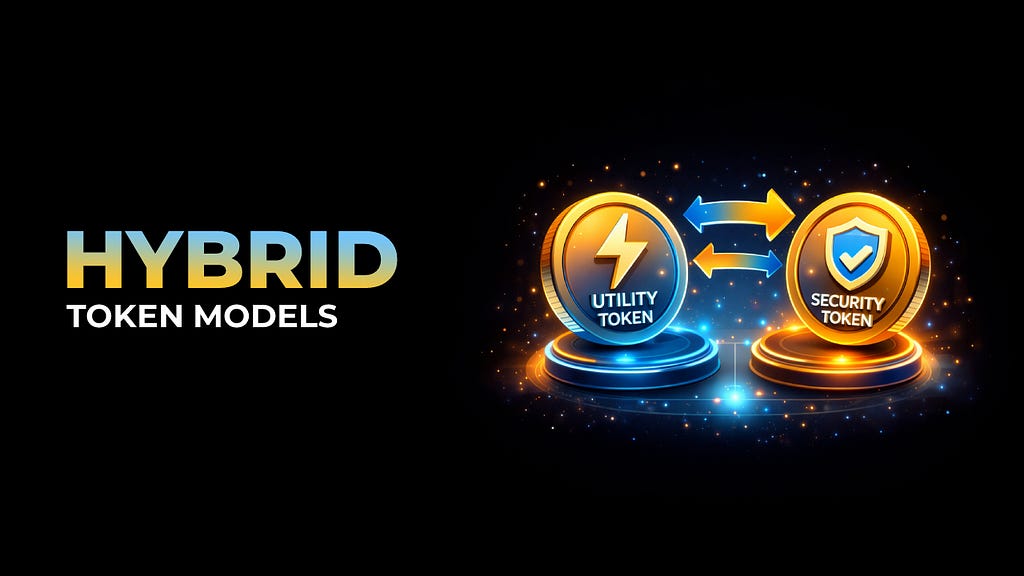
Today, as blockchain projects target real-world adoption, enterprise use cases, and regulated markets, token design has become far more sophisticated. This evolution has given rise to hybrid token models, a powerful approach that combines multiple token functionalities within a single framework. Hybrid token models blend elements of utility, governance, incentive, and sometimes compliance-oriented features, creating flexible digital assets that serve multiple roles within an ecosystem.
Hybrid token models are reshaping token development by aligning economic incentives with platform growth, governance participation, and long-term sustainability. Rather than issuing multiple separate tokens for different purposes, projects can now design a unified token architecture that supports ecosystem access, voting rights, staking rewards, and value flows all while maintaining regulatory awareness.
This blog explains what hybrid token models are, why they matter, how they work, and how they are influencing the future of token development across DeFi, Web3 platforms, DAOs, enterprise blockchain solutions, and regulated markets.
What Are Hybrid Token Models?
Hybrid token models refer to token designs that combine two or more functional roles into a single token or coordinated token system. Instead of limiting a token to one use case, hybrid models allow a token to serve multiple purposes across a blockchain ecosystem.
For example, a hybrid token may:
✦Grant access to platform features (utility)
✦Enable participation in governance decisions
✦Provide staking or reward incentives
✦Support fee payments or network operations
✦Include compliance or permission-based controls
This multi-functional design allows token development to move beyond simplistic use cases and support complex, scalable ecosystems.
Hybrid token models are particularly attractive to projects that aim for long-term growth, user retention, and institutional adoption, as they provide flexibility without excessive token fragmentation.
Why Hybrid Token Models Are Gaining Momentum
Traditional token models often face limitations. Utility-only tokens may lack strong incentives for long-term holding. Governance-only tokens may suffer from low participation. Security tokens may be restricted by regulatory complexity. Hybrid token models address these challenges by aligning multiple objectives within one framework.
Several factors are driving the adoption of hybrid token models:
✦Increasing complexity of blockchain ecosystems
✦Demand for sustainable tokenomics
✦Growing regulatory scrutiny
✦Institutional interest in structured digital assets
✦Need for stronger governance participation
Hybrid token models allow token developers to balance innovation with control, decentralization with compliance, and growth with stability.
Core Components of Hybrid Token Models
Utility Layer
The utility component allows token holders to access platform features, products, or services. This can include:
✦Access to applications
✦Usage-based payments
✦Feature unlocks
✦Service consumption
Utility ensures the token has practical value beyond speculation.
Governance Layer
Governance functionality allows token holders to participate in decision-making. This may include:
✦Voting on protocol upgrades
✦Proposing changes
✦Treasury management decisions
✦DAO governance participation
This layer supports decentralization and community ownership.
Incentive and Staking Layer
Hybrid tokens often include incentive mechanisms such as:
✦Staking rewards
✦Liquidity incentives
✦Network participation rewards
✦Long-term holding benefits
These mechanisms encourage ecosystem participation and reduce short-term speculation.
Compliance or Control Layer (Optional)
For regulated or enterprise-focused projects, hybrid token models may include:
✦Transfer restrictions
✦Whitelisting
✦Jurisdiction-based controls
✦Identity-aware transactions
This layer enables compliance without undermining core blockchain principles.
How Hybrid Token Models Improve Token Development
Hybrid token models significantly enhance token development by improving flexibility, sustainability, and scalability.
From a development perspective, hybrid tokens reduce the need for multiple token contracts and simplify ecosystem design. Instead of managing separate utility, governance, and incentive tokens, developers can build modular smart contracts that handle multiple roles.
From a business perspective, hybrid tokens create stronger alignment between users, developers, and investors. Token holders are incentivized to use the platform, participate in governance, and support long-term growth.
From a regulatory perspective, hybrid models allow teams to clearly define which token functions fall under specific legal frameworks, helping manage compliance risks more effectively.
Key Advantages of Hybrid Token Models
✦Multi-purpose token utility
✦Stronger incentive alignment
✦Improved governance participation
✦Reduced token fragmentation
✦Greater ecosystem cohesion
✦Enhanced long-term sustainability
These benefits explain why hybrid token models are rapidly becoming the preferred approach in modern token development.
Hybrid Token Models vs Traditional Token Models
Traditional token models often struggle to adapt as ecosystems grow. A utility-only token may work at launch but fail to support governance later. A governance token may attract voters but lack real utility. Hybrid token models solve this by offering adaptability from the start.
Hybrid token development enables projects to:
✦Expand functionality over time
✦Introduce new use cases without new tokens
✦Maintain token value through diverse demand drivers
✦Align community incentives with platform success
This flexibility is critical in fast-evolving blockchain environments.
Use Cases Driving Hybrid Token Adoption
Hybrid token models are being adopted across multiple sectors.
DeFi Platforms
DeFi protocols use hybrid tokens for:
✦Governance voting
✦Staking rewards
✦Fee discounts
✦Liquidity incentives
This creates a single token that powers the entire financial ecosystem.
DAOs
DAOs rely on hybrid tokens to:
✦Enable governance participation
✦Distribute treasury rewards
✦Encourage active community involvement
Hybrid models improve DAO efficiency and participation rates.
Web3 Applications
Web3 platforms use hybrid tokens to:
✦Control access
✦Reward creators and users
✦Govern platform upgrades
This supports sustainable creator economies.
Enterprise and Regulated Platforms
Enterprises adopt hybrid tokens to:
✦Combine utility with compliance controls
✦Support permissioned access
✦Enable structured governance
Hybrid token development bridges enterprise needs and blockchain innovation.
Point-Based Section: Types of Hybrid Token Models
1. Utility + Governance Hybrid Tokens
✦Access to platform services
✦Voting rights for protocol decisions
✦Common in DeFi and DAOs
2. Utility + Incentive Hybrid Tokens
✦Platform usage combined with staking rewards
✦Encourages long-term engagement
3. Governance + Incentive Hybrid Tokens
✦Voting power tied to staking
✦Prevents passive governance manipulation
4. Utility + Compliance Hybrid Tokens
✦Platform access with regulatory controls
✦Suitable for enterprise and regulated markets
5. Multi-Layer Hybrid Tokens
Combine utility, governance, incentives, and compliance
Designed for large-scale ecosystems
Tokenomics in Hybrid Token Development
Hybrid token models require carefully designed tokenomics to avoid conflicts between token functions. Poorly balanced hybrid tokens can lead to governance manipulation, excessive inflation, or regulatory risk.
Effective hybrid tokenomics focuses on:
✦Controlled token supply
✦Clear role separation within the token
✦Vesting and lock-up mechanisms
✦Incentive alignment across stakeholders
Tokenomics design is where hybrid token development truly differentiates from traditional models.
Smart Contract Architecture for Hybrid Tokens
Hybrid token development relies on modular smart contract design. Instead of embedding all logic in a single contract, developers use layered or upgradeable architectures.
Key architectural principles include:
✦Modular feature contracts
✦Role-based permissions
✦Upgrade-friendly logic
✦Event logging for transparency
This allows hybrid tokens to evolve alongside regulatory, technical, and market changes.
Governance Challenges and Solutions
Hybrid tokens introduce governance complexity. When tokens grant both utility and voting power, projects must prevent governance abuse.
Common solutions include:
✦Staking-based voting
✦Time-weighted voting power
✦Participation thresholds
✦Delegated governance models
These mechanisms ensure governance remains fair and effective.
Why Hybrid Token Models Are the Future
Hybrid token models reflect the maturity of the blockchain industry. As projects aim for sustainability rather than speculation, token development must support multiple objectives simultaneously.
Hybrid tokens:
✦Encourage real usage
✦Support decentralized decision-making
✦Align incentives with growth
✦Improve regulatory readiness
This makes them ideal for long-term blockchain initiatives.
Challenges in Hybrid Token Development
Despite their benefits, hybrid token models present challenges:
✦Higher design complexity
✦Increased development costs
✦More extensive testing requirements
✦Greater need for legal review
However, these challenges are manageable with experienced token development teams and proper planning.
Point-Based Section: Best Practices for Hybrid Token Development
Clearly define token roles early
✦Separate concerns within smart contracts
✦Balance governance and utility carefully
✦Avoid excessive token inflation
✦Plan for regulatory adaptability
✦Conduct thorough audits
✦Test governance mechanisms
✦Design for long-term scalability
Future Trends in Hybrid Token Development
Hybrid token models will continue evolving with:
✦Cross-chain hybrid tokens
✦AI-driven governance analytics
✦Compliance-aware hybrid frameworks
✦Integration with real-world assets
✦Institutional-grade hybrid tokens
These trends indicate that hybrid token development will become a standard practice rather than an exception.
How Businesses Can Adopt Hybrid Token Models
To successfully adopt hybrid token models, businesses should:
✦Define ecosystem goals clearly
✦Choose suitable blockchain platforms
✦Work with experienced token developers
✦Align legal and technical strategies
✦Plan post-launch governance and support
Hybrid token development is not just a technical decision it is a strategic one.
Conclusion
Hybrid token models are fundamentally reshaping token development by introducing flexibility, sustainability, and alignment across blockchain ecosystems. By combining utility, governance, incentives, and compliance into cohesive token frameworks, hybrid models solve many of the limitations of traditional token designs.
As blockchain adoption accelerates and regulatory expectations rise, hybrid token models offer a future-ready approach that balances innovation with responsibility. For projects seeking long-term success, hybrid token development is no longer optional it is the next logical evolution of digital asset design.
How Hybrid Token Models Are Shaping Token Development was originally published in Coinmonks on Medium, where people are continuing the conversation by highlighting and responding to this story.