
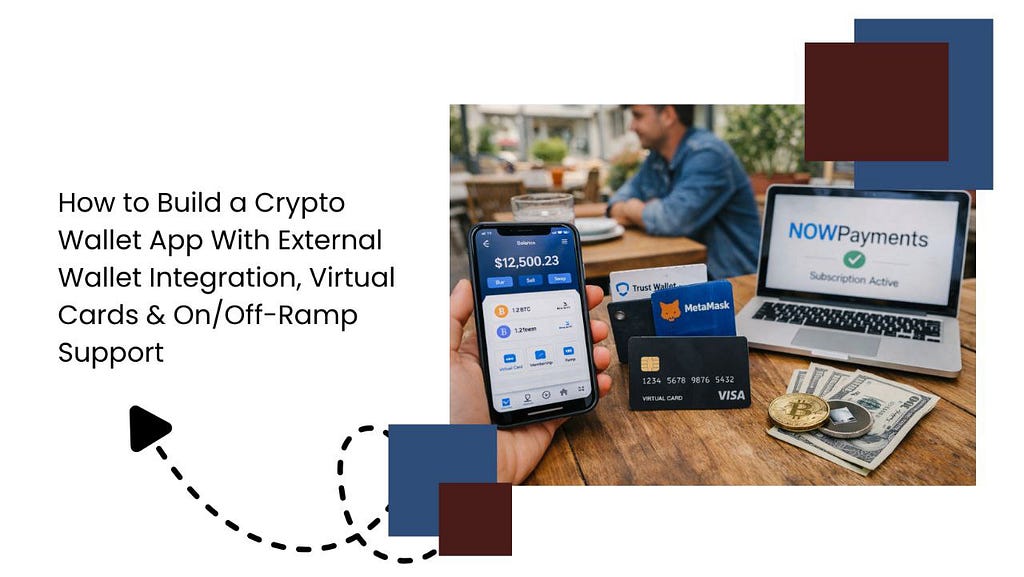
How to Build a Crypto Wallet App With External Wallet Integration, Virtual Cards & On/Off-Ramp Support
The future of crypto wallets is not decentralized.
It’s connected.
Today’s most successful wallet apps don’t force users to start from zero. Instead, they let users plug in existing wallets, spend crypto instantly, and move between fiat and crypto without friction.
Modern crypto wallet applications now combine:
External wallet connectivityFiat on/off-ramp supportVirtual crypto cardsSubscription-based premium featuresMulti-chain asset management
This isn’t just a wallet anymore — it’s a business model.
If you’re planning to build a next-generation wallet platform, this guide explains how all these components work together.
External Wallet Integration (Trust Wallet & MetaMask Connectivity)
One of the biggest shifts in Web3 UX is interoperability.
Instead of forcing users to create new wallets, platforms now allow connection with popular wallets like:
Trust WalletMetaMask
Why This Matters
Users prefer flexibility.
When your wallet app supports external wallet connections:
Users can import existing accountsAssets remain under user controlWeb3 dApps become instantly accessibleOnboarding friction reduces
This is usually achieved through:
WalletConnect protocolWeb3 provider integrationSecure key management layer
For businesses building a branded wallet platform similar to a MetaMask-style wallet infrastructure, having external wallet compatibility significantly increases adoption potential.
Virtual Crypto Cards (Spend Crypto Like Fiat)
Crypto adoption increases when spending becomes easy.
Virtual crypto cards allow users to:
Convert crypto to fiat instantlyMake online purchasesSubscribe to digital servicesPay for global transactions
How It Works
User holds crypto in walletWallet integrates payment processorCrypto converts to fiat in real-timeVirtual card processes transaction
Benefits for business owners:
Interchange revenueTransaction feesPremium card plansGlobal expansion
A wallet + card combo positions your app closer to fintech than just Web3.
Fiat On-Ramp & Off-Ramp Integration
Crypto adoption depends heavily on fiat access.
On-Ramp
Allows users to buy crypto using:
Credit/debit cardsBank transfersUPI (region-specific)
Off-Ramp
Allows users to:
Convert crypto to fiatWithdraw to bank accounts
Without on/off ramp, user retention drops.
With seamless integration:
You increase transaction volumeYou reduce dependency on external exchangesYou control user flow within your ecosystem
Subscription-Based Membership Plans (NowPayments Integration)
Recurring revenue is powerful.
Instead of depending only on transaction fees, wallet apps can introduce:
Premium membership plansLower trading feesExclusive staking poolsHigher transaction limitsVIP card tiers
To enable crypto-based subscription payments, platforms can integrate providers like NOWPayments.
This allows:
Users to pay via multiple cryptocurrenciesAutomated recurring billingGlobal payment acceptance
Now your wallet becomes a SaaS-style crypto product.
Putting It All Together: The Complete Ecosystem
When you combine:
External wallet connectivityVirtual crypto cardsOn/off ramp infrastructureSubscription-based revenue model
You’re not just building a wallet.
You’re building a crypto-fintech super app.
This type of architecture allows you to monetize through:
Transaction feesSpread marginsCard feesMembership subscriptionsFiat conversion margins
Technical Architecture Overview (For Founders)
A scalable wallet application typically includes:
Multi-chain backend (Ethereum, BSC, Polygon etc.)Secure key encryptionAPI-based payment integrationsKYC/AML compliance layerAdmin dashboard for plan managementCard issuing partner integrationLiquidity engine (if exchange module added)
For entrepreneurs who want to accelerate time-to-market, launching with a customizable wallet infrastructure instead of building everything from scratch can reduce development risk and speed up deployment.
Final Thoughts
User expectations in crypto have evolved.
They don’t want:
❌ Separate wallets
❌ Separate exchanges
❌ Separate payment apps
They want one unified experience.
A wallet that connects externally.
A card that lets them spend.
Fiat access when needed.
And premium features under subscription.
If you’re planning to build such a solution, the opportunity lies in combining Web3 flexibility with fintech usability.
How to Build a Crypto Wallet App With External Wallet Integration, Virtual Cards & On/Off-Ramp… was originally published in Coinmonks on Medium, where people are continuing the conversation by highlighting and responding to this story.