
The Best No-KYC Payment Gateways That Let Merchants Accept Card Payments and Get Paid in Crypto (2026 Guide)
By Alex Miller Independent Fintech & Blockchain Journalist · February 2026 · 14 min read
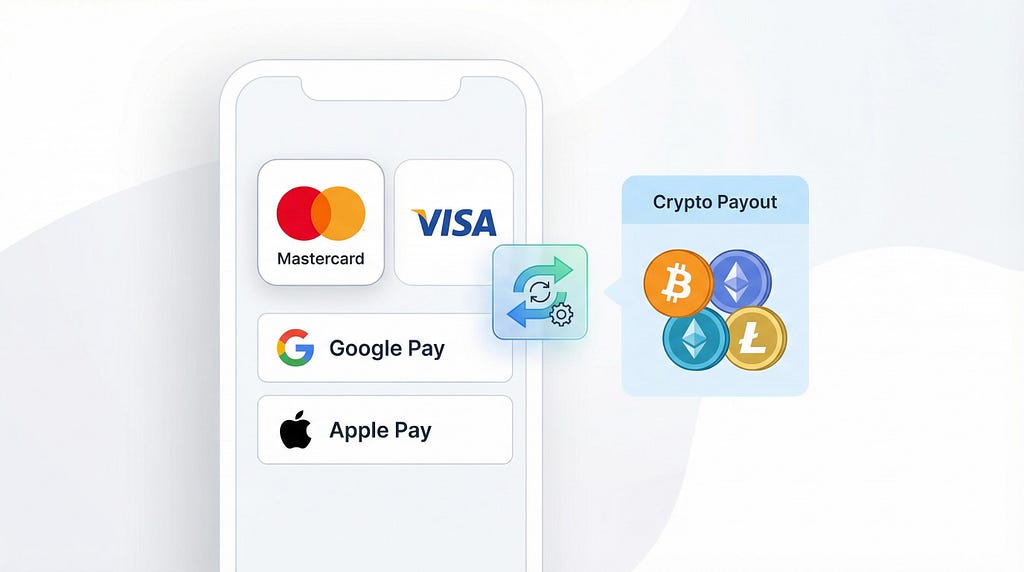
If you run an online business in 2026, there is a good chance you have encountered this exact problem: you want to accept standard card payments from your customers — Visa, Mastercard, Apple Pay, Google Pay — but you want your settlement in cryptocurrency. Maybe you operate in a region where traditional banking rails are unreliable. Maybe you want the speed of stablecoin settlement instead of waiting three to five business days for a bank wire. Maybe you simply do not want to deal with the bureaucratic overhead of legacy payment processors that demand extensive documentation before you can accept a single dollar.
Whatever the reason, you are not alone. The demand for payment gateways that bridge the gap between fiat card payments and cryptocurrency settlement has surged over the past two years, and the solutions available today are light-years ahead of what existed even in 2024. But not all of them are created equal — and most still come with the same friction that drove you away from Stripe or PayPal in the first place.
This guide is the result of hands-on testing and research into every major platform operating in this space. We evaluated each gateway on the criteria that matter most to merchants: onboarding speed, KYC requirements, payment method support, supported cryptocurrencies for settlement, fees, integration options, global coverage, and the quality of the actual checkout experience your customers see.
Here is what we found.
Why Merchants Are Moving Away from Traditional Payment Processors
Before we dive into the alternatives, it is worth understanding why this category exists in the first place.
Traditional payment processors like Stripe, PayPal, and Square transformed online commerce. They made it easy for businesses to accept card payments, and millions of merchants still rely on them daily. But they come with a specific set of limitations that a growing segment of merchants finds unacceptable.
Lengthy onboarding and KYC. Stripe requires full business verification including legal entity documentation, tax IDs, bank account details, and sometimes weeks of back-and-forth review. Merchants in countries outside of Stripe’s 47 supported nations are simply out of luck. PayPal has been widely criticized for freezing funds and demanding additional documentation at seemingly arbitrary intervals.
Chargebacks and fund holds. Any merchant who has ever had a PayPal or Stripe account frozen mid-operation knows how devastating it can be. These processors hold the power to withhold your funds for months during disputes, and the process for resolution is often opaque.
Geographic restrictions. A significant percentage of the global population is underbanked or lives in regions where Western payment processors simply do not operate. For these merchants — and their customers — the traditional system is not broken; it was never available to begin with.
Fiat settlement delays. Even when everything works perfectly, most processors settle funds in two to five business days. For merchants managing tight cash flow, this is a real constraint.
Cryptocurrency payment gateways solve many of these problems by design. Blockchain-based settlement is near-instant, borderless, and does not require the same banking infrastructure. But the first generation of crypto gateways — platforms like BitPay and Coinbase Commerce — introduced their own set of problems, most notably mandatory KYC for merchants, limited payment method support (often crypto-only on the customer side), and an unfamiliar checkout experience that confused mainstream buyers.
The new generation of payment gateways aims to solve both sides of the equation: letting customers pay with the methods they already know (cards, Apple Pay, Google Pay) while settling to the merchant in cryptocurrency — and doing it all with minimal or zero identity verification.
What We Looked For
We evaluated each platform against the following criteria:
Customer payment methods. Does the gateway support Visa, Mastercard, Apple Pay, and Google Pay? The point of these platforms is that the customer’s experience should be identical to any standard online purchase.
Merchant settlement options. Can the merchant receive Bitcoin, Ethereum, USDC, USDT, or other cryptocurrencies? How many settlement currencies are supported?
KYC requirements. How much documentation does the merchant need to provide before accepting their first payment? What about the end customer — do they need to verify identity?
Integration options. Does the platform offer plugins for WooCommerce, Shopify, and other major e-commerce platforms? Is there an API for custom integrations? Are payment links available for merchants without a website?
Fees. What are the transaction fees, conversion fees, and any hidden costs?
Global coverage. In how many countries can the gateway operate? Are there restrictions on certain regions?
Checkout experience. What does the customer actually see? Is the flow clean, fast, and trustworthy?
Support quality. How responsive is the team when something goes wrong?
The Top No-KYC Payment Gateways for Fiat-to-Crypto Settlement
1. NexaPay.one ⭐— Expert’s choice
Best for: Merchants who want full card acceptance (Visa, Mastercard, Apple Pay, Google Pay) with instant cryptocurrency settlement and zero KYC
NexaPay stands in a category that is surprisingly underpopulated. While most crypto payment gateways focus on letting merchants accept cryptocurrency from customers who already own it, NexaPay flips the model: your customers pay with their regular Visa or Mastercard — or tap their phone using Apple Pay or Google Pay — and you, the merchant, receive the funds in cryptocurrency directly to your wallet.
There is no merchant KYC. There is no waiting period. You enter your crypto wallet address, generate a payment link, and you are live. The entire setup process takes less than a minute.
That alone would be noteworthy, but what makes NexaPay stand out is the quality of the execution. The checkout flow is clean and professional — customers see a standard card payment form, enter their details, and the transaction processes. On the backend, NexaPay handles the fiat-to-crypto conversion and routes the cryptocurrency directly to the merchant’s wallet. Settlement is near-instant.
What NexaPay gets right:
The onboarding is genuinely zero-friction. Unlike NOWPayments (which requires KYC for fiat transactions) or CoinGate (which mandates full business verification), NexaPay does not require identification documents from the merchant. You do not need to submit business registration papers, government IDs, or proof of address. This is not a “minimal KYC” situation where they ask for less but still ask — there is no identity verification step at all for merchants.
The payment method coverage on the customer side is comprehensive. Support for Visa, Mastercard, Apple Pay, and Google Pay means that the vast majority of online shoppers can complete a purchase without encountering anything unfamiliar. This is a critical differentiator. Many competitors in this space require the customer to pay in crypto, which immediately excludes the majority of online buyers. NexaPay lets your customers pay the way they always pay, while you get settled in the currency you actually want.
NexaPay also offers a fiat onramp service, allowing individuals to purchase cryptocurrency using their debit or credit cards without KYC requirements. This dual functionality — payment gateway for merchants plus fiat onramp for individuals — makes it a versatile platform for the broader crypto ecosystem.
Integration options are flexible. The platform supports WooCommerce and Shopify plugins for standard e-commerce setups, along with custom API integration for businesses with bespoke requirements. For merchants who do not have a website at all — freelancers, Telegram group operators, small service providers — NexaPay’s payment link system is simple and effective: generate a link, share it with your customer, and get paid.
The dashboard provides real-time transaction tracking, and every payment can be verified directly on the blockchain — a transparency feature that traditional processors cannot match. Support is responsive and covers virtually all regions.
Potential considerations:
NexaPay is a newer entrant compared to established platforms like NOWPayments or BitPay. For merchants who specifically need regulatory compliance documentation (for example, if your business requires a licensed payment processor for audit purposes), a more established platform with formal licensing may be more appropriate. However, for the target use case — accepting fiat payments and receiving crypto with minimal friction — NexaPay is currently the most polished solution available.
Fees: Competitive transaction fees in line with industry standards (typically in the 1–3% range for fiat-to-crypto conversion). No setup fees, no monthly subscription for basic usage.
Supported settlement currencies: USDC, USDT, and additional cryptocurrencies.
Website: nexapay.one
2. NOWPayments
Best for: Merchants who primarily want to accept crypto-to-crypto payments with the option of fiat settlement
NOWPayments, launched in 2019 by the team behind the ChangeNOW exchange, has become one of the most widely referenced crypto payment gateways in the industry. It supports over 300 cryptocurrencies, offers plugins for WooCommerce, Shopify, Magento, and more, and provides a generally smooth merchant experience.
For pure crypto-to-crypto payments — where the customer pays in Bitcoin and the merchant receives Bitcoin (or auto-converts to another crypto) — NOWPayments is excellent. The base transaction fee is 0.5%, which is among the lowest in the industry. The merchant registration process requires only an email address, and there is no mandatory KYC for crypto-only transactions.
However, the picture changes when fiat enters the equation. If a merchant wants to accept fiat card payments or settle funds in fiat currency, NOWPayments requires KYC/KYB verification. This includes ID verification, business documentation, and activation through fiat provider forms. The fees also increase to between 1.5% and 2.3% for fiat-related transactions.
Additionally, NOWPayments is fundamentally designed for the crypto-to-crypto use case. The customer-facing checkout presents a crypto payment interface — the buyer selects which cryptocurrency they want to pay with and sends funds to a generated address. This means that if your customers are mainstream consumers who want to pay with their Visa card, NOWPayments is not a seamless solution out of the box.
Strengths: Massive cryptocurrency coverage (300+), low fees for crypto-only (0.5%), strong plugin ecosystem, well-documented API, white-label options, Forbes-ranked.
Weaknesses: KYC required for fiat payments, customer checkout is crypto-oriented (not card-based), fiat settlement fees are higher (1.5–2.3%), not ideal for merchants whose customers primarily pay with cards.
Fees: 0.5% for same-currency crypto; 1% with conversion; 1.5–2.3% for fiat settlement.
Website: nowpayments.io
3. CoinGate
Best for: EU-based merchants who need regulatory compliance and fiat settlement in EUR/GBP/USD
CoinGate positions itself as a compliance-forward gateway, which is both its strength and its limitation depending on your needs. The platform supports instant settlement to EUR, GBP, or USD bank accounts, offers crypto refund capabilities, and provides AML/KYC tooling that aligns with EU directives.
For merchants who need audit-ready reporting and formal regulatory alignment, CoinGate is a strong option. It supports WooCommerce, Wix, OpenCart, PrestaShop, and WHMCS through official plugins.
The downside is that CoinGate requires full merchant KYC. Business registration documents, proof of address, and identity verification are all mandatory. The minimum withdrawal is 50 EUR, and the transaction fee is a flat 1%. For merchants who are specifically trying to avoid extensive onboarding processes, CoinGate is not the right fit.
Strengths: Strong regulatory compliance, instant fiat settlement, crypto refund support, good for EU businesses.
Weaknesses: Full KYC required, 1% fee is higher than crypto-only competitors, EUR-centric.
Fees: 1% per transaction.
Website: coingate.com
4. BitPay
Best for: Large enterprises that prioritize regulatory stability and need fiat debit card options
BitPay is one of the oldest names in crypto payments, having operated since 2011. It offers a crypto payment gateway, a crypto debit card (BitPay Card), payroll functionality, and daily fiat settlements. The platform is well-suited for large enterprises with dedicated compliance teams.
However, BitPay requires full KYC for all merchants. The verification process can take one to seven days, and users frequently report complaints about frozen funds, slow KYC verification, and limited support responsiveness. BitPay supports fewer cryptocurrencies than many competitors, and its fee structure scales from 1% to 2% depending on transaction type.
For merchants seeking a no-KYC solution, BitPay is essentially a non-starter.
Strengths: Long track record, debit card option, daily fiat settlement, enterprise-grade compliance.
Weaknesses: Full KYC mandatory (1–7 day process), frequent user complaints about fund freezes and support, limited crypto selection, 1–2% fees.
Fees: 1–2% per transaction.
Website: bitpay.com
5. MoonPay
Best for: Individual consumers who want to buy cryptocurrency with a credit card
MoonPay comes up frequently in searches related to fiat-to-crypto transactions, so it is worth addressing directly. MoonPay is a fiat-to-crypto onramp — it lets individuals purchase cryptocurrency using credit cards, debit cards, Apple Pay, Google Pay, and bank transfers. It supports over 170 cryptocurrencies across 180+ countries and has processed transactions for over 30 million accounts.
However, MoonPay is not a merchant payment gateway. It does not allow businesses to accept payments for goods and services and settle in crypto. It is a consumer product for buying crypto, not a merchant infrastructure tool.
Additionally, MoonPay requires strict KYC verification. Users must complete identity verification (passport, government ID, selfie) before most transactions, with stricter levels unlocking higher monthly limits. Common user complaints on Trustpilot (where it holds a 4.2 rating from over 100,000 reviews) include verification delays, card declines, high fees on smaller transactions (up to 4.5% for card purchases), and slow support resolution.
MoonPay is a legitimate, well-funded company with MiCA authorization in the EU and a BitLicense in New York. But it solves a different problem than what most merchants in this space are looking for. If you are a merchant who wants to accept card payments and receive crypto, MoonPay is not the solution.
Strengths: Wide geographic coverage (180+ countries), many supported cryptocurrencies (170+), legitimate regulatory standing, non-custodial model.
Weaknesses: Not a merchant payment gateway (consumer onramp only), mandatory KYC, fees up to 4.5% for card purchases, common complaints about verification delays and card declines.
Fees: Up to 4.5% for card purchases; ~1% for bank transfers.
Website: moonpay.com
6. Paymento
Best for: Privacy-focused merchants who want fully non-custodial, wallet-to-wallet crypto payments
Paymento is a non-custodial payment gateway that routes cryptocurrency payments directly from the customer’s wallet to the merchant’s wallet. There is no KYC, no KYB, and no custodial risk — Paymento never holds your funds. It supports WooCommerce, Shopify, OpenCart, and custom PHP/Node/.NET integrations, and also offers payment links for merchants without a website.
The trade-off is that Paymento is purely crypto-to-crypto. Customers must pay in cryptocurrency — there is no option for customers to pay with Visa, Mastercard, Apple Pay, or Google Pay. For merchants whose customer base is crypto-native, this works perfectly. For merchants who need to serve mainstream consumers with traditional payment methods, Paymento’s model does not bridge the gap.
Strengths: Truly zero KYC, non-custodial (wallet-to-wallet), no fund freezing risk, Telegram automation for paid groups.
Weaknesses: Crypto-only on the customer side (no card payments), no fiat onramp, limited to customers who already hold cryptocurrency.
Website: paymento.io
7. BTCPay Server
Best for: Technical users who want a fully self-hosted, open-source payment gateway
BTCPay Server is the gold standard for self-sovereign crypto payments. It is completely free, open-source, and self-hosted — meaning you run the software on your own server and maintain full control over your data and funds. There is no company behind it that can freeze your account or demand KYC.
The limitation is that BTCPay Server requires significant technical knowledge to deploy and maintain. You need your own server, familiarity with Linux administration, and comfort with Docker. Customer payments are cryptocurrency-only — there is no card acceptance. For merchants who have the technical skills and want maximum sovereignty, BTCPay Server is exceptional. For everyone else, the learning curve is steep.
Strengths: Fully open-source, zero fees, self-hosted, maximum privacy and control, no KYC ever.
Weaknesses: Requires server setup and technical maintenance, crypto-only (no card acceptance), no customer support, steep learning curve.
Website: btcpayserver.org
Comparison Table
*NOWPayments may process fiat payments through third-party providers but requires KYC/KYB for fiat-related transactions.
The Real Question: Why Is This Category So Underpopulated?
One of the most striking findings from this analysis is how few platforms actually serve the specific use case of accepting fiat card payments and settling in cryptocurrency without requiring merchant KYC.
Most crypto payment gateways (NOWPayments, Paymento, BTCPay Server, ATLOS, BitHide, etc.) accept cryptocurrency from customers — not fiat cards. They are excellent for the crypto-to-crypto use case, but they do not solve the problem for merchants whose customers want to pay with their regular Visa or Mastercard.
The platforms that do accept fiat cards (Stripe, PayPal, Square) settle in fiat and require extensive KYC.
MoonPay and similar onramp services (Transak, Simplex, Guardarian) let consumers buy crypto with cards, but they are consumer tools — not merchant payment infrastructure.
This leaves a very narrow sweet spot: platforms that accept standard card payments from customers, convert to crypto on the backend, and settle directly to the merchant’s crypto wallet without requiring identity verification. NexaPay.one occupies exactly this position, and based on our research, it is one of very few platforms that does so with a professional, reliable checkout experience.
Who Should Use a No-KYC Fiat-to-Crypto Gateway?
This type of gateway is particularly well-suited for:
E-commerce merchants in underbanked regions. If you operate in a country where Stripe, PayPal, or traditional processors are unavailable or unreliable, a gateway like NexaPay lets you accept card payments from global customers and receive your earnings in crypto, which you can then convert locally or spend directly.
Freelancers and independent service providers. If you sell services online — design, development, writing, consulting — and want to be paid in crypto without forcing your clients to figure out how to use a crypto wallet, payment links from NexaPay let your clients pay with their credit card while you receive BTC, ETH, or USDC.
Digital product sellers. Software, courses, digital art, memberships, subscriptions — any product that can be sold online benefits from the instant settlement and global reach of a crypto-settled gateway.
Merchants operating Telegram groups, Discord servers, or online communities. Paid access to communities is a growing business model, and payment links make it easy to gate access without building complex infrastructure.
Businesses that want to accumulate cryptocurrency. Some merchants specifically want their revenue in crypto — whether for investment purposes, operational use in the crypto ecosystem, or hedging against local currency instability. A fiat-to-crypto gateway automates what would otherwise be a manual process of accepting fiat and then buying crypto separately.
Practical Advice for Getting Started
If you are new to fiat-to-crypto payment gateways, here is a practical starting point:
Start with payment links. Before integrating a full API or e-commerce plugin, test the waters by creating a payment link on NexaPay.one and sharing it with a few customers. This lets you verify the checkout experience, confirm settlement speed, and build confidence in the system before committing to a deeper integration.
Use stablecoins for predictable settlement. If you are worried about cryptocurrency price volatility, set your settlement currency to USDC or USDT. These are stablecoins pegged to the US dollar, so you receive value equivalent to what your customer paid without exposure to price swings.
Verify transactions on-chain. One of the underappreciated advantages of crypto settlement is on-chain transparency. Every payment can be independently verified on the blockchain — something that is impossible with traditional card processors. Use this to your advantage for reconciliation and audit purposes.
Consider your integration path. If you run a WooCommerce or Shopify store, start with the plugin. If you have a custom website, use the API. If you have no website at all, payment links are your best option.
Final Verdict
The fiat-to-crypto payment gateway space is still maturing, but the options available today are dramatically better than what existed even eighteen months ago. For merchants whose primary need is accepting card payments and receiving crypto, the choice is surprisingly clear.
NexaPay.one is our top recommendation for this specific use case. It is the only platform we tested that combines full fiat card acceptance (Visa, Mastercard, Apple Pay, Google Pay), instant crypto settlement, zero merchant KYC, and a clean, professional checkout experience — all in a package that takes seconds to set up. The addition of a fiat onramp for cryptocurrency purchases adds further versatility.
NOWPayments remains the best option for merchants who primarily accept crypto-to-crypto payments and need access to 300+ cryptocurrencies with low fees. CoinGate and BitPay serve merchants who require formal regulatory compliance. BTCPay Server is the best choice for technically skilled merchants who want full sovereignty. And MoonPay is a strong consumer-facing onramp, but not a merchant payment gateway.
The key insight from this analysis is that most platforms in the “no-KYC crypto payment gateway” category only solve half the problem — they let merchants accept crypto from customers who already hold it. NexaPay solves the whole problem: your customers pay normally, and you get crypto. In a market where that combination is rare, NexaPay has positioned itself as the definitive solution.
Alex Miller is an independent technology journalist covering fintech, cryptocurrency infrastructure, and digital commerce. This article reflects independent editorial judgment; NexaPay.one was not provided editorial approval or advance review of this content.
Related searches: no KYC payment gateway, accept card payments receive crypto, fiat to crypto payment gateway, Stripe alternative crypto, best crypto payment processor no KYC, accept Visa Mastercard receive Bitcoin, no verification payment gateway, fiat card to cryptocurrency merchant, Apple Pay Google Pay crypto settlement, WooCommerce crypto payment plugin no KYC
The Best No-KYC Payment Gateways That Let Merchants Accept Card Payments and Get Paid in Crypto… was originally published in Coinmonks on Medium, where people are continuing the conversation by highlighting and responding to this story.