
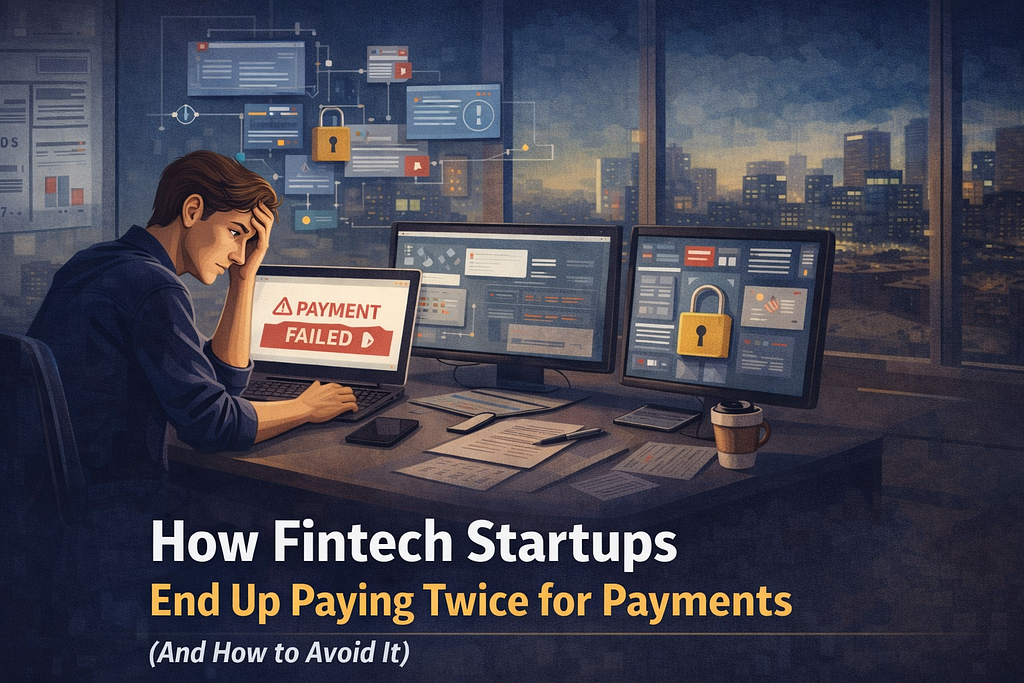
I still remember the call from a founder last year. They had just hit a $2M monthly transaction run rate, and suddenly their dashboard lit up with failed payments.
Customers were complaining. Engineers were scrambling to patch code they hadn’t touched in months. And worst of all? Half of the failures were preventable.
ChatGPT Generates Image
It’s a story I hear too often. Payments look simple at first: APIs work, sandbox tests pass, money flows. But scaling unveils a harsh truth. Failed webhooks, chargebacks, reconciliation errors, compliance audits, they don’t show up during the initial dev cycle. They appear under pressure, when your revenue, reputation, and team sanity are at stake.
Let’s break down the mistakes that make this story so common.
1. Choosing a gateway based on features, not trade-offs
Founders often assume that the more features a gateway has, the more future proof it is. “It has subscriptions, multi-currency, fraud tools; let’s go!” sounds reasonable.
Reality hits when your first refund fails, or when a rare edge case in cross-border settlement causes a week-long reconciliation headache. Suddenly, the fancy features don’t matter. Your engineers are rewriting integrations mid-growth. Months of effort vanish, and your launch roadmap slips.
2. Assuming compliance is “someone else’s job”
It’s tempting to think: “PCI, KYC, AML; they handle it all.” After all, the gateway promises compliance.
Here’s what happens in production: small oversights, like storing card data incorrectly or missing a subtle webhook log, trigger audits. The team spends days compiling reports and justifying processes instead of building new features. And yes, fines can follow.
I use a simple payment gateway evaluation scorecard with founders to avoid these mistakes. Comment SCORECARD if you want it.
3. Waiting for failures to appear
Many founders think transaction failures are rare: “We’ll fix them when they happen.”
But failures spike when you least expect them: Black Friday, payroll days, or cross-border spikes. Without retry logic and monitoring, failed payments mean lost revenue and frustrated customers. In one case, a startup lost tens of thousands of dollars before realizing a webhook timeout was silently dropping transactions.
4. Overlooking hidden integration complexity
“APIs are simple, our engineers can handle it,” is another common assumption.
Reality: multi-currency settlements, partial reversals, and chargeback disputes accumulate invisible technical debt. Each small edge case adds up. When scaling, these “minor” issues snowball into weeks of firefighting, delaying product releases, and exhausting teams.
5. Treating costs as static
Early-stage founders often calculate fees based on current volume. But as volume grows, hidden costs appear per-transaction fees, currency conversion spreads, settlement delays, and dispute management fees. Suddenly, profitability looks very different than expected.
How seasoned teams think differently
Experienced fintech teams don’t chase features, they map trade-offs. Before selecting a gateway, they ask:
How does this gateway behave under load?What’s the retry and reconciliation plan?How much compliance work falls on us versus them?Can it scale cross-border or multi-currency?What happens when transactions fail or are disputed?
They monitor payments in real-time, automate error handling, and stress-test every critical flow. Integration quality compounds over time. A good decision now prevents months of pain later.
Practical Checklist for Early-Stage Founders
Test failure scenarios, not just happy pathsClarify compliance responsibilities upfrontTrack per-transaction and hidden fees at scaleAudit webhook reliability and retry logicAutomate reconciliation end-to-endStress-test cross-border and peak-hour flowsDocument trade-offs, not just feature lists
I’ve seen founders lose months or even millions, because they underestimated these issues. Gateway decisions aren’t just tech choices; they’re long-term operational bets. The right choice now saves time, money, and headaches later.
I’d love to hear your experiences: what unexpected payment failures did you encounter, and how did you fix them? Share your story in the comments, we can all learn from each other.
How Fintech Startups End Up Paying Twice for Payments (And How to Avoid It) was originally published in Coinmonks on Medium, where people are continuing the conversation by highlighting and responding to this story.