
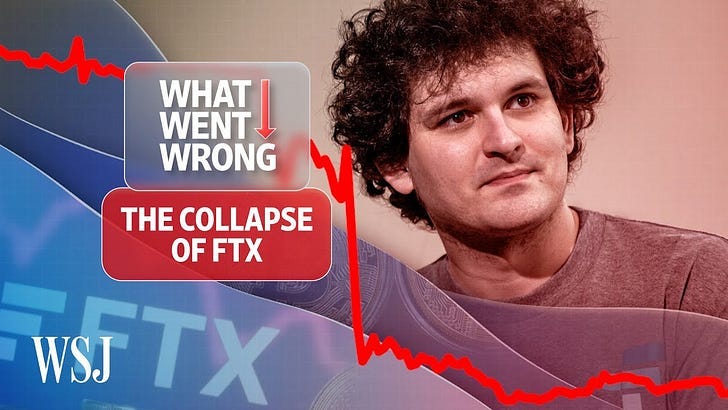
Sam Bankman-Fried (SBF) was once a name whispered in awe across fashion, tech, sports, and business circles alike. Charismatic, seemingly brilliant, and strikingly young, he built a reputation as the poster child of crypto innovation. A prodigy with a degree in Physics and Mathematics from MIT (2014), he spent three years at the notoriously competitive quantitative trading firm Jane Street Capital, specializing in international ETF trading and effective-altruism-linked arbitrage strategies, quickly rising through the ranks to notable success.
Headlines painted him as the altruistic genius of decentralized finance, a figure promising a new financial frontier. His companies-Alameda Research and FTX-were lauded as twin pillars of the crypto ecosystem: one, a high-octane trading engine; the other, a sleek global exchange.
Altruistic genius in crypto? You might ask where the link comes from. After Jane Street, SBF joined the Center for Effective Altruism (EA), and his early impressions stayed with him. Throughout his career, he remained a prominent donor to the EA movement; a philosophy which emphasizes using evidence and reason to do the most good, famously through “earn to give” strategies. A conscious capitalist in the crypto world seemed almost too good to be true, and indeed, it was.
His fall was as spectacular as his rise. Within months, SBF went from celebrated wunderkind to emblem of governance failure. Convicted in March 2024 on seven counts of fraud and conspiracy, he is currently serving a 25-year prison sentence for massive fraud related to his cryptocurrency exchange, FTX. His downfall severely tarnished EA’s reputation, raising questions about whether his criminality exposed flaws in the movement’s emphasis on calculation and risk (wherein the ends justified questionable means) or whether it was simply a personal moral failure.
I find these two videos on effective altruism particularly insightful:
https://medium.com/media/0829cc09d52172da4804c3f0e2bb3a64/hrefhttps://medium.com/media/96eb676a9df794a2fb0608a6a4d447f8/href
Where It All Went Wrong: Governance and Risk Management Failures
At the heart of FTX’s collapse lay catastrophic internal control failures. Publicly, Sam Bankman-Fried projected an image of a disciplined innovator; a genius orchestrating complex markets with efficiency, transparency and integrity. Behind the scenes, the accounting and operational architecture told a different and messier story; one of blurred lines, missing documentation, and cultural permissiveness that turned operational gaps into systemic risk.
Commingling of Funds
Alameda Research and FTX were designed to operate as separate entities, but in practice, their balance sheets were deeply entangled. In a traditional financial institution, client deposits and proprietary trading capital are segregated, with robust reconciliation routines. Under Sam’s fiefdom, client deposits flowed into Alameda’s trading operations, and proprietary trading profits (often speculative) were shuffled back through FTX accounts. Employees described ad hoc transfers and informal approvals, with SBF’s word effectively acting as the ultimate authorization.From an accounting standpoint, this violated the principle of fiduciary segregation: assets held in trust for clients cannot simultaneously fund speculative positions. The consequences were immediate; when markets turned, there was no clear record of whose money was where, leaving both clients and regulators in the dark.
2. Lack of Audit-Ready Records
Attempting to reconcile FTX’s books was like chasing shadows. Transactions were logged irregularly and inconsistently, some journal entries were incomplete, lacking clear audit trails and essential supporting documentation was missing. Auditors would struggle to verify existence, completeness, or valuation — core financial assertions that underpin trust in any institution. SBF reportedly treated accounting as a “loose operational tool” rather than a governance backbone, leaving auditors with little more than piecemeal spreadsheets and anecdotes.
3. Opaque Policies and Internal Procedures
Policies on risk limits, counterparty exposure, and collateral management were often verbal, informal or undocumented (i.e., outright absent). Without explicit controls, employees routinely relied on SBF’s discretion for approvals and exceptions, creating a world where the founder’s judgment substituted for governance frameworks. Textbook failure!! Internal controls require formalized procedures, segregation of duties, and escalation pathways, and in the absence of these, small errors escalated unchecked, eventually amplifying exposure across trading desks and the exchange itself.
Here are two super interesting videos for more context:
https://medium.com/media/2f4d21d516a72cb62c33a1887cc594ec/hrefhttps://medium.com/media/f02c730da55a4c0520b5802d484ab582/href
4. Disclosure Failures
To the outside world, FTX appeared rock-solid. Press releases, interviews, and social media painted a picture of liquidity, solvency, and innovation. In reality, internal ledgers suggested a far different story. Investors and regulators were left assuming stability based on PR narratives rather than verifiable financial statements. GAAP, IFRS, and prudential norms call for transparent recognition and disclosure of: risks, intercompany transactions, and contingent liabilities; standards that FTX repeatedly failed to meet. These omissions were blind spots that masked systemic fragility.
GAAP, IFRS, and prudential norms call for transparent recognition and disclosure of risks, intercompany transactions, and contingent liabilities.
5. Risk Culture Gone Wrong
Perhaps the most insidious failure was cultural. SBF cultivated a workplace ethos of ambition and improvisation: rapid risk-taking without documentation, oversight, or accountability. While this approach produced short-term market gains, it systematically bypassed the safeguards that prevent catastrophic loss. Tools that ensure resilience in traditional finance were either ignored or applied inconsistently. The result was a high-speed financial engine with no brakes, entirely dependent on luck and goodwill.
Using Accounting Protocols to Diagnose the Collapse
Viewed through the lens of accounting and internal controls, FTX’s failure can be mapped to familiar failure points:
Segregation of assets → ignored, enabling liquidity shocks.Audit-ready bookkeeping → absent, preventing reliable oversight.Policy and procedure documentation → minimal, allowing arbitrary decision-making.Disclosure compliance → superficial, masking financial health.Internal audit & risk monitoring → underdeveloped, leaving gaps in early warning systems.
The lesson for CFOs, auditors, and regulators is that flashy growth and market prominence cannot substitute for disciplined control frameworks, enforceable policies, and verifiable accounting records.
Bottom Line
FTX’s story isn’t a morality tale about one individual’s hubris; it is a case study in how ignoring internal controls, accounting discipline, and risk infrastructure can lead to catastrophic failure for startups. For the next generation of crypto companies/startups, the blueprint is clear: segregated funds, documented procedures, audit trails, and transparent disclosure are non-negotiable. Anything else, no matter how dazzling, is rat poison dressed up as innovation.
Here are some informative reads on the whole fiasco:
Going Infinite: Sam LewisStealing the Future: David MorrisCrypto Confidential: Jake Donoghue
Lessons from FTX: Internal Controls Gone Wrong was originally published in Coinmonks on Medium, where people are continuing the conversation by highlighting and responding to this story.